
Updated on: 2026-11-08
An uncoated stainless steel wok supports high-heat cooking, fast evaporation, and durable everyday performance. Its surface is designed for natural browning and clean, controlled searing without a polymer coating. With the right preheating and oil technique, it can help you build better flavour through Maillard reactions and reduced moisture. This guide explains what makes this pan type different, addresses common concerns, and provides practical care steps for consistent results.
Product Spotlight | Myths vs. Facts | How It Works | Seasoning and Surface Behavior | Cooking Techniques | Maintenance and Cleaning | Frequently Asked Questions | Final Recommendations | Q&A Section | About the Author
Product Spotlight: Uncoated Stainless Steel Wok for Modern Stir-Fry
An uncoated stainless steel wok is a professional-style cooking vessel built for rapid heat transfer, intense searing, and responsive temperature control. Unlike nonstick cookware, it relies on your method: proper preheating, correct oil amount, and food-handling timing. This design encourages caramelisation and browning, which can improve aroma and texture in stir-fries, fried rice, noodles, and quick sautés.
When you choose an uncoated stainless steel wok, you gain a surface that is stable under high temperatures and compatible with long-term use. Stainless steel also resists warping better than many softer metals. The pan shape, with sloped sides, supports toss-and-turn cooking and helps you keep ingredients moving so they cook evenly and do not steam in their own moisture.
For a related example of how stainless steel pans behave in everyday cooking, you may find it useful to review a comparable option such as uncoated stainless steel wok on the Culivra range. If you also prepare high-sizzle meals frequently, pairing a wok with a well-matched set of cookware can simplify workflow.

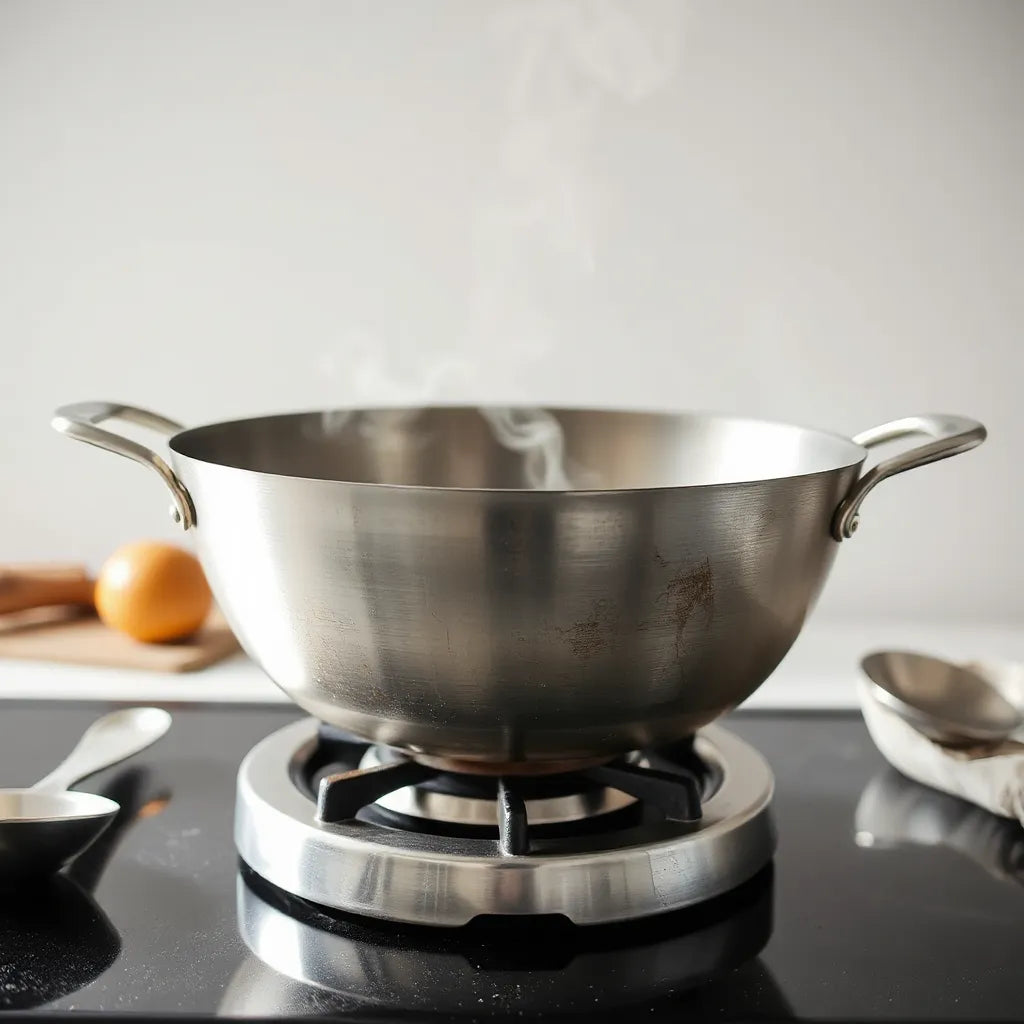
Steaming heat waves over a steel bowl shape
Myths vs. Facts About Uncoated Stainless Steel Woks
Many buyers hesitate because they have heard claims about sticking, maintenance difficulty, or performance limits. Most concerns are manageable when you follow correct technique.
Myth 1: It will always stick
Fact: Sticking is usually a result of insufficient preheating, excess moisture, or adding food too early. Stainless steel can perform reliably once the surface reaches the right temperature and you use an appropriate oil quantity.
Myth 2: It needs a heavy coating to work
Fact: An uncoated wok does not require a permanent nonstick coating. Some cooks develop a light, polymer-free “seasoned” layer through repeated heating and oil use, but the primary driver of release is temperature and contact timing.
Myth 3: Cleaning is impossible
Fact: Cleaning stainless steel is straightforward when you address residue promptly. Deglazing with hot water or a mild detergent and using non-scratch tools usually restores the surface quickly.
Myth 4: It cannot reach stir-fry searing heat
Fact: Stainless steel wok designs are made for high-heat cooking. With a suitable burner and correct preheat, you can achieve strong browning and fast evaporation, which are central to stir-fry style meals.
Why Uncoated Stainless Steel Performs Well at High Heat
The cooking results you want from a wok depend on two key factors: heat delivery and moisture management. Stainless steel conducts heat efficiently, helping you maintain a strong cooking temperature even when you add cold ingredients. The sloped wok walls also give you more surface area as you stir, which improves even cooking.
In stir-fry cooking, moisture control is crucial. If ingredients are too wet or if the pan is not hot enough, food tends to steam. With a properly heated uncoated stainless steel wok, liquids evaporate quickly, and you get better browning instead of soft, pale textures.
Another important concept is surface contact. When you start cooking at the right time, proteins and sugars form flavour compounds. When you stir too aggressively too early, you interrupt this process. A wok rewards methodical movement: let the first contact cook, then stir and toss to finish.

Split screen: pan heating, then tossing vegetables
Seasoning and Surface Behavior Without Coatings
Although an uncoated wok is not coated with a nonstick layer, you can still improve performance through a practical approach to surface conditioning. The goal is not to build a thick film. The goal is to encourage better oil behaviour and reduce the tendency for residue to fuse to the metal.
Start with a clean, dry wok. Heat it gradually until it is hot enough to shimmer and show subtle heat movement across the base. Add a small amount of high-smoke-point oil and spread it with a controlled swirl. Remove excess oil if it pools heavily. Continue heating briefly, then let the wok cool.
Over repeated cooking sessions, this creates a thin, functional layer that can support easier release. Even so, the wok will not perform like coated nonstick. You should expect some patina development. That is not a defect; it is a normal surface evolution.
If you already use other cookware, you can use the same principles to improve results. For example, a nonstick stock pot can be ideal for simmering sauces and soups, while a wok focuses on browning and evaporation. Consider whether your current tools match your cooking goals, such as nonstick stock pot with glass lid for gentle liquid work.
Technique Guide for Better Browning and Less Sticking
Sticking and uneven browning are usually solvable through workflow. Use these technique guidelines as a baseline and adjust to your burner and ingredients.
Preheat properly
Preheat long enough for the base to reach cooking temperature. A useful indicator is how water reacts: a few drops should dance or evaporate rapidly rather than remain sluggish. If your ingredients go in while the wok is still cool, food tends to cling.
Use the right oil amount
Oil is a heat transfer layer. Too little oil can lead to dry contact and residue. Too much oil can cause steaming and shallow frying effects. For many stir-fries, a thin, even film works best.
Dry ingredients before cooking
Pat meat dry, and drain vegetables if they are pre-washed. Frozen vegetables should be used directly from frozen if your recipe supports it, but avoid piling them in a way that traps ice melt.
Cook in stages
Overcrowding lowers the pan temperature and produces steam. Cook protein first, remove it, and cook vegetables in batches. Return the protein at the end. This approach protects texture and supports browning.
Let contact happen, then move
When you add food, allow brief contact for searing. Then stir and toss to keep the pan evenly active. If you keep moving immediately, you can prevent browning from developing.
Control heat during finishing
High heat is essential early for searing. For finishing, you may lower the heat slightly to prevent burning sauces. Many stir-fry sauces include sugar; they darken quickly when the wok is too hot.
Cleaning and Maintenance for Longevity
Correct cleaning is what keeps an uncoated stainless steel wok performing session after session. The guiding principle is to remove residue efficiently while protecting the metal surface.
Cool slightly, then deglaze
After cooking, allow the wok to cool to a safe handling temperature. Add hot water to loosen stuck bits and gently scrape with a wooden or silicone tool. If you need more action, use a mild dish detergent and warm water.
Avoid harsh methods that damage the surface
For stainless steel, non-scratch pads and gentle brushes are usually sufficient. Avoid aggressive scraping that can gouge the metal. Once the surface is damaged, it becomes harder to clean and can affect cooking performance.
Dry thoroughly
Drying prevents water spotting and maintains a clean appearance. Wipe with a towel and set the wok over low heat briefly to evaporate remaining moisture.
Manage stubborn residue
If residue remains, simmer water with a small amount of detergent for a short time, then rinse and re-clean. For light discolouration, heat plus a small amount of oil can restore the cooking surface through gentle reconditioning.
If you want a simple way to think about maintenance across the kitchen, consider how stainless steel differs from coated sets. Some users prefer a dedicated pan for high-heat work and a separate set for low-to-medium temperature cooking. A general approach is to keep your wok for browning tasks and reserve other pieces for simmering and gentle heating. If you cook frequently across multiple styles, you may also review nonstick cookware set to balance your kitchen workflow.
Frequently Asked Questions
How do I prevent sticking in an uncoated stainless steel wok?
Preheat thoroughly, dry ingredients, and use a thin oil film. Add food when the surface is hot enough to sizzle immediately. Stir after brief contact rather than immediately.
Do I need to season it like cast iron?
You do not need traditional cast-iron seasoning. You can develop a light, natural conditioning layer over time through repeated cooking, but the wok still primarily relies on temperature control.
Is it safe for high-temperature stir-frying?
Stainless steel is commonly used for high-heat cooking. Use your burner responsibly and avoid thermal shock such as adding very cold water to a fully overheated wok.
What is the best way to clean after oily meals?
Use hot water deglazing first, then wash with mild detergent. Non-scratch tools usually remove residue effectively. Dry completely to prevent spotting.
Final Recommendations for Choosing and Using a Wok
An uncoated stainless steel wok is a high-performance choice for cooks who value browning, fast evaporation, and long-term durability. To get reliable results, focus on three practical priorities: proper preheating, controlled oil and moisture, and staged cooking that avoids overcrowding. If you approach the pan with these principles, you can achieve stir-fry textures that are difficult to replicate with coated cookware.
When shopping, also consider dimensions that match your burner and portion needs. A wok that is too small can overcrowd your ingredients, while one that is too large may not heat evenly on a standard home stove. For consistent outcomes, choose a wok that fits your kitchen workflow and your typical meal size.
Finally, do not treat “nonstick behaviour” as a fixed requirement. With stainless steel, performance improves as technique becomes consistent. Over time, you will learn how your burner and cookware respond, and your results will become more repeatable.
Q&A Section
What foods benefit most from an uncoated stainless steel wok?
Foods that benefit from strong heat and quick drying include stir-fried vegetables, seared proteins, fried rice, and noodle dishes. Items with sauces can also work well if you add them after searing and control heat during finishing.
Why do some recipes suggest short contact time before stirring?
Short contact time allows the surface to reach searing contact and encourages browning. Once the first layer of food begins to set, stirring becomes less likely to tear or break the sear, which can improve both texture and flavour.
What should I do if my wok shows dark spots or streaks?
Dark spots are often harmless patina or residue that has oxidised or bonded slightly. Clean with hot water deglazing and mild detergent. If needed, recondition with gentle heat and a small amount of oil after the wok is clean and dry.
Can I use metal utensils on a stainless steel wok?
Stainless steel tolerates metal utensils better than coated pans, but you should still avoid aggressive scrubbing. For best longevity of the surface finish, use utensils appropriate for cookware, such as silicone or wooden tools, especially when cleaning.
About the Author
Culivra provides practical guidance for home cooks who want cookware that performs consistently across everyday meals. The team’s expertise focuses on cookware materials, heat behaviour, and reliable kitchen maintenance so you can cook with confidence. If you treat an uncoated stainless steel wok as a precision tool and follow sound technique, your results will improve quickly. Thank you for reading, and enjoy your next stir-fry.
Disclaimer: This article is for general informational purposes only and does not replace manufacturer instructions or professional advice. Always follow the care and safety guidance provided with your cookware.

Leave a comment
This site is protected by hCaptcha and the hCaptcha Privacy Policy and Terms of Service apply.