
Introduction: It's Time to Rethink What's in Your Fridge
Open the average kitchen cupboard and you'll likely find a jumble of mismatched plastic containers — lids that no longer fit, boxes stained with last week's bolognese, and a nagging feeling that something isn't quite right. For years, plastic has been the default for food storage, but a growing body of research and a shift in consumer awareness is changing that conversation for good.
Glass food storage isn't a new idea — it's actually a return to the way things were done before plastic became ubiquitous in the mid-20th century. And as it turns out, our grandparents were onto something. Glass is non-toxic, non-porous, endlessly reusable, and as functional as it is beautiful on a kitchen shelf.
In this guide, we'll walk through every reason why upgrading to glass food storage containers is one of the best decisions you can make for your health, your food, and your home — and how to choose the right pieces for the way you cook and eat.
The Problem with Plastic Food Storage
Before we champion glass, it's worth understanding what we're moving away from — and why.
Chemical Leaching
The most significant concern with plastic food storage is chemical leaching. Plastics — even those labelled BPA-free — can release a range of compounds into your food, particularly when exposed to heat, acidic foods, or general wear and tear over time. BPA (bisphenol A) was one of the first chemicals to come under scrutiny, linked to hormonal disruption, but many of its replacements (BPS, BPF, and phthalates) are now facing similar questions from researchers.
A 2020 study published in Environmental Science & Technology found that some BPA-free plastics actually released more oestrogenic chemicals than their BPA-containing counterparts. When you're reheating leftovers in a plastic container or storing acidic foods like tomato sauce, you may be getting more than you bargained for.
Staining and Odour Absorption
On a more everyday level, plastic is porous. That means it absorbs colours, smells, and bacteria over time. Your turmeric-yellow takeaway containers are a case in point. No matter how thoroughly you wash plastic, it retains traces of what it's held — and that affects the taste and quality of whatever you store next.
Environmental Impact
Plastic food storage containers are difficult to recycle. Most kerbside recycling programmes don't accept them, and even when they do make it to a facility, the quality of recycled plastic degrades significantly with each cycle. The result? Millions of tonnes of plastic containers end up in landfill or, worse, the ocean.
Why Glass Is the Better Choice
Switch to glass, and almost every one of the above problems disappears. Here's a closer look at why glass food storage containers are worth the investment.
1. Completely Non-Toxic and Inert
Glass is chemically inert. It doesn't react with food, doesn't leach chemicals, and doesn't absorb odours or stains. Whether you're storing a sharp vinaigrette, a slow-cooked ragù, or fresh berries, glass keeps its integrity — and keeps yours. You can store, reheat, and serve from the same vessel without any concern about what might be migrating into your meal.
This is especially important for families with young children, people managing health conditions, or anyone who simply wants to eat food in its purest form.
2. Better Food Freshness and Longevity
One of the underrated advantages of glass is how well it preserves food. Because glass is non-porous, it creates a genuinely airtight seal when paired with the right lid — keeping moisture in, oxygen out, and your food fresher for longer.
Herbs stay crisp. Leftovers retain their flavour. Meal prep stays fresher through the week. You'll find yourself throwing away less food, which is both financially and environmentally significant.
3. From Fridge to Oven to Table — Without Switching Vessels
Quality glass food storage containers are genuinely multi-functional. They go from freezer to fridge to oven to table without a second thought. This isn't just convenient — it fundamentally changes the way you cook. Batch-cook a grain dish, store it in glass, slide it straight into the oven to reheat, and bring it to the table as a serving dish. That's fewer washing-up items, less time, and a more elegant kitchen experience.
Our Glass Meal Prep Containers are designed exactly for this kind of flexible, modern cooking. Borosilicate glass handles thermal shock without cracking, making the transition from cold to hot completely safe.
4. Hygienically Superior
Because glass doesn't harbour bacteria in micro-scratches the way plastic does, it's a more hygienic material for food storage. You can sterilise glass at high temperatures, and it comes out of a hot dishwasher cycle genuinely clean — not just visually clean. For meal preppers, batch cookers, and anyone storing raw meat or fish, this matters.
5. Aesthetically Beautiful
There's no escaping it — glass just looks better. A shelf of neatly arranged glass containers with their contents on display is a genuinely satisfying sight. It turns your fridge into an organised, aspirational space and your kitchen shelves into something worth showing off.
Our 10-Piece Glass Storage Jar Set is a perfect example of how functional storage can double as a design statement. Uniform, clean, and premium — exactly what a modern kitchen deserves.
6. Environmentally Responsible
Glass is endlessly recyclable without any loss of quality. It's made from natural materials (sand, soda ash, limestone), and when it does reach the end of its life, it can be melted down and remade into new glass indefinitely. Unlike plastic, there's no degradation in the recycling loop.
Beyond recyclability, the durability of glass means you buy less over time. A set of quality glass containers, properly cared for, will last decades. Compare that to replacing warped, stained, or cracked plastic containers every couple of years, and the environmental and financial maths quickly tips in glass's favour.
Glass vs Plastic: A Side-by-Side Comparison
| Feature | Glass | Plastic |
|---|---|---|
| Chemical safety | ✅ Inert, non-leaching | ⚠️ May leach chemicals |
| Food freshness | ✅ Non-porous, airtight | ⚠️ Absorbs odours, porous |
| Oven-safe | ✅ Yes (borosilicate) | ❌ No |
| Microwave-safe | ✅ Yes | ⚠️ Risk of leaching |
| Dishwasher-safe | ✅ Yes | ⚠️ Degrades over time |
| Hygienic | ✅ No micro-scratches | ⚠️ Harbours bacteria |
| Environmental impact | ✅ Endlessly recyclable | ❌ Difficult to recycle |
| Durability | ✅ Lasts decades | ⚠️ Warps, cracks, stains |
| Aesthetics | ✅ Clean, premium | ⚠️ Functional at best |
How to Choose the Right Glass Food Storage Containers
Not all glass containers are created equal. Here's what to look for when building out your kitchen's glass storage system.
Material: Borosilicate vs Soda-Lime Glass
Borosilicate glass is the gold standard for kitchen use. It's engineered to withstand thermal shock — meaning it won't crack when you take it from a freezer and put it straight into a hot oven. It's also more resistant to chipping and general daily use.
Soda-lime glass (the most common type) is fine for cold storage but can crack under sudden temperature changes. If you plan to use your containers for oven cooking, always choose borosilicate.
Lid Quality
The lid is just as important as the container itself. Look for airtight, leak-proof lids — ideally made from silicone or fitted with a silicone seal. These create a genuine barrier that keeps food fresh and prevents spills when transporting.
Avoid containers with plastic clips that are purely decorative rather than functional. A good locking mechanism should feel secure with an audible click and hold under pressure.
Size and Shape
Think about how you actually use your kitchen. A mix of sizes works best for most households:
- Small jars (200–500ml): Ideal for sauces, dressings, nuts, dried fruit, and spices.
- Medium containers (500ml–1L): Perfect for soups, leftovers, and salads.
- Large containers (1–2L+): Great for batch-cooked grains, pasta, and meal prep portions.
Rectangular containers tend to stack more efficiently in the fridge; round jars are better for dry goods and pantry storage. Browse our full Storage collection to find the mix that works for you.
Stackability
Fridge space is precious. Choose containers that stack cleanly — both with and without lids on. Some ranges are specifically designed with interlocking bases or uniform dimensions to make the most of limited shelf space.
Glass Food Storage for Meal Prep: A Game-Changer
If you meal prep regularly — or want to start — glass containers will transform your experience.
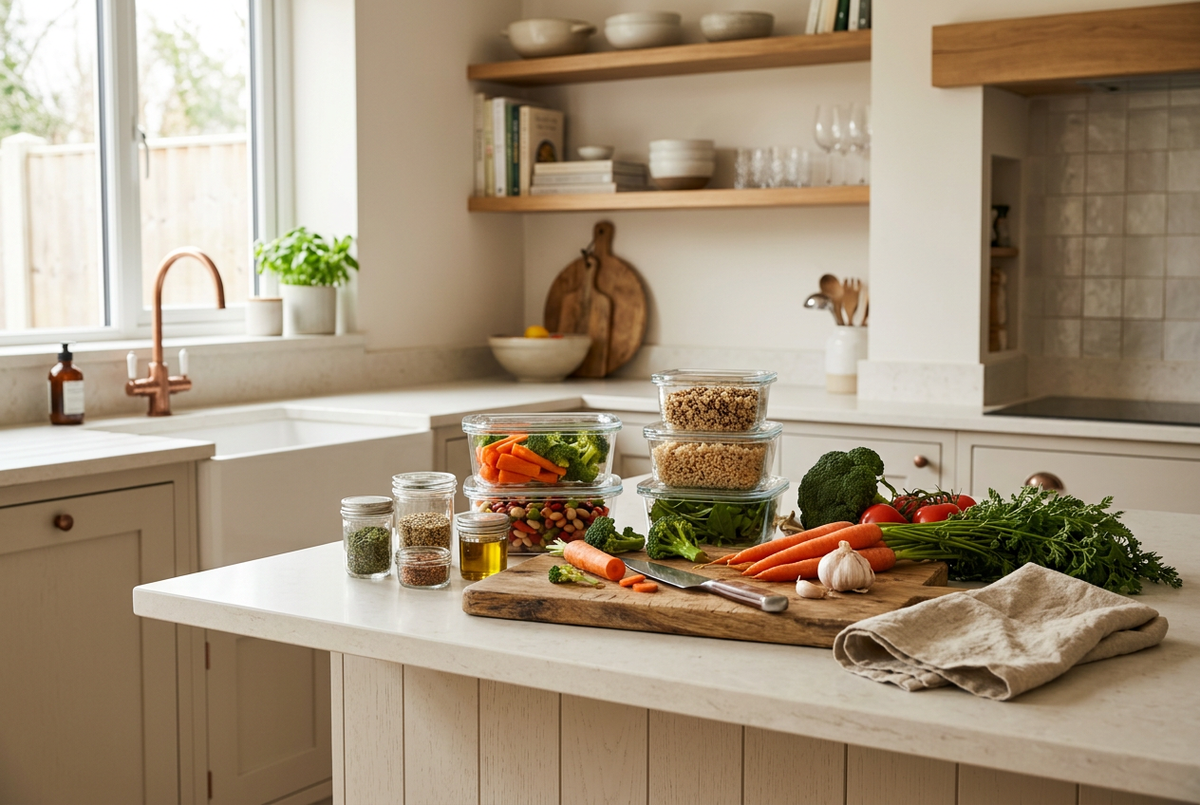
The ability to cook in bulk, store in glass, and reheat directly in the oven or microwave removes so many friction points from the process. No more decanting into oven dishes. No more wondering whether the plastic is safe to microwave. No more food going off because the seal wasn't airtight.
A solid meal prep setup might look like this:
- Sunday: Batch cook grains, roast vegetables, prep proteins. Store in individual glass containers, labelled and ready.
- Monday–Friday: Grab, reheat, eat. Zero stress, maximum efficiency.
Our Glass Meal Prep Containers are sized for exactly this kind of weekly rhythm — generous enough for a full meal, compact enough to stack four-deep in the fridge.
Glass Storage Beyond the Fridge
Glass food storage isn't just for leftovers and meal prep. Consider where else it can transform your kitchen:
The Pantry
Decanting dry goods — pasta, rice, lentils, oats, flours, sugars — into glass jars is one of the most impactful things you can do for your kitchen organisation. You can see exactly what you have at a glance, everything stays fresher longer, and it looks genuinely beautiful.
Our 10-Piece Glass Storage Jar Set is designed for this purpose — a cohesive collection that brings order and elegance to pantry shelves.
Batch-Made Sauces and Dressings
A homemade vinaigrette, a jar of pesto, or a batch of bolognese sauce all benefit enormously from glass storage. Glass won't react with acidic ingredients, won't absorb the smell of garlic or fish, and keeps everything tasting exactly as it should.
Fermentation and Preserving
If you're interested in home fermentation — kimchi, sauerkraut, kefir, kombucha — glass is essential. Wide-mouth glass jars allow easy access for packing and stirring; glass won't react with the acids produced during fermentation; and you can watch the process happen through the sides.
Caring for Your Glass Containers
Glass is low-maintenance, but a few simple habits will keep your containers in perfect condition for years.
- Avoid extreme temperature transitions with soda-lime glass — always let frozen glass come to room temperature before placing in the oven.
- Don't overfill when freezing — liquids expand as they freeze, and filling a container to the brim can crack the glass.
- Hand-wash lids if they contain rubber or silicone seals — dishwasher heat can degrade silicone over time.
- Check lids annually — replace any lids that have warped, cracked, or lost their seal.
- Store with lids off when empty to prevent moisture build-up and odours.
Making the Switch: Where to Start
If the idea of replacing all your plastic at once feels overwhelming, start small and build gradually. A good starter approach:
- Replace your most-used containers first — the ones you reach for every day for leftovers and packed lunches.
- Add a jar set for the pantry — this is an easy win with immediate visual impact.
- Build out your meal prep set over time as older plastic containers need replacing.
There's no need to throw out everything at once — the goal is progress, not perfection. But most people who make the switch find they want to do it faster than they expected, simply because the difference is so noticeable.
Explore the full range in our Storage collection to find the pieces that fit your kitchen and your cooking style.
Conclusion: Glass Is the Upgrade Your Kitchen Deserves
Glass food storage is one of those upgrades that improves your kitchen in multiple dimensions simultaneously — it's safer, more functional, more sustainable, and more beautiful than the plastic it replaces. Once you've made the switch, it's very hard to go back.
Whether you're a committed meal prepper looking for a more efficient system, a home cook wanting to reduce your environmental footprint, or simply someone who wants a fridge that looks as good as it functions — glass is the answer.
Browse the Culivra Storage collection and find the containers that will transform the way you think about your kitchen.

Leave a comment
This site is protected by hCaptcha and the hCaptcha Privacy Policy and Terms of Service apply.