
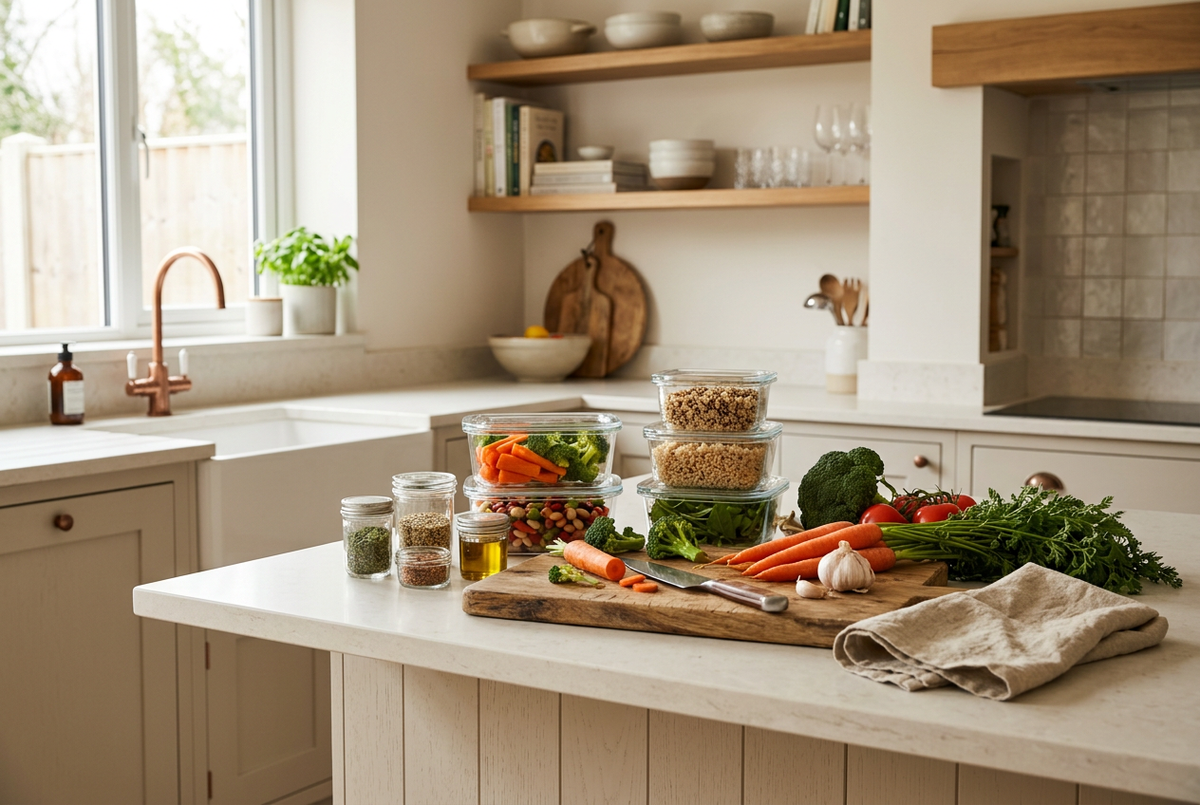
Meal prep for beginners should make life easier, not turn Sunday into another working day. You do not need a fridge filled with identical lunches, an elaborate spreadsheet or a completely new set of recipes. A useful meal prep routine starts with the food you already enjoy and a realistic understanding of your week.
Perhaps you want lunch ready before a busy morning. Perhaps you would like to cook dinner without searching through cupboards at seven o’clock. Or perhaps you simply want to buy ingredients with a plan instead of discovering forgotten vegetables behind the milk. All are good reasons to begin.
This guide walks through a flexible approach to planning, shopping, cooking and organising meals. You will learn how to start small, choose useful food storage containers and build a routine that leaves room for changing plans. The goal is less daily decision-making and a kitchen that helps you get on with your day.
What is meal prep?
Meal prep means preparing some part of a future meal in advance. That might be cooking a complete dish, portioning an ingredient, measuring spices or deciding what you will make before you go shopping. It does not have to mean preparing every breakfast, lunch and dinner for an entire week.
There are three useful approaches. Complete-meal preparation gives you finished portions that need little further work. Component preparation gives you separate ingredients to combine later. Batch cooking creates a larger quantity of one dish, with extra portions set aside for another meal.
Most people benefit from a mixture. You might prepare two lunches, organise ingredients for a stir-fry and cook an extra portion of a freezer-suitable dish. Choosing the approach that matches your habits is more useful than following somebody else’s perfect-looking routine.
Start with one problem you want to solve
Before buying ingredients or containers, identify the moment that regularly makes cooking difficult. Is it the morning rush? The gap between finishing work and eating dinner? The lack of appealing options when you open the fridge? Your answer should shape your first meal prep session.
If lunch is the problem, start with two planned lunches rather than seven days of food. If dinner is the problem, prepare a few components that reduce the number of tasks you need to complete in the evening. If you often buy ingredients twice, begin with a cupboard check and a clearer shopping list.
Keep the first week deliberately manageable. One successful habit is easier to repeat than an ambitious plan you abandon halfway through. Once you know which preparation genuinely saves effort, you can expand it without adding unnecessary work.
Build a weekly meal plan around your actual diary
A good weekly meal plan starts with your schedule, not a recipe collection. Look at the evenings when you will be home, the lunches you need to take with you and any meals you already expect to eat elsewhere. Leave space for changes instead of assigning a complicated dish to every slot.
Next, choose two or three meals with overlapping ingredients. A bag of carrots can contribute to a tray of roasted vegetables, a simple soup and a crunchy lunch accompaniment. Peppers might work in a stir-fry and a wrap. This is ingredient planning, not a requirement to eat the same finished meal repeatedly.
Give each meal a realistic level of effort. A night with limited time needs something straightforward, while a quieter evening can accommodate more cooking. Keep one flexible option available for the day when your plan changes. Ingredients for a simple cupboard-based dinner can be more useful than another rigidly assigned recipe.
Check your kitchen before writing the shopping list
Take a quick look through the fridge, freezer and cupboards before shopping. Note what is already available and which ingredients would be useful to include in your next meals. Check labels and condition rather than assuming everything you find is suitable to use.
Make your list by meal, then combine repeated ingredients. If two dishes need onions, write one total quantity rather than leaving yourself to calculate it in the shop. Add any breakfast or snack ingredients you actually need, but avoid buying extras simply because they look like meal prep essentials.
It also helps to check your equipment. Do you have a suitable pan, a clear work surface and enough containers for the portions you intend to prepare? Discovering a missing lid after cooking is an avoidable frustration. Prepare the storage before you prepare the food.
Choose food storage containers that suit your routine
The best meal prep containers for your household are the ones that fit the portions, storage space and transport needs you have. A large container might be useful for a shared component, while smaller containers can keep toppings or separate ingredients organised.
Think about where each container will be used. Will it stay in the fridge, travel in a lunch bag or hold dry cupboard ingredients? Check the product instructions for suitability, cleaning and temperature limits. Do not assume that a container’s lid has the same heating permissions as its base.
Culivra’s Glass Meal Prep Containers are an option to explore for prepared meals. Their product description lists borosilicate glass, four locking clips and a silicone gasket. Before using any container for freezing or reheating, follow its specific instructions, including guidance for the lid and changes in temperature.
Glass is useful when you want to see what is inside without opening each container. However, portability, weight and cupboard space also matter. Choose a manageable set for your first routine instead of buying more containers than you can comfortably store or use.
Make dry ingredients easier to find
Meal preparation often slows down before cooking even begins. You search for the pasta, discover two open packets and realise you cannot tell how much is left. Keeping everyday dry ingredients visible makes the planning stage more straightforward.
For larger cupboard staples, explore Culivra’s Airtight Food Storage Container set. The product description includes four 2.8-litre containers with a clear, stackable design. Match the container to the ingredient and your shelf dimensions rather than organising purely for appearance.
Smaller ingredients need a different approach. The 10-Piece Glass Storage Jar Set includes five 250ml jars and five 350ml jars, making it worth considering for smaller quantities of everyday dry goods. Keep ingredient names, dates and relevant original packaging information accessible when transferring food.
Do not feel you have to decant everything. Some ingredients are easier to keep in their original packaging. The aim is to find what you need, understand what you have and avoid buying duplicates, not to create a cupboard that requires constant maintenance.
Use components to create variety
Component preparation is a helpful starting point if the thought of eating identical lunches puts you off meal prep. Instead of building five complete dishes, prepare a small selection of ingredients that can contribute to different meals.
For example, you might prepare vegetables for one recipe, mix a dressing and portion a dry ingredient ready for cooking. Later, you can combine those components in different ways. A wrap, a warm bowl and a plate with separate sides can feel quite different even when they share ingredients.
Keep components separate when that suits their texture. A crunchy topping does not always benefit from sitting in a dressing, and a sauce can be easier to adjust when added at serving. Consider how each ingredient behaves rather than putting everything into one container automatically.
Variety can come from the final touches. Herbs, a different dressing or a contrasting accompaniment can change the character of a meal without requiring another full cooking session. Start with flavours you already enjoy, then experiment once your basic routine feels comfortable.
Plan a focused preparation session
A useful preparation session has a beginning and an end. Decide what you intend to complete before you start: perhaps one batch recipe, two lunches and an organised shelf of ingredients. You do not need to keep adding tasks simply because you are already in the kitchen.
Read the recipes first and identify which tasks take longest. Clear a work area, gather utensils and check that your containers are clean and ready. If a dish needs a long cooking stage, use appropriate waiting time for simpler tasks, while keeping track of everything on the hob or in the oven.
Work in a sensible order and avoid crowding the kitchen with too many simultaneous dishes. A calmer session makes it easier to notice when food needs attention and to keep raw and ready-to-eat ingredients appropriately separated.
Finish by putting ingredients away, labelling prepared items and cleaning the surfaces and equipment you have used. Ending with a functional kitchen matters. Meal prep should not save time tomorrow by leaving you with an unmanageable pile of washing-up today.
A beginner-friendly example you can adapt
Imagine a week with two packed lunches, three dinners at home and one evening when you expect very little time to cook. Instead of preparing everything in advance, choose one main recipe to make in extra quantity and two quick dinners that share some ingredients.
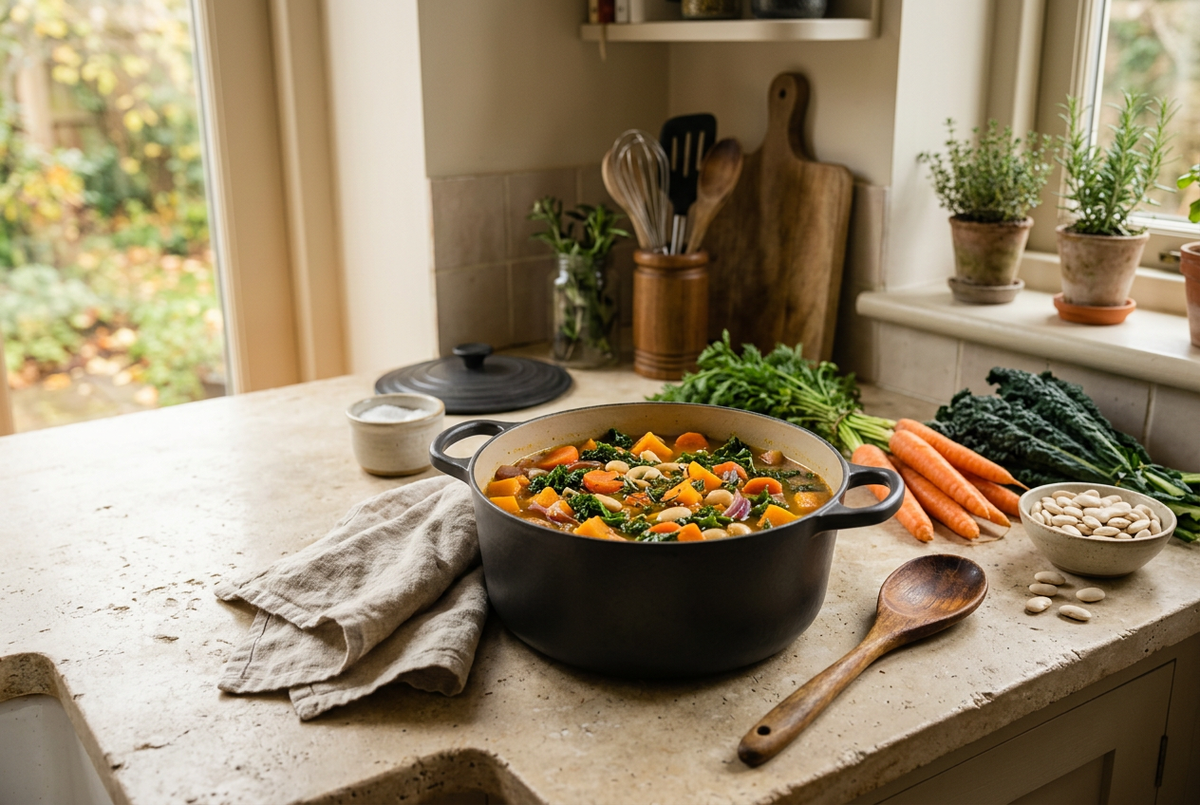
Your main recipe could be a vegetable-based stew or another familiar dish suited to your needs. One quick dinner might use vegetables in a stir-fry, while the other uses a few of the same ingredients in wraps. Select recipes and storage arrangements appropriate to the ingredients you choose.
During your preparation session, organise the ingredients, make the main recipe and prepare only those components that benefit from being handled ahead. Set aside the portions intended for later, following suitable cooling and storage guidance. Leave delicate ingredients for the day you will use them.
This example is intentionally flexible. It is not a fixed storage schedule or a promise that every dish will keep for the same period. The purpose is to show how a small amount of preparation can support several meals without committing you to a fridge full of finished food.
Keep food safety part of the plan
Food storage is not just about choosing tidy containers. Ingredients, preparation methods and temperatures affect how food should be handled. Follow current food-safety guidance and the instructions on packaging rather than applying one storage rule to every meal.
For UK guidance, consult the Food Standards Agency when deciding how to cool, store, freeze and reheat prepared food. Different dishes may need different treatment, so check advice relevant to what you are making. An airtight lid does not make food safe indefinitely.
Label containers clearly so you know what they hold and when the contents were prepared. Keep allergen information available where relevant, especially if you are preparing meals for other people. A container that looks similar to another is not enough to identify its ingredients.
If you are unsure whether a prepared item has been handled or stored safely, do not rely on the container’s appearance as reassurance. Build your meal plan around guidance you can follow consistently. Good organisation supports food safety, but it does not replace it.
Organise the fridge around what you need next
Once the food is prepared and appropriately stored, make it easy to find. Keep labels facing outward and group related items where practical. A planned lunch should not disappear behind unrelated shopping before you have a chance to use it.
Arrange the fridge in a way that also respects food-safety guidance, including appropriate separation of raw and ready-to-eat food. Avoid packing it so tightly that you cannot see what is inside or use it as intended. Organisation is useful only when the storage arrangement remains practical.
Make a brief note of the meals or components available. This can be a simple message on your phone rather than another kitchen accessory. When somebody asks what there is to eat, you have an answer without opening every container.
Check your plan again midweek. If your diary changes, adjust upcoming meals and consult appropriate guidance for anything you need to store differently. Flexibility is easier when you know what you have and when it was prepared.
Common meal prep mistakes to avoid
The first common mistake is preparing too much. It is tempting to solve every meal in one session, but a smaller plan teaches you more about your household’s appetite and preferences. Increase quantities when experience supports it, not because a photograph suggests you should.
The second is choosing recipes you do not particularly enjoy. Meal prep cannot turn an unappealing lunch into an appealing one simply by putting it in a matching container. Begin with familiar meals and make small changes that improve convenience.
The third is ignoring texture. Some ingredients work better freshly assembled, and others should stay separate until serving. Think about the finished experience, not just how neat the portions look when you pack them.
The fourth is creating an equipment-heavy routine. You may eventually want additional cookware or containers, but start by using what already works. Buy to solve a specific problem, such as a missing portion size, rather than to imitate somebody else’s kitchen.
How to make the habit stick
Choose a regular planning moment that fits your week. It might be a short check before shopping or a conversation about the next few days. The important part is consistency, not whether your preparation happens on a Sunday.
After each week, ask what helped and what went unused. Did preparing lunch make mornings easier? Did a particular ingredient appear in too many meals? Was the portion size right? These observations are more useful than judging whether the routine looked impressive.
Keep a small collection of reliable meals that share ingredients and require manageable effort. Repeating successful recipes reduces planning time, while changing one element keeps the routine interesting. Over time, you will develop a system based on your own kitchen.
Allow yourself to have weeks when you prepare less. Meal prep is a tool, not a test. Even checking the cupboards and planning two dinners can be a worthwhile step when your schedule is busy.
Meal prep for beginners: frequently asked questions
Do I need to prepare a whole week at once?
No. Start with one or two meals or a few useful components. How far ahead you prepare depends on the food, your schedule and appropriate storage guidance. A shorter routine can be easier to manage and adjust.
Are glass containers suitable for meal prep?
Glass containers can be a practical option, particularly when visibility matters. Suitability for freezing, heating and transport depends on the specific product. Check the instructions for both the container and its lid before use.
What should I buy first?
Start with your existing equipment. If you need something additional, choose it to solve a clear problem: a suitable lunch container, storage for a frequently used dry ingredient or a pan that fits your usual recipe quantities. There is no essential shopping list that suits everyone.
How do I avoid boring lunches?
Use flexible components, keep suitable toppings separate and change the finishing flavours. Plan meals you genuinely enjoy rather than relying on a single dish for every lunch. A little variation can be easier than cooking several unrelated recipes.
Can meal prep help me waste less food?
A clear plan can help you buy more deliberately and notice ingredients you already own. The outcome depends on your habits, quantities and storage practices. Begin with realistic portions, then adjust the next shopping list using what you learn.
Make your next week easier, one meal at a time
The simplest way to begin meal prep is to choose one meal you want to make easier, check your kitchen and plan a modest preparation session. Keep the routine flexible, follow appropriate food-safety guidance and use containers that suit the way you actually cook.
If prepared lunches are your starting point, explore Culivra’s glass meal prep containers. If cupboard organisation is the bigger challenge, consider the airtight food storage containers or glass storage jar set for ingredients you use regularly.
You do not need to transform your whole kitchen this weekend. A couple of planned meals, clearly labelled ingredients and less searching through cupboards are a useful beginning. Build from what works, and let your meal prep routine earn its place in your week.

Leave a comment
This site is protected by hCaptcha and the hCaptcha Privacy Policy and Terms of Service apply.