
Updated on: 2026-11-12
This guide explains what granite effect nonstick cookware is, how it performs, and how to choose the right set for everyday cooking. You will learn practical care steps that help preserve release quality and reduce sticking over time. The article also covers heat habits, utensil choices, and cleaning methods that protect the coating. By the end, you will have a clear plan for selecting, using, and maintaining a granite-inspired nonstick surface.
1. What Granite Effect Nonstick Cookware Means
2. Why It Stands Out for Home Cooking
3. How the Coating Behavior Affects Cooking Results
4. Key Advantages of Granite Effect Nonstick Cookware
5. Quick Tips for Better Release and Easier Cleanup
6. How to Choose a Granite Effect Nonstick Set
7. Pairing with Other Cookware
What Granite Effect Nonstick Cookware Means
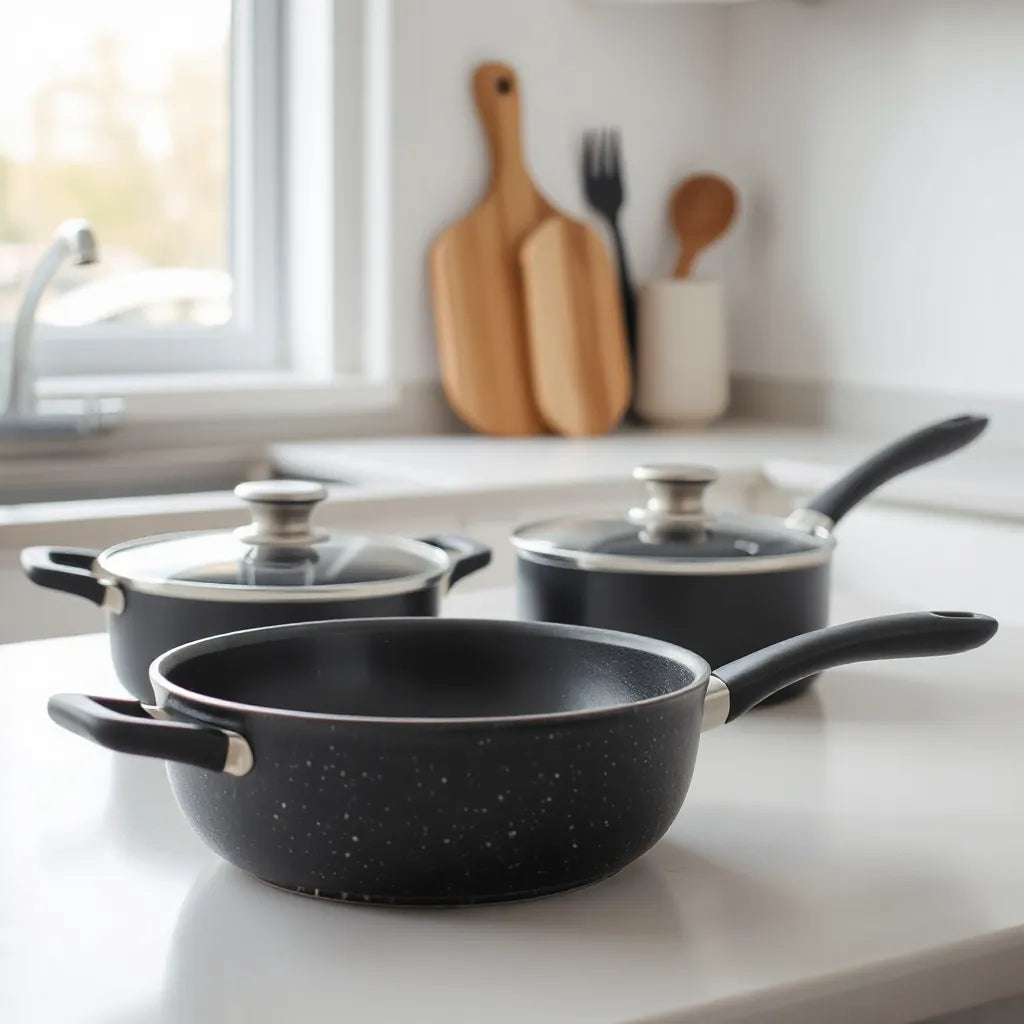
Granite effect nonstick cookware is a category of nonstick pans and cookware designed to give food a better release than traditional bare metal finishes. The “granite effect” term usually refers to a textured, speckled, or mottled coating appearance that resembles natural stone. This pattern is not cosmetic alone. In many designs, it also supports a more uniform coating layer and helps distribute heat across the cooking surface.
Most granite effect cookware uses a nonstick polymer coating reinforced for durability. The coating sits on an aluminum or similar base with engineered layers that improve heat conduction. The final result is a cooking surface that supports lighter oil use, faster everyday cooking, and easier cleaning for foods that typically cling to cookware.

Textured coating pattern, even heat spread, gentle food release
Why It Stands Out for Home Cooking
When you cook weeknights, you often prioritize speed, predictable results, and minimal cleanup. Granite effect nonstick cookware is designed for that rhythm. The surface is made for lower-friction contact between food and pan, which can reduce sticking when you cook eggs, pancakes, fish, and delicate sauces.
Another advantage is consistency. Many shoppers choose nonstick cookware after experiencing uneven heating or difficult release from older pans. A well-built nonstick base with stable heat transfer can help browning look more controlled without requiring high temperatures that can stress coatings.
How the Coating Behavior Affects Cooking Results
Nonstick performance depends on how the coating behaves under heat and how you interact with the surface. Granite effect finishes are intended to keep the nonstick layer intact through normal cooking. However, performance can vary based on temperature settings and utensil choices.
At moderate temperatures, food often releases more easily. At very high temperatures, the coating can degrade faster, which may lead to increased sticking and a duller surface. You also need to consider how sauces behave. Watery liquids can help create steam that lifts food from the surface, while thick sugar-based sauces can caramelize quickly. With nonstick, the goal is control: use heat levels that suit the food rather than chasing intense flame or maximum settings.
Utensils matter as well. Soft utensils help maintain surface integrity. Abrasive tools, metal scraping, and aggressive scrubbing can shorten the useful life of the coating.
Key Advantages of Granite Effect Nonstick Cookware
- Improved food release for everyday items: Eggs, thin omelettes, and light proteins usually slide more easily with less oil.
- Efficient cooking with moderate heat: Many designs heat evenly enough for consistent simmering and sautéing.
- Texture that supports visual heat distribution: The speckled appearance can align with a more structured coating layout.
- Streamlined cleanup: Less residue often means faster rinsing and easier wipe-down.
- Lower reliance on heavy oil: A nonstick surface can help reduce added fats for daily meals.
Quick Tips for Better Release and Easier Cleanup
- Preheat briefly, then cook on steady medium heat rather than maximum heat.
- Use a small amount of oil only when needed, especially for low-fat recipes.
- Choose silicone, wood, or nylon utensils to protect the coating.
- Let pans cool before washing. Hot thermal shock can be harsh on coatings.
- Soak stuck food for a short period before gently scrubbing.
If you are replacing an older pan system, start with the pieces you use most. A frying skillet and a saucepan often cover a large share of daily meals.

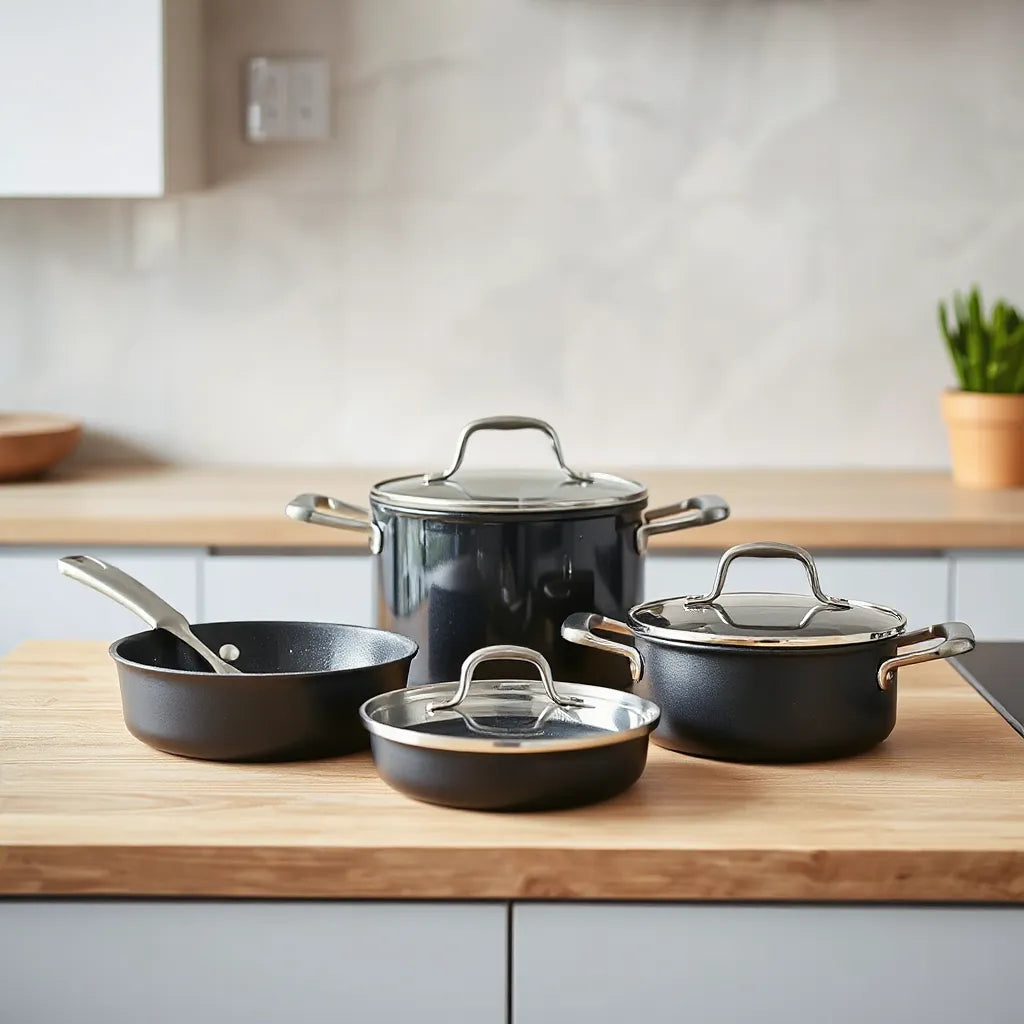
Kitchen heat control, gentle utensil contact, simple rinse cleanup
How to Choose a Granite Effect Nonstick Set
Selecting granite effect nonstick cookware is not only about appearance. You should review build quality, pan shapes, and cooking coverage. Consider the following checklist before you commit.
1) Match pan sizes to your meal habits
A set that includes multiple diameters can be more useful than a one-size pan. For example, a 20 cm to 24 cm skillet commonly fits personal meals and small family portions. A larger pan supports searing batches of vegetables or cooking multiple servings of pasta sauce.
2) Evaluate coatings and base construction
Look for cookware sets that specify multi-layer construction and stable base materials. Thick bases can reduce hot spots and improve control. Coating thickness is not always stated, but you can often infer quality from uniform finish and well-finished edges.
3) Check lids and steam management
If your set includes lids, ensure they fit securely. Lids improve simmering consistency by controlling moisture loss. Glass lids also provide visibility when reducing sauces or monitoring simmer levels.
4) Confirm compatibility with your cooktop
Induction, gas, and electric cooktops behave differently. Many nonstick sets support common home cooktops, but you should verify compatibility with your specific heat source.
5) Consider long-term use, not only initial performance
Granite effect nonstick cookware is a practical everyday tool. Choose a set you can maintain. Proper heating habits and gentle cleaning routines will preserve the release quality longer than aggressive use.
Nonstick Cookware Set

View Nonstick Cookware Set
Pairing with Other Cookware
Nonstick cookware performs best for low-stick, everyday cooking. For techniques that require high heat, heavy browning, or metal-friendly scraping, pairing with other cookware can be a smarter long-term strategy. This approach reduces stress on your nonstick layer while still allowing variety in your cooking methods.
For example, you can pair your nonstick pans with stainless steel for tasks like deglazing, searing at higher temperatures, and preparing dishes that benefit from a browned base. If you frequently stir-fry or cook with a tossing motion, a wok can add versatility. For budget-conscious meal planning, a single high-performance wok can cover fast cooking needs that do not require nonstick release.
Explore complementary options on the Culivra site, such as a stainless steel frying pan for searing and browning, or a stainless steel wok for high-heat stir-fry styles.
Care and Longevity: Protecting the Nonstick Layer
Coatings last longer when they are treated as cooking surfaces that prefer steady heat and gentle handling. The goal is to prevent abrasion and avoid thermal stress.
Cleaning habits that preserve release quality
- Use warm water and a soft sponge after meals.
- Avoid scouring pads and metal brushes.
- For light residue, soak briefly and then wipe clean.
- Dry the pan promptly to reduce water spotting.
Heat control is the foundation
One of the most common causes of early wear is cooking at temperatures that are higher than necessary. Nonstick performs reliably at moderate settings, so you can typically achieve good results without maximal heat. If a recipe calls for intense browning, consider finishing in a different pan or lowering the temperature after initial sear.
Utensils and stacking practices
Use utensils that do not scratch. Avoid scraping techniques that lift or damage the coating. Also, store pans with protective liners or soft layers between pieces. Stacking without protection can lead to surface abrasion.
Signs it is time to replace
Even with careful use, coatings can wear over time. If you notice persistent sticking, a rough surface texture that changes significantly, or uneven performance across the pan, replacing the cookware may improve cooking consistency.
For shoppers who want a more complete system, reviewing a full nonstick cookware set can help you align lid sizes and cooking coverage across your routine.
Summary and Next Steps
Granite effect nonstick cookware is a practical solution for everyday meals that require dependable release and simple cleanup. When you understand how the coating responds to heat, you can cook with confidence while reducing stress on the surface. Choose a set based on meal habits, pan coverage, and cooktop compatibility, then protect the coating with gentle cleaning and controlled temperatures.
Next steps are straightforward: review your cooking routines, identify which pieces you use most, and commit to a maintenance routine that matches nonstick best practices. If you want additional planning for sauce work and simmering, consider pairing your nonstick set with a nonstick stock pot with glass lid for one-pot cooking.
Q&A
Is granite effect nonstick cookware suitable for daily cooking?
Yes. It is designed for routine meal preparation such as sautéing vegetables, cooking eggs, and reheating sauces. With moderate heat and gentle utensils, it supports consistent release and fast cleanup, making it a strong choice for frequent use.
What temperature should be used with granite effect nonstick cookware?
Moderate heat is the most reliable approach. High heat can stress the coating and shorten its lifespan. If you need browning, start with controlled heat and adjust gradually rather than using the highest setting immediately.
Can granite effect nonstick cookware be cleaned in the dishwasher?
It is best to follow the manufacturer guidance for your specific set. In general, hand washing with a soft sponge helps preserve surface finish more effectively. Dishwasher heat, detergents, and motion can be harsher over time.
How do I prevent food from sticking more over time?
Focus on three habits: use moderate temperatures, avoid metal scraping, and clean gently with warm water. If food residue builds up, a short soak and a soft wipe can restore cleanliness without abrasive scrubbing.
About the Author
Culivra is a home cookware brand focused on practical performance and careful design. The author team contributes expertise in cookware selection, cooking surface behavior, and day-to-day maintenance guidance. This article is written to help you choose granite effect nonstick cookware with clarity and use it in a way that supports long-lasting results. Thank you for reading, and may your meals be consistent, convenient, and well controlled.
Disclaimer: This article is for general informational purposes only. Always follow the care instructions provided with your specific cookware set, and replace items if they show signs of wear or reduced performance.

Leave a comment
This site is protected by hCaptcha and the hCaptcha Privacy Policy and Terms of Service apply.