
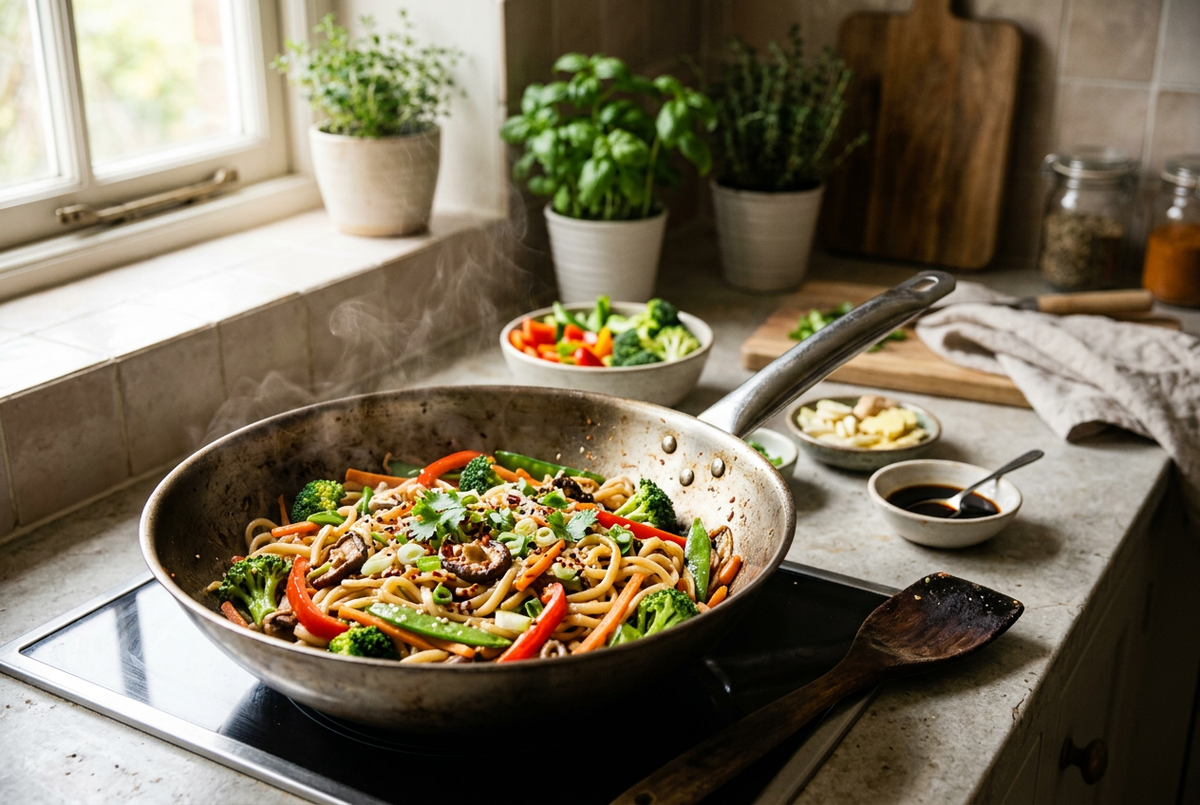
Learning how to stir fry at home is one of the most useful skills you can bring to everyday cooking. A handful of vegetables, a suitable pan and a simple sauce can become a colourful dinner without a complicated recipe. The method is flexible enough for busy evenings, yet rewarding enough to keep improving each time you cook.
The difference between a lively stir fry and a watery pan of vegetables usually comes down to preparation, batch size and timing. You do not need to copy the intense heat of a restaurant kitchen. Instead, you need to understand what your own hob and cookware can comfortably handle, then organise the ingredients around them.
This guide explains how to choose a pan, prepare vegetables, build a balanced sauce and bring everything together. You will also find a flexible two-person recipe, troubleshooting advice and answers to common questions. Whether you prefer noodles, rice or a vegetable-led supper, these principles give you a reliable starting point.
What is stir frying?
Stir frying is a method of cooking relatively small pieces of food quickly in a hot pan with a little oil. Ingredients are moved regularly so they cook evenly, while different components are often added in stages. The aim is not simply to keep stirring: it is to manage heat, moisture and contact with the cooking surface.
It is also worth remembering that stir frying belongs to a wide range of cooking traditions. There is no single sauce, vegetable combination or noodle that defines every stir fry. This article offers a practical home-cooking framework rather than presenting one adaptable recipe as the definitive version of a particular regional dish.
At home, a good result often means cooking smaller batches rather than turning the hob to its highest setting. A domestic burner can lose heat when a large quantity of cold food is added. Work with that limitation and your ingredients are more likely to cook cleanly instead of sitting in released liquid.
Choose a wok or frying pan that suits your kitchen
A wok provides room for moving ingredients and bringing cooked food up the sides while the centre remains the main cooking area. A wide frying pan is also a useful option, particularly when you are cooking a modest portion and want a broad area of direct contact with the hob.
Before choosing either, check the manufacturer's guidance on hob compatibility, oil use and heat settings. The best pan for you is one that works with your cooking surface, feels comfortable to handle and offers enough room for the amount you actually cook. A very large pan is not automatically better on a small burner.
If you are exploring wok cooking, take a look at Culivra's Uncoated Stainless Steel Wok. For a frying-pan approach, browse the 304 Stainless Steel Frying Pan. Check each product's current details before deciding which size and format best fit your kitchen.
Do not assume that every pan should be heated in the same way. In particular, avoid applying advice intended for uncoated cookware to a coated pan. Follow the care instructions supplied with your cookware and never leave heating oil unattended. Confident cooking starts with controlled heat, not a smoking kitchen.
Prepare everything before you switch on the hob
A stir fry moves quickly once cooking begins. If you are still chopping garlic while the vegetables are ready for sauce, it is easy to lose control of the sequence. Set out the ingredients in the order you will need them, with the sauce mixed and a clean serving dish nearby.
Wash vegetables, then drain and dry them well. Water clinging to broccoli florets or sliced peppers adds moisture to the pan and can encourage steaming. You do not need to make every ingredient perfectly dry, but a bowl of dripping vegetables makes the cooking process harder than it needs to be.
Cut ingredients into pieces that cook at a similar pace. Carrots usually benefit from thin slices or small matchsticks, while tender leaves can stay larger. Separate thick stalks from leafy tops so you can add them at different moments. Consistent cutting matters more than making everything look identical.
Keep raw meat and its preparation tools separate from vegetables and cooked ingredients. If you include meat, follow the relevant food-safety guidance and make sure it is fully cooked before serving. Colour alone is not a dependable doneness test; use a suitable food thermometer where appropriate.
Build your stir fry around a simple structure
A useful stir fry has four parts: a main ingredient, vegetables, aromatics and sauce. Rice or noodles can sit alongside or become part of the finished dish. Starting with this structure makes it easier to use what you have without buying a long list of ingredients for one meal.
For the main ingredient, choose something that suits your preferences and cooking confidence. Firm tofu, mushrooms, chicken, beef or prawns all need different handling, so avoid treating them as interchangeable on the same timer. For a first attempt, a vegetable stir fry with firm tofu is a straightforward way to focus on the method.
Choose two or three vegetables rather than emptying the entire fridge into the pan. Broccoli, pepper and carrot offer a useful mix of texture and colour. Cabbage, green beans, mushrooms, courgette and pak choi can also work well when cut and added with their cooking needs in mind.
Garlic, ginger and spring onions can provide the aromatic base. Prepare small quantities to begin with; you can adjust the balance in later meals. Keep a little sliced spring onion aside for finishing, so the final dish has something fresh as well as ingredients cooked into the sauce.
A simple stir-fry sauce for two people
For a flexible starting sauce, mix two tablespoons of reduced-salt soy sauce, three tablespoons of water, one teaspoon of rice vinegar and one teaspoon of sugar. If you want a lightly thickened finish, whisk in one level teaspoon of cornflour. This is a starting balance, not a rule for every combination.
Taste the mixture before it touches raw ingredients. You are looking for savouriness with a little acidity and sweetness, rather than a sauce that tastes strongly sweet or sharply sour. Different brands of soy sauce vary, so adjust with a little more water if the mixture is too salty for your preference.
You can add chilli flakes, a small amount of grated ginger or another seasoning you enjoy. A few drops of toasted sesame oil can be added near the end for flavour if suitable for your diet. Check labels for allergens and dietary requirements, including wheat in many soy sauces and sesame in some finishing oils.
Cornflour settles while the sauce stands, so stir it again immediately before adding it to the pan. Once added, let the sauce cook and thicken rather than serving it as a raw slurry. If the finished coating becomes too thick, add a small splash of water and stir through.
How to stir fry step by step
1. Get your rice or noodles ready
If you are serving rice separately, organise it so it is ready when the stir fry is finished. For noodles, follow the packet instructions, then drain thoroughly. Some noodles need soaking, others need boiling, and ready-to-wok varieties have their own directions. Treat the packet as the starting point rather than using one method for every noodle.
Avoid leaving cooked noodles sitting in a deep pool of water. If they are clumped together, loosen them gently before they go into the pan. Trying to separate a dense noodle block while delicate vegetables continue cooking often leads to broken noodles and overdone greens.
2. Heat the pan with control
Prepare your pan according to its care instructions, then add an appropriate cooking oil. Use a moderate amount that coats the cooking area without creating a deep pool. Choose an oil suitable for your cooking temperature and avoid heating it until it smokes heavily.
You want the ingredients to sizzle when they enter, but there is no prize for using maximum heat. Start within the cookware's recommended range and adjust as you learn how your hob behaves. If the oil begins smoking excessively, reduce the heat safely rather than pressing ahead.
3. Cook the main ingredient in manageable batches
If your meal includes tofu or another main ingredient, cook it first when that suits the recipe. Spread it out rather than piling everything into the middle. Let it make contact with the pan before moving it, and turn the pieces as needed for an even result.
Transfer cooked pieces to a clean plate while you work on the vegetables. This prevents them from overcooking during the next stage. For meat or seafood, make sure the complete cooking process reaches a safe result, and never reuse a plate contaminated by raw ingredients for finished food.
4. Add vegetables in order of cooking time
Begin with firmer vegetables such as thinly sliced carrot and small broccoli pieces. Stir and turn them so they cook evenly. Add peppers or other quicker-cooking vegetables afterwards, followed by delicate leaves closer to the end. The exact timing depends on piece size, pan temperature and how tender you like them.
If thick vegetables remain too firm while their edges colour quickly, a small splash of water can help them soften. That is different from flooding the pan. Use moisture deliberately, then allow excess liquid to evaporate before bringing the rest of the meal together.
5. Add aromatics without burning them
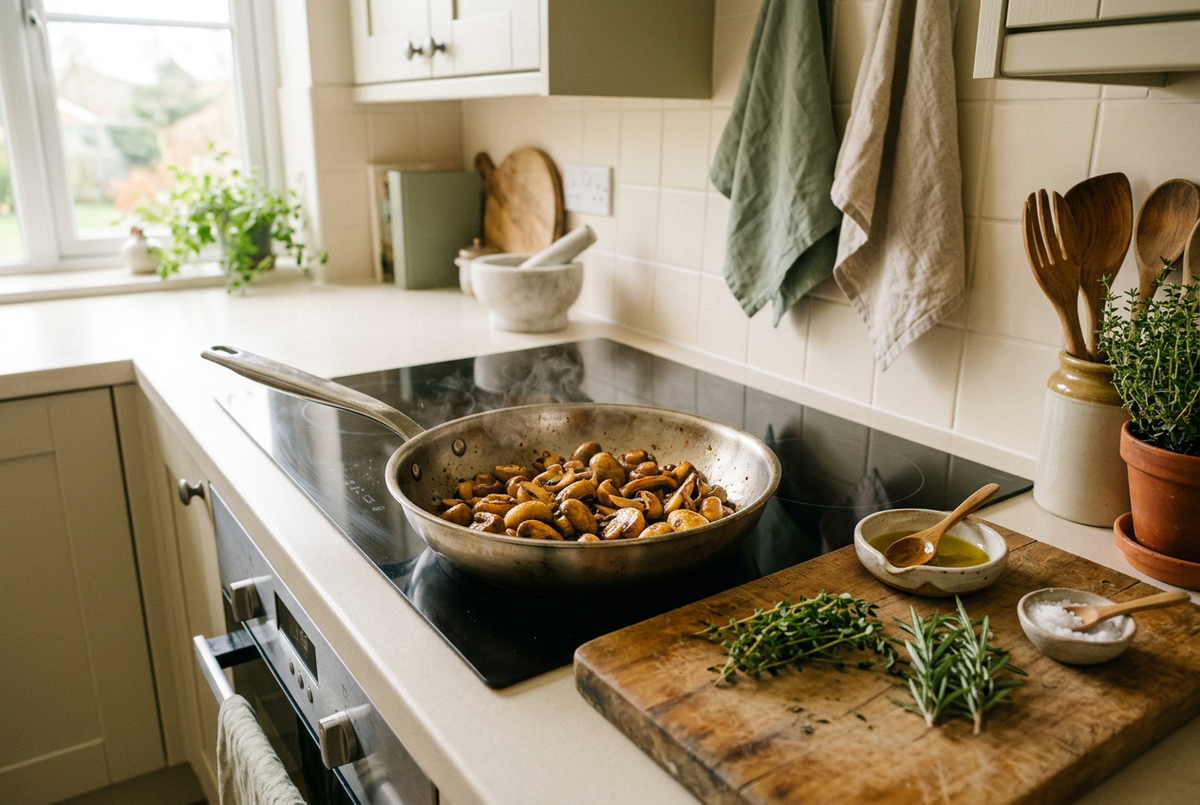
Finely chopped garlic can burn quickly, especially on an exposed hot patch of metal. Add garlic and ginger when you can stir them through promptly, adjusting the heat as needed. They should smell fragrant rather than becoming dark and bitter before the other ingredients are ready.
Some recipes begin with aromatics, while others introduce them later. For a beginner working on a domestic hob, adding them once the main vegetable cooking is underway can offer more control. The important thing is to understand why you are choosing an order, not to copy it mechanically.
6. Bring everything together with the sauce
Return the cooked main ingredient to the pan. Add drained noodles now if you are making a noodle stir fry, then pour in the freshly stirred sauce. Toss or turn gently until everything is hot and coated, allowing any cornflour in the sauce to cook and thicken.
Stop once the dish is ready. Extra minutes in the pan will not necessarily improve the flavour, but they can soften vegetables and make noodles fragile. Taste with a clean spoon, adjust carefully and finish with the reserved spring onions or another suitable garnish.
An easy vegetable and tofu stir fry to try
For two servings, start with approximately 200 to 250 grams of firm tofu, one pepper, one small carrot, a small head of broccoli, two spring onions, one garlic clove and a small piece of fresh ginger. Add two portions of noodles according to the packet serving guidance, plus the sauce described above.
Drain the tofu and pat it dry before cutting it into bite-sized pieces. Slice the pepper, cut the carrot thinly and divide the broccoli into small florets. Slice the spring onions, keeping the greener tops separate, then finely chop or grate the garlic and ginger.
Prepare the noodles as directed and drain them well. Cook the tofu in a little oil in your suitable pan, working in batches if necessary, then move it to a clean plate. Cook the carrot and broccoli first, followed by the pepper and the paler spring-onion pieces.
When the vegetables are approaching your preferred tenderness, add the garlic and ginger and stir briefly. Return the tofu, add the noodles and pour in the stirred sauce. Turn everything together until piping hot and lightly coated, then finish with the spring-onion greens and serve promptly.
Use the recipe as practice rather than a fixed shopping list. Next time, swap the pepper for cabbage or replace part of the broccoli with mushrooms. Change one or two things at a time so you can understand which combinations and cooking adjustments work best for you.
Why is my stir fry watery?
The most common causes are overcrowding, wet ingredients and more sauce than the pan can reduce. Vegetables release moisture as they cook. If too many go in together, the temperature drops and that liquid collects faster than it evaporates. The result is closer to a simmer than a stir fry.
Reduce the quantity in the pan and cook in batches. Dry washed vegetables more thoroughly, drain noodles properly and avoid tipping in excess marinade. If using frozen vegetables, follow their cooking instructions and account for the extra moisture they can release rather than assuming they behave exactly like fresh ones.
Also look at the sauce quantity. A stir fry usually needs enough to coat the ingredients, not enough to submerge them. Add part of the sauce first if you are unsure, then judge the result. It is easier to add another spoonful than to remove a puddle from a nearly finished dinner.
Why do ingredients stick or burn?
Sticking can result from unsuitable heat, excess surface moisture, moving ingredients too soon or using cookware in a way that does not suit its surface. Check the pan instructions first. Then concentrate on drying ingredients, controlling the heat and allowing appropriate contact with the cooking surface.
Burning often happens when finely chopped aromatics or sugary sauces spend too long against a very hot pan. Lower the heat when necessary and keep the next stage ready to go. A little browning can add flavour, but blackened garlic and scorched sauce are not useful shortcuts to a restaurant-style result.
If residue starts to burn, do not keep scraping it through everything and hope the sauce will hide it. Pause and assess whether you should transfer usable ingredients to a clean pan. Good judgement is more valuable than finishing the entire meal in one vessel at any cost.
Make weekday preparation easier
You can simplify dinner by washing and cutting suitable vegetables in advance, keeping them refrigerated in appropriate containers. Store components separately when they have different moisture levels or cooking needs. A little organisation is helpful; preparing every ingredient days ahead regardless of its condition is not.
Culivra's Glass Meal Prep Containers are worth exploring for organising prepared ingredients and portions. Check the product's current use and care instructions, including guidance for lids and temperature changes, rather than assuming every component can be used in the same way.
For dry ingredients, keep noodles, rice and seasonings organised so you can see what you already have. The Airtight Food Storage Container and 10-Piece Glass Storage Jar Set offer different storage formats to explore. Choose containers around ingredient quantities and available cupboard space.
If you save cooked leftovers, cool and refrigerate them promptly and follow current food-safety guidance for storage and reheating. Rice needs particular care. Do not judge whether leftovers are safe solely by smell, and avoid repeatedly cooling and reheating the same batch.
Frequently asked questions about stir frying
Can you make a stir fry without a wok?
Yes. A suitable wide frying pan can work well for a home stir fry. The key is to keep the quantity manageable and follow the pan's heat guidance. If ingredients are piled deeply on top of each other, divide the cooking into batches rather than relying on the pan shape to solve overcrowding.
Should vegetables be cooked before adding noodles?
Usually, the vegetables should be close to their desired texture before prepared noodles are added. This lets you focus on coating and heating the noodles without leaving them in the pan for the entire vegetable cooking time. Always account for the instructions on the particular noodles you are using.
Do you need a bottled stir-fry sauce?
No. A simple mixture of soy sauce, water, acidity and a little sweetness can provide a useful starting point. Bottled sauces are convenient too, but taste and concentration vary. Read the label, check allergens and start with a sensible quantity rather than automatically using the whole bottle.
Can a stir fry be made in advance?
You can prepare many components ahead, but the final texture is usually best shortly after cooking. Keep chopped ingredients suitably chilled, store raw and ready-to-eat components separately and combine them when you cook. Follow food-safety guidance rather than treating meal preparation as permission to leave ingredients at room temperature.
How do you keep vegetables crisp?
Cut them thoughtfully, dry them after washing and avoid overcrowding. Add firmer vegetables before delicate leaves, then stop cooking when the texture suits you. Crisp does not have to mean raw: aim for vegetables that are pleasantly cooked while still retaining their individual character.
Is more heat always better?
No. Your pan, oil and hob all have practical limits. Controlled heat and smaller batches are often more useful than the highest setting. If ingredients scorch before they cook through, reduce the heat, adjust the cutting size or change the sequence instead of assuming you need an even hotter pan.
Bring better stir fries into your weekly routine
The best way to learn how to stir fry at home is to repeat a simple combination until the timing feels natural. Prepare everything first, keep the pan comfortably filled, add ingredients in a sensible order and use sauce to complement the meal rather than drown it.
Once those habits become familiar, you can vary vegetables, noodles and seasonings with much more confidence. Start with cookware that suits your hob and everyday portions, then build a small preparation routine around it. Explore Culivra's stainless steel wok and the glass meal prep containers to find practical additions for your own cooking and kitchen organisation.

Leave a comment
This site is protected by hCaptcha and the hCaptcha Privacy Policy and Terms of Service apply.