
Learning how to cook with stainless steel without food sticking can transform the way you use your kitchen. A pan that once seemed difficult suddenly becomes useful for golden mushrooms, crisp potatoes, richly browned chicken and quick sauces. The difference is usually not a secret coating or a complicated chef’s trick. It is a combination of sensible heat, a little cooking fat, well-prepared ingredients and enough patience to let the food cook before moving it.
Stainless steel does not behave exactly like non-stick cookware, and expecting it to do so is often where frustration begins. It is particularly useful when you want browning and flavourful pan juices. Delicate foods need more attention, but everyday cooking becomes much easier once you understand what the pan is telling you.
This guide explains how to get started, why sticking happens, how to adjust your technique for different ingredients and what to do when dinner does not go quite to plan. If you are choosing a pan, explore Culivra’s 304 Stainless Steel Frying Pan alongside the advice below. Always follow the care and heat guidance supplied with your particular cookware.
Why does food stick to stainless steel?
Food can cling to stainless steel when it makes direct contact with the cooking surface, particularly before its exterior has had time to set and brown. Moisture, temperature and the amount of fat between the ingredient and the pan all affect what happens next. A wet piece of chicken placed in a cool pan behaves very differently from a dry piece added to a moderately preheated surface.
Sticking is therefore not always a sign that something is wrong with the cookware. Sometimes the pan needs a little more preheating. Sometimes the heat is too fierce and the food is burning. Sometimes the ingredient simply needs another moment before it is ready to turn. Learning to distinguish these situations is more useful than relying on one supposedly perfect temperature.
There is also a difference between a browned layer left behind after searing and food that tears apart when you try to lift it. The first can be the beginning of an excellent sauce. The second suggests that preparation, heat control or timing needs adjusting. Your aim is controlled browning, not a completely spotless pan at every stage.
Start with a clean pan and a practical setup
Before cooking, check that your pan is clean, dry and free from old residue. A thin patch of yesterday’s burnt oil can make today’s ingredients catch in the same place. Wash the surface using the method recommended by the manufacturer, rinse it well and dry it before putting it on the hob.
Choose a burner that suits the base of the pan. On a gas hob, flames should stay underneath rather than licking around the sides. On other hobs, an appropriately sized cooking zone helps you manage the heat more predictably. Do not assume the highest setting is the best starting point, especially when you are still learning how quickly the pan responds.
Have your ingredients ready before you begin. Pat suitable ingredients dry, slice vegetables consistently and put a clean plate nearby for cooked food. Keep a heat-safe utensil within reach. Small preparations like these prevent the rushed moments when oil overheats while you search for a spatula or the mushrooms continue cooking while you clear a space on the worktop.
How to preheat a stainless steel pan
Begin with moderate heat and allow the pan to warm gradually. The time needed varies with its construction, its size and your hob, so an exact number of seconds is less helpful than paying attention. Follow any manufacturer instructions about empty preheating, and avoid leaving an empty pan heating unattended.
For many everyday sautéing tasks, you can add your chosen oil after a brief, gentle preheat and watch how it behaves. It should flow easily across the base. A slight shimmer can indicate that it is ready for suitable ingredients, but smoking oil is a warning to reduce the heat. Different fats behave differently, so the visual cue is a guide rather than a universal rule.
You may have seen the water-drop test recommended online. A small drop can behave differently as the metal gets hotter, but this does not establish the right cooking temperature for every food. A pan hot enough to make water skate across it may be much too hot for butter or eggs. Never add water to hot oil, and do not treat a dramatic water effect as a reason to keep increasing the heat.
The most useful habit is to begin gently and make small adjustments. If you have overheated the pan, move it off the heat and allow it to cool naturally before continuing. Avoid sudden cooling with cold water, which can damage some cookware.
Add enough cooking fat for the task
Cooking fat helps create a barrier between the food and the stainless steel surface. You do not need to turn every meal into a shallow fry, but a completely dry pan is often an unforgiving place to start. Add enough oil to coat the area where the food will sit, then tilt the pan carefully to spread it.
Choose a fat appropriate to the cooking temperature and follow its packaging guidance. A cooking oil suitable for sautéing is a straightforward choice for vegetables and many proteins. Butter offers flavour but can brown quickly, so it suits gentler heat or being added later in the cooking process. Mixing butter with oil does not make the butter solids immune to burning.
Remember that ingredients change the balance as they cook. Mushrooms can absorb some fat at first, while other foods release their own. If the pan looks dry and ingredients are dragging across it, a modest additional amount of oil may help. Add it carefully and adjust the heat rather than repeatedly pouring more into an overheated pan.
Dry ingredients cook more predictably
Surface moisture is one of the biggest obstacles to good browning. When wet ingredients enter a hot pan, water must evaporate before their surfaces can brown effectively. That can leave you with steaming food and uneven results, particularly if you add a large quantity at once.
For meat or fish, use kitchen paper where appropriate and follow safe food-handling practices. Do not wash raw poultry. For washed vegetables, drain them thoroughly and dry them when practical. If you are cooking tofu, removing excess moisture and using firm pieces can make it easier to handle, although the best preparation depends on the dish.
Marinades need particular attention. Sugary sauces can catch before the main ingredient is cooked. Remove excess marinade where the recipe calls for it, use a gentler temperature and consider adding a sweet glaze near the end instead. A little extra planning is much easier than trying to rescue a burnt coating.
Leave space in the pan
A crowded pan loses heat quickly and traps moisture between the ingredients. Instead of a lively sauté, you can end up with vegetables sitting in liquid. This does not automatically ruin dinner, but it changes the cooking method and makes a crisp, browned finish harder to achieve.
Arrange ingredients in a reasonably even layer with some breathing room. If you cannot do that, cook in batches. Let the pan recover between batches, and check whether it needs a small amount of fresh oil. The extra few minutes often produce a better result than squeezing everything in at once.
Pan size should reflect what you regularly cook, not just what fits in a cupboard. Before buying, check the listed dimensions and think about your usual portions. A larger pan is useful only if your hob can heat it effectively and you can handle it comfortably. For more compact kitchens, cooking two smaller batches can be a sensible compromise.
Let the food release before turning it
One of the most helpful stainless steel cooking habits is also one of the hardest: stop moving the food so much. When an ingredient first touches the pan, its surface may cling. As it cooks and develops a firmer, browned exterior, it often becomes easier to lift.
Place the food carefully, then give it time. Test one edge gently with a suitable spatula or tongs rather than pulling hard. If it resists and there is no sign of burning, wait a little longer and test again. Release is a useful cue, but it is not a guarantee that the inside is cooked.
If you smell burning, see dark smoke or notice blackening around the edges, do not keep waiting for a magical release. Reduce the heat and take action. Heat control matters more than following a rule rigidly. Browned food should smell appetising, not bitter or acrid.
How to cook mushrooms in stainless steel
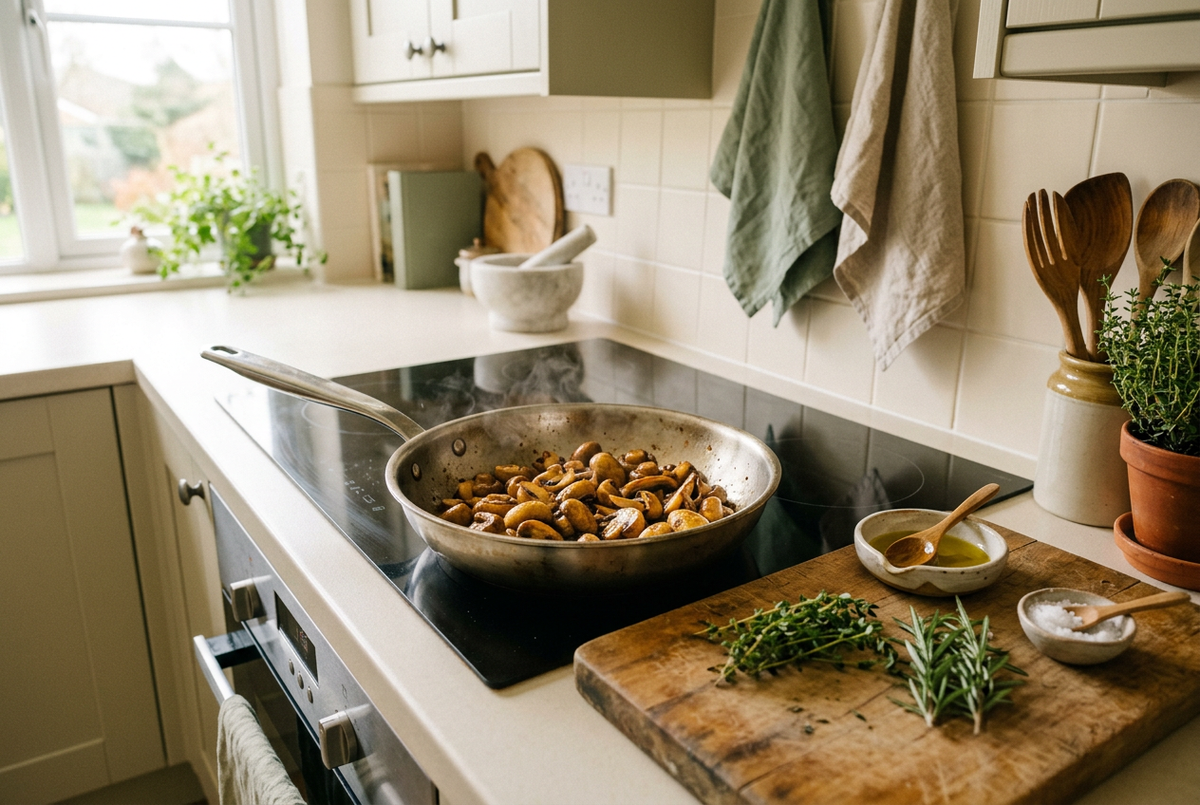
Mushrooms are an excellent ingredient for practising because they show clearly how moisture and crowding affect the result. Clean them as appropriate, dry them and cut larger ones into similar-sized pieces. Warm the pan, add oil and spread the mushrooms in a loose layer.
Let them make contact with the base before stirring. They may release liquid as they cook; allow that moisture to evaporate while keeping the heat controlled. Turn them occasionally so several surfaces can colour. If you are cooking a large quantity, work in batches rather than piling them deep.
Finish with seasoning, herbs and, if you like, a little butter on lower heat. Add garlic late enough that it does not burn while the mushrooms finish browning. Serve on toast, stir through pasta or use as a side dish. This simple exercise teaches you more about the pan than repeatedly testing it with your most delicate ingredients.
How to cook chicken without tearing the surface
Prepare similarly sized portions so they cook more evenly, and remove excess surface moisture. Preheat the pan moderately, add suitable oil and lower the chicken into it carefully, away from you. Avoid adding more pieces than the pan can comfortably hold.
Allow the first side to develop colour before testing whether it will lift. Turn gently, then adjust the heat as needed so the outside does not burn before the centre is cooked. Thick pieces may need a different approach from thin cutlets, so follow a reliable recipe rather than expecting one timing to fit everything.
Do not judge poultry safety by browning, clear juices or release from the pan alone. Use a food thermometer and follow current official food-safety guidance for the cut and cooking method. Keep raw-food utensils separate from ready-to-eat food, and clean the preparation area properly afterwards.
Can you cook eggs in a stainless steel pan?
Yes, but eggs are more demanding than mushrooms or many browned proteins. They are delicate, cook quickly and readily cling when the heat or fat is poorly judged. If you are new to stainless steel, build confidence with simpler sautéing first rather than using eggs as the only test of whether your pan works.
For fried eggs, use a clean surface, gentle to moderate heat and enough fat to coat the cooking area. Add the egg carefully and resist scraping underneath immediately. If butter darkens rapidly or the edges become tough before the top sets, reduce the heat. Very high preheating is not a shortcut to better eggs.
Scrambled eggs need especially careful temperature control and a suitable utensil. There is nothing wrong with choosing a non-stick pan for the meals where easy release matters most. A mixed cookware setup can be more practical than expecting one material to do everything. You can browse Culivra’s Nonstick Cookware Set and compare its listed care instructions with your cooking habits.
Turn browned bits into a simple pan sauce
One of the pleasures of stainless steel is the browned residue that can remain after cooking. Often called fond, this layer can bring depth to a quick sauce. It should be brown and pleasantly aromatic rather than blackened. Burnt residue will not become delicious just because you add liquid.
Once the main ingredient is safely cooked, transfer it to a clean plate and lower the heat. Carefully add a modest splash of stock or water to the warm pan, watching for steam and spluttering. Loosen the browned bits gently with a suitable utensil, then let the liquid simmer until the flavour and consistency suit your dish.
Finish with herbs or another ingredient from your recipe. A small piece of butter stirred in off the heat can add richness. Check the cookware manufacturer’s guidance for acidic ingredients and avoid prolonged storage of sauces in the pan. If the base is burnt, clean it and make a fresh sauce separately instead.
Troubleshooting common stainless steel cooking problems
Food sticks as soon as it goes in
Check whether the pan was adequately warmed, whether oil covered the cooking area and whether the food was very wet. Avoid trying to solve all three by turning the hob to maximum. Start your next batch with a clean surface, moderate preheating and drier ingredients, then compare the result.
The outside burns before the middle cooks
The heat is likely too aggressive for the ingredient’s thickness or the recipe. Reduce it and consider smaller or more evenly sized portions next time. Sweet marinades, finely chopped garlic and butter solids can also burn early, so think about the order in which you add them.
Vegetables turn watery instead of golden
Look first at crowding and moisture. Dry the vegetables better, use a wider cooking area if appropriate or cook in smaller batches. Give released liquid time to evaporate. Repeated stirring can also reduce the time each surface spends in contact with the pan.
A dark patch keeps catching food
Old residue may need removing before the next meal. Let the cookware cool and clean it using a manufacturer-approved method. Avoid gouging the surface with a sharp tool. If the pan is clean but one area repeatedly overheats, check the burner size and try a lower setting.
Clean the pan without making the next meal harder
Allow the pan to cool enough to handle safely before washing. Warm water, washing-up liquid and a suitable sponge are often a sensible starting point, subject to the care instructions. For stubborn residue, soaking can loosen the food and reduce the temptation to scrub aggressively.
If a specialist cleaner is needed, choose one approved for your cookware and follow its directions. Do not mix cleaning chemicals or improvise with harsh products. Rinse thoroughly and dry the pan before putting it away. Check the manufacturer’s guidance before using a dishwasher, abrasive pad or metal utensil.
A home cook does not need to keep every pan looking untouched to cook well. The priority is a clean cooking surface and cookware that remains in good condition. Routine, gentle cleaning is usually easier than allowing layers of residue to build up over several meals.
Build a calmer everyday cooking routine
Good pan technique works best alongside simple preparation. Plan which ingredients need the hottest surface and which should go in later. Cook watery vegetables separately when necessary, keep delicate seasonings away from prolonged high heat and have a clean serving dish ready before the food finishes.
Organise dry ingredients so you can find what you need without leaving the hob unattended. Culivra’s Airtight Food Storage Container is one option to explore for your ingredient-storage setup; check the product details for its intended uses. Storage accessories do not replace safe handling or suitable refrigeration for perishable foods.
If you want to make preparation easier across the week, read our meal prep for beginners guide. Combining an organised worktop with a few reliable pan techniques can make everyday meals feel far less rushed.
Frequently asked questions
Does stainless steel need seasoning like cast iron?
Do not assume that it does. Stainless steel is generally used as a clean cooking surface with fat added for the meal, rather than maintained with the seasoning routine associated with cast iron. Follow the instructions for your specific pan instead of applying treatments intended for another material.
Is higher heat better for preventing sticking?
No. Adequate preheating helps, but excessive heat can burn oil and food. The right setting depends on the recipe, the ingredient and your hob. Moderate heat is a more manageable starting point while you learn how the cookware responds.
Can I use less oil once I gain confidence?
You may find that better preparation and temperature control let you use fat more deliberately. However, stainless steel is not automatically a dry-cooking surface for delicate ingredients. Adjust the quantity to the food and recipe rather than pursuing an arbitrary minimum.
Why does my second batch cook faster?
The pan may have retained more heat than it had for the first batch. Check the oil and cooking surface between batches, reduce the setting if necessary and remove burnt residue before continuing. Consistency comes from adjusting to the pan, not keeping the dial fixed regardless of what happens.
Should I replace non-stick cookware with stainless steel?
Not necessarily. Stainless steel is useful for browning and pan sauces, while non-stick cookware can be convenient for delicate foods. Choose according to the meals you actually cook, the care routine you prefer and the manufacturer’s guidance for each item.
Make your next meal a simple practice run
The best way to learn how to cook with stainless steel without sticking is to repeat a straightforward meal and change one thing at a time. Start with mushrooms or another forgiving vegetable. Use moderate heat, a light coating of suitable oil and enough space for moisture to escape. Let the food sit before turning, and notice how its behaviour changes as it browns.
Once that feels comfortable, move on to other ingredients and simple pan sauces. You do not need flawless results on the first attempt, and you do not need a cupboard full of specialist tools. A clean pan, patient timing and attention to heat will take you a long way. Explore the Culivra 304 Stainless Steel Frying Pan to see the available options, and choose the size that suits your hob and everyday meals.

Leave a comment
This site is protected by hCaptcha and the hCaptcha Privacy Policy and Terms of Service apply.