
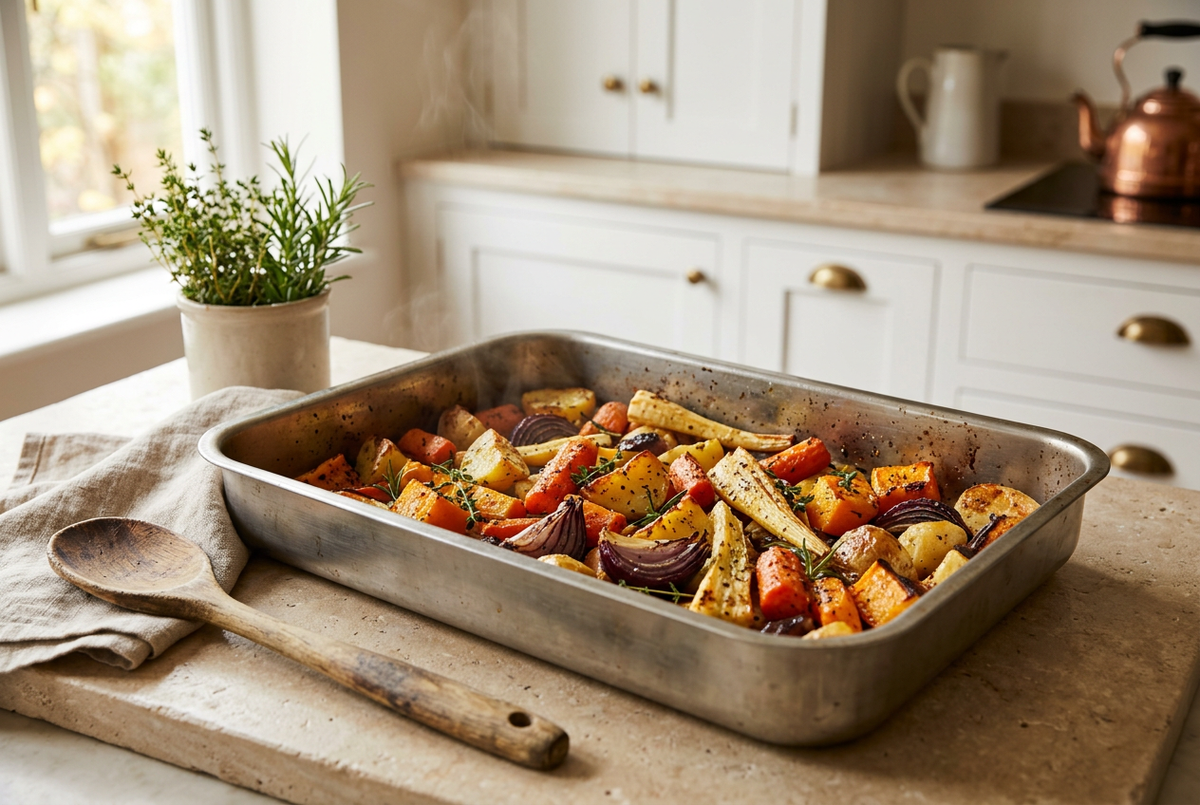
Knowing how to roast vegetables is one of the most useful skills you can bring to everyday cooking. A hot oven can turn a bag of carrots, a few potatoes or an overlooked cauliflower into something with golden edges, a tender centre and plenty of flavour. The technique is simple, but the difference between beautifully browned vegetables and a soft, watery tray often comes down to a handful of small decisions.
This guide explains how to choose your vegetables, prepare them evenly, use your oven confidently and build flavour without making dinner complicated. You will also find approximate cooking times, troubleshooting advice and practical ways to turn a tray of vegetables into several different meals. Whether you are cooking a Sunday lunch or preparing ingredients for a busy week, these principles give you a reliable starting point.
The quick answer: how to roast vegetables
Start with a fully preheated oven at around 200°C fan or 220°C conventional, provided your tray and any lining are suitable for that temperature. Cut the vegetables into similar-sized pieces, dry them thoroughly and toss with a modest coating of oil. Spread them in a single layer with some space between the pieces, then roast until browned outside and tender inside, turning when needed.
Most vegetables take roughly 20 to 50 minutes, depending on their density, size and the oven. Softer vegetables generally finish before dense roots. Rather than treating the clock as a guarantee, check the colour and test a thick piece with a knife. The best results come from responding to what is happening in the tray.
Why roasting makes vegetables taste different
Roasting combines heat with the gradual loss of surface moisture. As the outside dries, it can brown, developing deeper flavours than you usually get from boiling. Meanwhile, the centre softens. That contrast is what makes a roast carrot feel so different from a carrot simmered in water, even before you add seasoning.
Moisture management matters as much as temperature. If vegetables are wet or piled together, steam gathers around them and delays browning. A hotter oven cannot always rescue an overcrowded tray. Drying the vegetables, giving them room and choosing a suitable shallow tray are often more effective than simply increasing the heat.
Which vegetables are best for roasting?
Root vegetables for hearty, comforting meals
Carrots, parsnips, potatoes, sweet potatoes, beetroot and celeriac all work well. They have enough structure to soften gradually while developing browned edges. Cut particularly dense vegetables into smaller pieces, especially if you want them to finish alongside quicker-cooking ingredients. Beetroot can stain neighbouring vegetables, so use a separate tray if you prefer to keep the colours distinct.
Root vegetables are particularly useful when you want a substantial side dish. Try carrots and parsnips with thyme, or potatoes and celeriac with rosemary. You do not need a long ingredient list. A little oil, suitable seasoning and enough space in the tray often deliver a better result than a crowded mixture with lots of extras.
Brassicas for crisp edges and deeper flavour
Broccoli, cauliflower, Brussels sprouts and cabbage are excellent roasting choices. Cut cauliflower into florets with reasonably similar thicknesses and halve larger Brussels sprouts through the stem. Cabbage can be cut into wedges, leaving enough core attached to hold the leaves together. Exposed edges brown quickly, so check these vegetables before the centres become too soft.
Use the stalks where practical. A peeled broccoli stalk, sliced into manageable pieces, can roast alongside the florets. Keep an eye on smaller florets because their fine tips may darken before thicker stalk pieces are tender. If necessary, remove finished pieces rather than waiting for every item to cook at exactly the same speed.
Softer vegetables for quicker trays
Peppers, courgettes, aubergines, mushrooms and tomatoes bring colour and variety, but they release more moisture than many roots. Give them generous space and avoid cutting everything too small. Larger pieces are more likely to retain a pleasant texture while their surfaces brown. Tomatoes are delicious roasted, although they often become juicy rather than crisp.
Red onions and squash fit comfortably into many mixed trays. Onion wedges should be substantial enough to avoid burning at the tips, while squash benefits from evenly sized chunks. Follow the preparation requirements of the variety you buy, including whether its skin is suitable to eat. Remove tough skin and seeds when needed before cutting.
Choose a suitable roasting tray
A shallow, oven-safe tray encourages moisture to escape and gives vegetables a broad surface for contact. A deep dish can still cook them, but may hold more steam around the ingredients. Check the manufacturer's temperature limits, especially for non-stick coatings, handles and accessories. Never assume that every pan can go into a very hot oven.
Tray size should match the amount of food. A large tray is useful only if it fits your oven with enough room for air to circulate. If you are building a more practical cooking setup, browse Culivra's nonstick cookware set alongside your existing equipment, checking individual product specifications before choosing anything for oven use. Hob cookware and roasting equipment are not automatically interchangeable.
Baking paper can make cleaning easier, but it must be rated for your cooking temperature and kept away from heating elements. Follow the paper manufacturer's instructions. Whether you line the tray or not, avoid a thick pool of liquid underneath the vegetables. Browning needs direct heat and a surface that can gradually dry.
Prepare vegetables for even cooking
Wash your vegetables, remove damaged sections and dry them thoroughly. Water clinging to the surface has to evaporate before good browning can begin. A clean tea towel or kitchen paper is useful for vegetables with folds and crevices. With mushrooms, clean them as appropriate and avoid leaving them soaking in water before roasting.
Consistency matters more than a particular shape. If one potato chunk is twice the thickness of another, they are unlikely to finish together. Aim for pieces of comparable thickness within each vegetable type. Dense roots can be cut smaller than peppers or onions when they share a tray, helping narrow the difference in cooking time.
Think about how the food sits on the tray. Flat cut sides create good contact and encourage browning. Halved sprouts can begin cut-side down; carrot batons can lie on one broad side. You do not need to arrange every piece perfectly, but avoiding a heap gives each vegetable a better chance to roast rather than steam.
How much oil should you use?
Use enough oil to give the vegetables a thin, reasonably even coating, not so much that they sit in a puddle. As a starting point, try one to two tablespoons for around 500g of vegetables, then adjust for the ingredients and tray. Aubergine and other absorbent vegetables may need a different approach from smooth-skinned peppers or onions.
Tossing in a large bowl makes it easier to distribute oil than drizzling over a crowded tray. Choose an oil suitable for your cooking temperature and follow its guidance. Add salt according to your preference, then use herbs, spices and finishing ingredients to build flavour. You can always adjust the seasoning after cooking, when you know how the tray tastes.
Roast vegetable temperatures and approximate timings
For a mixed tray, 200°C fan or 220°C conventional is a useful starting point when your equipment is suitable. Ovens vary, and the size of your pieces makes a considerable difference. The ranges below are approximate guides for vegetables spread in a single layer, not promises of an exact finishing time.
- Potatoes, cut into roughly 2–3cm chunks: around 35–50 minutes.
- Carrots and parsnips, cut into medium batons: around 30–45 minutes.
- Squash and sweet potatoes, cut into chunks: around 25–40 minutes.
- Cauliflower florets: around 25–35 minutes.
- Halved Brussels sprouts: around 20–30 minutes.
- Broccoli florets: around 15–25 minutes.
- Peppers and red onion wedges: around 20–35 minutes.
- Courgette pieces and mushrooms: around 20–30 minutes.
Start checking near the lower end of the range. Turn pieces when their undersides have browned, rather than moving them constantly. If you are using two trays, you may need to swap their positions during cooking. Leave space around them and follow your oven's instructions for cooking on multiple shelves.
A simple mixed roast vegetable method
For a flexible starting recipe, use around 1kg of prepared vegetables: potatoes, carrots, squash, red onion and peppers make a colourful combination. You will also need roughly two to three tablespoons of suitable oil, plus seasoning and a few sprigs of thyme or rosemary if you like. Spread this quantity across two trays if one would be crowded.
Preheat the oven and cut the potatoes, carrots and squash into evenly sized pieces. Keep the onion and pepper pieces a little larger. Toss the dense vegetables with part of the oil and seasoning, arrange them in a single layer and begin roasting. After about 15 minutes, add the oiled onion and peppers, using another tray if necessary.
Continue cooking until the roots are tender and the edges are browned, checking and turning as needed. This may take another 20–30 minutes, but use texture rather than the clock as your final guide. Finish with fresh herbs or a squeeze of lemon. Taste before adding more salt, especially if you plan to serve the vegetables with a salty topping.
This staggered approach is more reliable than expecting every ingredient to behave identically. Once you understand which vegetables cook fastest in your oven, you can adapt the combination to what is in the fridge. The method is deliberately flexible, making it useful for small quantities of different vegetables that need using up.
Seasoning ideas that keep dinner interesting
Rosemary, thyme and black pepper
This combination suits potatoes, carrots, parsnips and onions. Use woody herb sprigs during roasting and remove tough stems before serving. Whole garlic cloves can be added where appropriate, but finely chopped garlic often burns during a long roast. Add delicate ingredients later, or use them in a finishing dressing instead.
Smoky paprika and cumin
Try a modest amount of smoked paprika and ground cumin with cauliflower, sweet potato or peppers. Mix the spices with the oil so they spread evenly. Heavy coatings of dry spice can catch in a hot oven, so start lightly. A spoonful of plain yoghurt or a squeeze of lime after cooking provides a fresh contrast.
Lemon, herbs and a simple dressing
For a brighter finish, toss cooked vegetables with lemon zest, a little juice and chopped parsley. Add acidic dressings after roasting when you want to preserve browned edges. A small splash is often enough. Too much dressing can overwhelm the vegetables and soften a tray that has just come out beautifully crisp.
Keeping everyday seasonings organised makes these variations easier to use. Culivra's 10-piece glass storage jar set is one option to explore for organising suitable dry ingredients. Label jars clearly and retain any information you need from the original packaging, including dates and allergen details.
Common roasting mistakes and how to fix them
The vegetables are soft but not browned
Overcrowding, surface moisture and insufficient preheating are common causes. Next time, dry the vegetables more thoroughly and divide them between trays. For a tray already in the oven, carefully spread the vegetables out if you have suitable space and equipment. Give them time to dry and colour, checking frequently rather than simply leaving them indefinitely.
The edges burn before the centres soften
The pieces may be too large, your oven may run hot, or the tray may be too close to a heating element. Reduce the heat slightly and move the tray if your oven allows. At the next attempt, cut dense vegetables smaller and keep delicate florets or thin onion tips out of the longest cooking stage.
Some pieces are ready and others are hard
This usually points to uneven cutting or vegetables with very different cooking times. Remove finished pieces and let the rest continue. For future trays, begin with dense roots and add quicker vegetables later. Separate trays can be the simplest solution, especially when cooking for several people or combining very watery vegetables with potatoes.
The vegetables stick to the tray
Check that the tray is appropriate, the vegetables have a light coating of oil and you are not trying to move them too early. Browned surfaces can sometimes release more easily once a crust has formed. Use utensils suited to your tray's surface and avoid scraping coated cookware with metal tools unless the manufacturer explicitly permits it.
Turn roasted vegetables into complete meals
A tray of vegetables becomes dinner when you add something substantial and a contrasting flavour or texture. Spoon them over rice or couscous with chickpeas and a dressing. Fold them into pasta with a little reserved cooking water and your preferred sauce. Serve them alongside eggs, fish, beans or another protein that suits your household.
Roasted vegetables also work well as a filling for wraps and warm sandwiches. Chop larger pieces after cooking so they are easier to eat. Add something fresh, such as leaves or herbs, and keep wet sauces separate until serving. This helps the meal feel balanced rather than turning every ingredient into one soft mixture.
For another day, cooked vegetables can become the starting point for a quick hob meal. Culivra's 304 stainless steel frying pan is worth exploring if you are comparing pans for everyday cooking; check the listing for its compatibility and care information. Choose equipment around your cooking habits rather than assuming one pan needs to perform every task.
Planning ahead without losing texture
Roasting a little extra can make weekday meals easier, but plan what you will use rather than filling trays without a purpose. One portion could accompany tonight's meal, while another becomes tomorrow's grain bowl. Keeping dressings and fresh toppings separate gives you more flexibility and helps preserve the character of the cooked vegetables.
For storing prepared portions, explore Culivra's glass meal prep containers. Choose a size that suits your portions, and follow the product's instructions for storage and reheating, including any guidance about lids. Do not assume a container is suitable for every appliance or temperature merely because its base is glass.
Follow current food-safety guidance for cooling, refrigeration and reheating, particularly when vegetables are combined with rice, meat or dairy. Refrigerate promptly as appropriate rather than leaving cooked food sitting out throughout the evening. Label prepared portions so you know what they contain, and plan meals around using them within the recommended storage period.
If you are developing a weekly routine, read our meal prep for beginners guide for a broader approach to planning ingredients and meals. Roasted vegetables work best as one flexible component of that routine, not as a reason to cook more than your household will realistically eat.
Frequently asked questions about roasting vegetables
Should I boil vegetables before roasting?
Most vegetables can be roasted without boiling first. Potatoes are a common exception when you want a traditional roast-potato texture, because parboiling and roughening the surface creates a different result. For an everyday mixed tray, smaller raw potato chunks are a convenient option. Choose the method according to the texture and timing you want.
Can I roast frozen vegetables?
Often, yes, but follow the packet instructions. Frozen vegetables may release more moisture and produce a softer result than fresh equivalents. Avoid overcrowding and do not thaw them unless instructed. Different products are prepared differently, so use the manufacturer's method as your starting point rather than applying one fixed timing to every frozen mixture.
Do I need to peel vegetables first?
Not always. Many carrots and potatoes can be scrubbed and cooked with their skins on, provided they are sound and appropriately prepared. Tough skins, damaged areas and the requirements of particular vegetables still matter. Peeling is also a texture preference. Keep the preparation consistent so the pieces cook as evenly as possible.
Should I cover vegetables while they roast?
Usually not if your aim is browned edges. Covering traps moisture and encourages steaming. Some recipes deliberately use a covered stage to soften dense vegetables before uncovering them, but that is a different method. For the basic approach in this guide, use an uncovered tray and enough room for moisture to escape.
Can I roast vegetables without oil?
You can cook vegetables without added oil, although browning, texture and sticking may differ. Use equipment suitable for that method and follow its instructions. If your goal is simply to use less oil, measure a small amount and distribute it thoroughly rather than pouring directly from the bottle. Adjust to your preferences and dietary needs.
Why do my vegetables go soft after serving?
Hot vegetables continue releasing steam. Piling them into a deep bowl, covering them tightly or adding a large amount of dressing can soften their surfaces. Serve soon after roasting when crispness matters most. For meals prepared ahead, expect a different texture and choose recipes that work well with tender vegetables rather than promising fresh-from-the-oven crunch.
Make roasting part of your everyday cooking
The most reliable roast vegetables come from a few repeatable habits: dry the ingredients, cut them thoughtfully, preheat the oven and leave room on the tray. From there, adjust the timing to the vegetable rather than forcing every ingredient into the same schedule. Check for tenderness, look for colour and finish with seasoning that complements the meal.
Start with one simple combination this week, then change the vegetables or seasonings next time. You will quickly learn how your oven behaves and which textures your household enjoys. Explore Culivra's airtight food storage containers for organising suitable dry ingredients alongside your cooking routine, and use the linked guides and kitchen essentials above to build a setup that supports the meals you actually make.

Leave a comment
This site is protected by hCaptcha and the hCaptcha Privacy Policy and Terms of Service apply.