
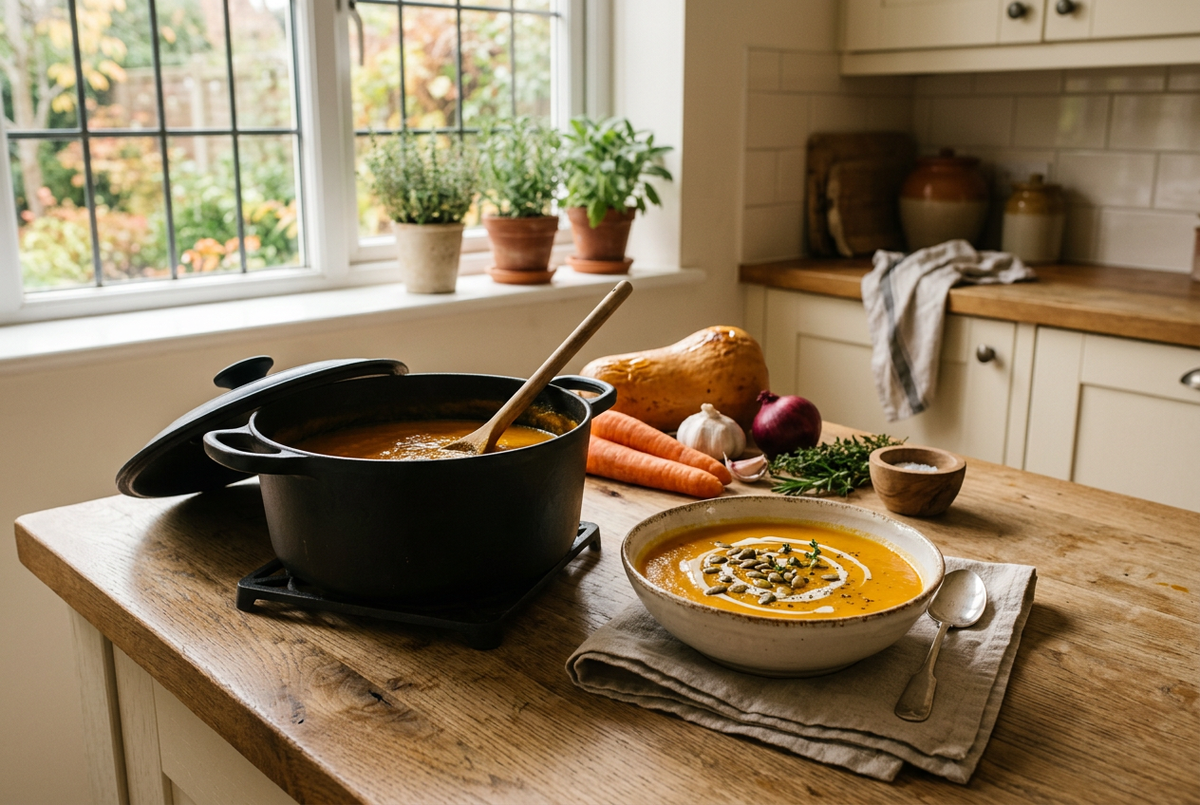
Learning how to make homemade soup is one of the most useful skills you can bring to everyday cooking. A few vegetables, a good stock and a little attention can become a comforting lunch or a satisfying evening meal. You do not need a complicated recipe, a cupboard full of specialist ingredients or an entire afternoon standing beside the hob.
Autumn is a particularly lovely time to start. Squash, carrots, leeks, potatoes and other familiar vegetables give you plenty of options, while a warm bowl of soup fits naturally into cooler days. The real benefit, though, is flexibility: once you understand the basic method, you can adapt it to the ingredients you have rather than shopping for a completely different recipe every week.
This guide explains how to build flavour, choose suitable cookware, balance texture and make three approachable autumn soups. You will also find practical ways to organise ingredients and avoid common mistakes, so homemade soup feels like an everyday habit rather than a special project.
What makes a good homemade soup?
A good soup needs balance more than it needs a long ingredient list. Think about five things: a flavourful base, a main ingredient, enough liquid, a pleasing texture and a finishing touch. Onion slowly softened in a little oil creates a different starting point from vegetables briefly boiled in water. Stock contributes savouriness, while herbs, spices and a small amount of acidity can make the finished bowl taste more complete.
Texture matters just as much as flavour. Some soups should be smooth and spoon-coating; others are better with recognisable pieces of vegetables, beans or pasta. Decide which result you want before you start chopping. Consistent pieces cook more evenly, and deliberate choices make the difference between a rustic soup and one that simply feels unfinished.
You can keep ingredients inexpensive and still make something enjoyable. A carrot soup with carefully softened onion and a bright finish may be more satisfying than a crowded pot containing ten vegetables that do not work particularly well together.
Choose the right pot and prepare your workspace
Use a pot with enough room for the ingredients and the liquid, leaving comfortable space for stirring. An overcrowded saucepan makes it awkward to soften vegetables and increases the chance of splashes when you add stock. A stable base, comfortable handles and a lid are useful features for regular soup making.
If you are reviewing your kitchen equipment, explore Culivra's Nonstick Stock Pot with Glass Lid. Check the product page for the available sizes and care information, and choose a size that suits the quantities you actually cook. A large household batch and a small lunch for two have different needs.
You will also want a chopping board, a suitable knife, a spoon and a ladle. A measuring jug helps you add stock gradually rather than guessing. A blender is useful for smooth soup, but it is not essential: chunky vegetable soup can be just as appealing, and a potato masher gives a thicker, rustic finish.
Before heating the pot, chop your vegetables, measure the spices and set the stock nearby. This small preparation step makes the cooking calmer and helps prevent garlic or spices burning while you search for the next ingredient.
A simple formula for homemade vegetable soup
For an adaptable starting point, use one medium onion, roughly 600–800g of prepared vegetables and around 750ml to 1 litre of stock. These are flexible kitchen proportions rather than strict rules. Watery vegetables, thickening ingredients and your preferred consistency will all change how much liquid you need.
Add one or two flavour accents, such as garlic and thyme, ginger and cumin, or rosemary and black pepper. Resist the temptation to use every spice in the cupboard. A clear combination is easier to balance and lets the main vegetable remain recognisable.
For a heartier soup, include a drained tin of beans or chickpeas, or serve bread alongside it. If you add dried lentils, pasta or grains, follow their packet instructions and allow for the extra liquid they absorb. Different ingredients have different cooking times, so they cannot always be added at the same stage.
Step 1: Soften the aromatic base
Warm a little oil over a moderate heat, add the chopped onion and cook gently until softened. Stir occasionally and lower the heat if the edges begin catching. You are giving the onion time to lose its harshness and become part of the soup's flavour, not trying to rush it into deep brown pieces.
Celery or leek can join the onion if they suit the recipe. Add finely chopped garlic towards the end of this stage because it can colour quickly. If using ground spices, stir them through briefly before adding liquid, taking care not to scorch them.
Step 2: Add the main vegetables
Stir in the prepared vegetables so they become coated with the aromatic base. Firm ingredients such as carrots and potatoes should be cut into reasonably even pieces. Large chunks beside tiny cubes make it difficult to judge when everything is ready.
This stage is also a chance to notice the proportions. If you want a carrot-led soup, carrots should make up most of the vegetables. Adding several potatoes may thicken the result, but it will also soften the carrot flavour.
Step 3: Pour in stock and simmer gently
Add enough stock to cover the vegetables, keeping some back if you are unsure. Bring the mixture to a simmer, then reduce the heat. A gentle simmer is usually easier to manage than a vigorous rolling boil and gives you more control over the texture.
Cook until the firmest vegetables are tender when pierced. Check occasionally and stir as needed. If the soup is becoming too thick before the ingredients soften, add a little more liquid. Follow the recipe's timing as a guide, but let the actual tenderness of the vegetables make the final decision.
Step 4: Choose your texture
Leave the soup chunky, mash part of it, or blend until smooth. For an especially useful middle ground, remove a portion, mash or blend it, then stir it back through the pot. This gives the liquid more body without losing all the vegetable pieces.
Follow your blender manufacturer's instructions for hot liquids. With a hand blender, keep the blade submerged to reduce splashing and use a compatible vessel, taking care not to damage the pot's surface. Never assume that every jug blender can safely handle hot soup.
Step 5: Taste and finish
Taste before adding extra salt, particularly when using prepared stock. Adjust a little at a time. Black pepper, chopped herbs or a small squeeze of lemon can help the flavours feel clearer without changing the whole recipe.
If the soup is too thick, add stock or water gradually. If it is too thin, simmer it uncovered for a while, stirring regularly, or mash some of the vegetables. Make one adjustment at a time so you can tell what actually improved the result.
Easy roasted squash and carrot soup
This autumn combination gives a naturally mellow flavour and a bright orange colour. Roasting the vegetables first adds another layer of flavour, making it a useful option when you have time to use the oven. The quantities below make approximately four portions, depending on how generously you serve them.
Ingredients: 500g prepared squash, 300g carrots, one onion, two garlic cloves, about 900ml vegetable stock, two tablespoons of oil, half a teaspoon of ground cumin and black pepper. You can finish with a little cream or a suitable plant-based alternative if you enjoy a softer flavour.
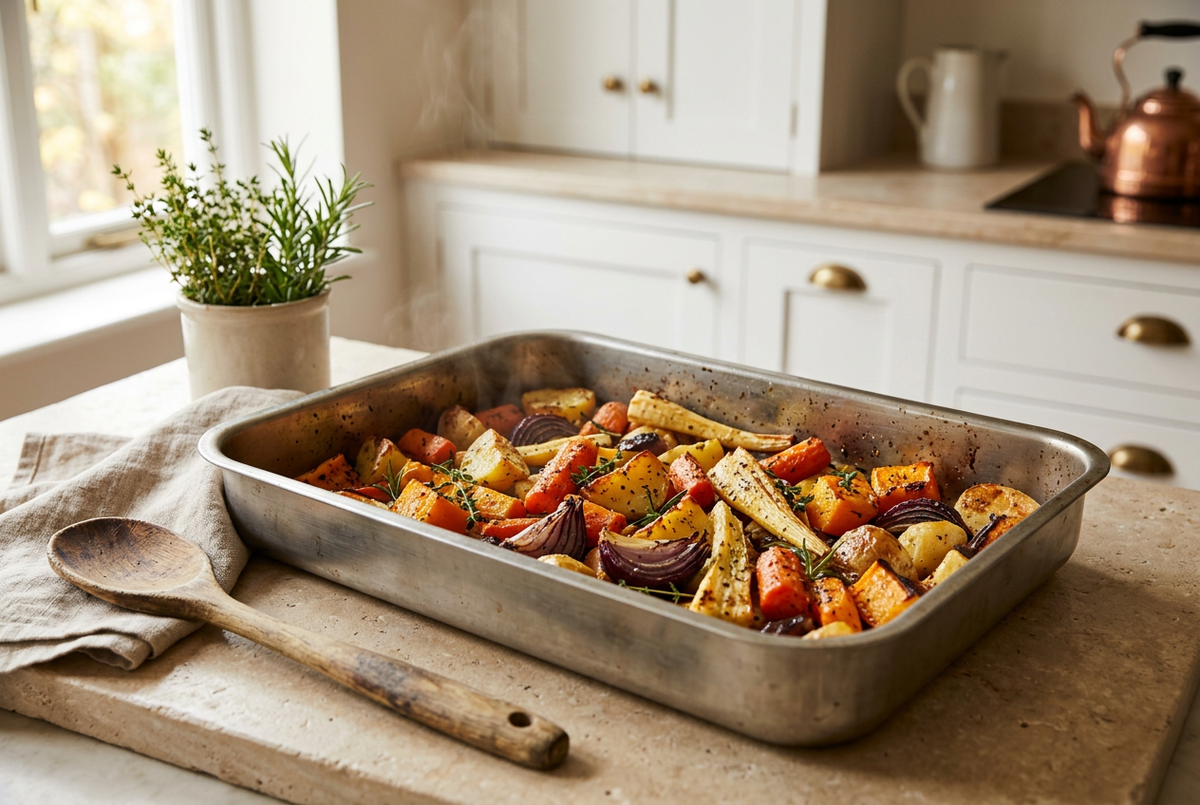
Heat the oven to 200°C, or 180°C fan. Cut the squash and carrots into similar-sized pieces, toss with half the oil and spread them over a roasting tray. Roast until tender and beginning to colour, checking and turning as needed; the exact time depends on the size of the pieces and your oven.
Meanwhile, soften the chopped onion in the remaining oil in your soup pot. Add the chopped garlic and cumin briefly, then stir in the roasted vegetables. Pour in most of the stock and simmer gently so the flavours come together. Blend to your preferred consistency and use the remaining stock to loosen it if needed.
Finish with pepper and taste before adding salt. A small swirl of cream, a spoonful of yoghurt or a scattering of seeds can add contrast, but none is essential. The soup should still taste good before the toppings go on.
Simple leek and potato soup
Leek and potato soup is a useful reminder that familiar ingredients can be enough. Its gentle flavour works well with crusty bread, while the potatoes give it body without needing a complicated thickening method.
Ingredients: two large leeks, 500g potatoes, one small onion, about 1 litre of vegetable stock, one tablespoon of oil or a little butter, and black pepper. A small splash of milk or cream is optional at the end.
Split and wash the leeks carefully, checking between the layers for grit, then slice them. Peel the potatoes if preferred and cut them into even cubes. Soften the onion and leeks gently in your pot without letting them brown heavily. Add the potatoes and stock, bring to a simmer and cook until the potatoes are tender.
For a rustic texture, mash some of the potatoes against the side of the pot and stir them through. For a smoother finish, blend briefly, stopping as soon as you reach the consistency you want. Overworking potatoes can make the texture unpleasantly gluey, so more blending is not necessarily better.
Taste, add pepper and adjust the liquid. If using milk or cream, stir it in gently near the end. Chopped chives or parsley make a simple finish. Keep toppings restrained so the delicate leek flavour is not lost beneath stronger additions.
Chunky tomato, bean and vegetable soup
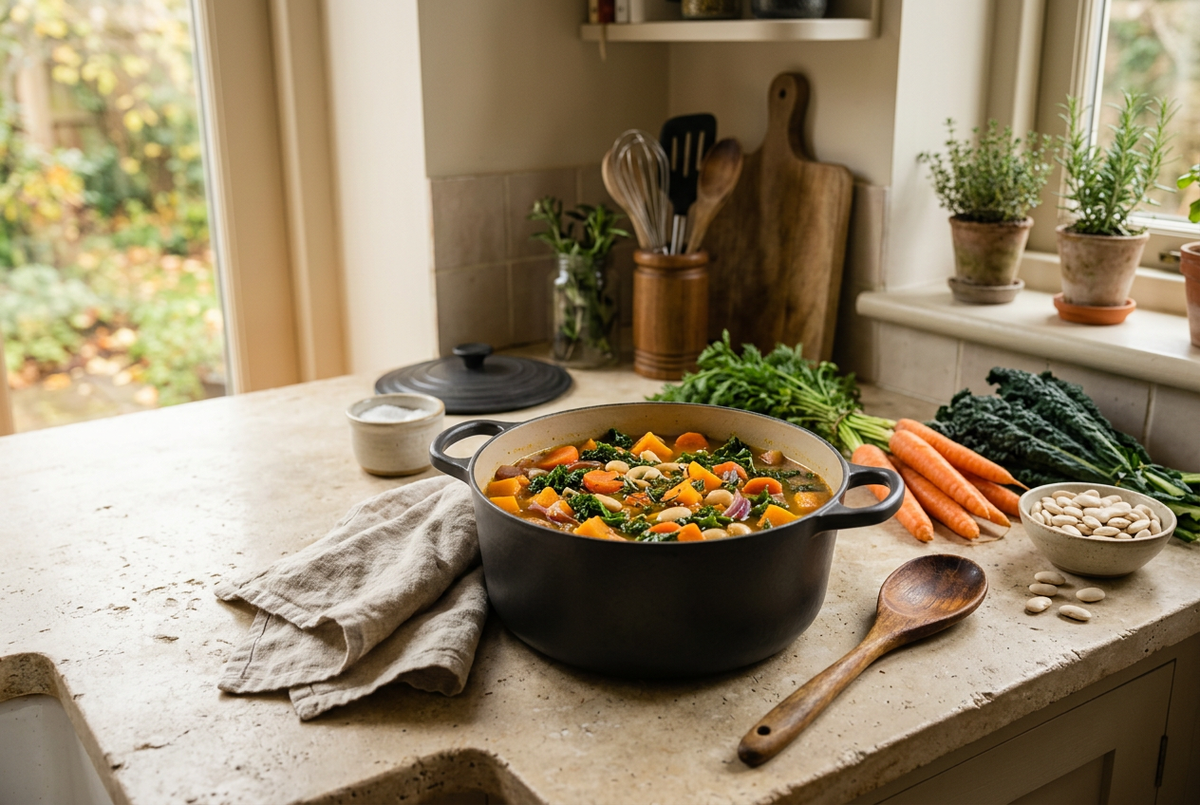
If you prefer a soup with plenty to chew, this is an easy direction to take. Tinned tomatoes and beans make a convenient base, while the vegetables can change with what you already have. The result is closer to a substantial bowl meal than a light starter.
Ingredients: one onion, two carrots, one courgette, two garlic cloves, one 400g tin of chopped tomatoes, one drained and rinsed 400g tin of beans, about 700ml vegetable stock, one tablespoon of oil and a teaspoon of dried mixed herbs.
Chop the vegetables into small, even pieces. Soften the onion and carrots in the oil, add the garlic briefly, then stir in the tomatoes, stock and herbs. Simmer until the carrots are nearly tender before adding the courgette and beans. Continue cooking until the vegetables have the texture you enjoy and everything is thoroughly heated.
Crush a few beans with the back of a spoon if you want a thicker broth. Taste before seasoning, since both stock and tinned ingredients may contribute salt. Serve with bread, or add a little grated cheese if it suits your preferences.
For this recipe, there is no need to blend. The contrast between the beans, vegetables and tomato broth is part of the appeal. It is also a useful way to practise cutting vegetables consistently and adding quicker-cooking ingredients later.
How to fix common soup problems
The soup tastes flat
Start by checking the seasoning rather than immediately adding another spice. A little salt may help if the stock was unsalted; a small squeeze of lemon can brighten a heavy-tasting vegetable soup. Add either carefully and taste again. Acidity and salt do different jobs, so neither should be treated as a cure for every problem.
The texture is too watery
Simmer uncovered to reduce excess liquid, or blend part of the vegetables back into the broth. Beans and potatoes can contribute body when they already suit the recipe. Next time, begin with less stock and add more later. It is easier to thin a thick soup than to remove a large amount of extra water.
The vegetables are unevenly cooked
Check both the size of the pieces and the order in which you added them. Firm root vegetables usually need longer than tender leaves or small courgette pieces. Cut similar ingredients consistently, and introduce delicate vegetables later rather than expecting everything to finish together.
The base has caught on the bottom
Reduce the heat and avoid scraping a badly burnt layer into the soup. If necessary, move the unburnt portion into a clean pot and reassess the flavour. For future batches, stir regularly, use enough liquid and check that your chosen heat level suits the pot. Higher heat is not a shortcut to better flavour.
Make soup cooking easier with an organised kitchen
A tidy ingredient system can make a bigger difference than collecting more gadgets. Keep your frequently used lentils, pasta and spices easy to identify, and avoid buying duplicates simply because an open packet has disappeared behind everything else.
Culivra's 10-Piece Glass Storage Jar Set is worth exploring for smaller pantry ingredients, while the Airtight Food Storage Container offers another option to consider for your cupboard setup. Check capacities and materials on each product page so you can match the container to what you want to store.
If you decant ingredients, keep the original cooking instructions, allergen information and date details accessible. An attractive cupboard should still be a useful one. Labels are most helpful when they tell you what something is and how you use it, not merely when they look coordinated.
For cooked portions, browse the Glass Meal Prep Containers and check the care instructions for both containers and lids. Follow current food-safety guidance for cooling, refrigeration, freezing and reheating; those decisions depend on the ingredients and handling, not simply on the container material.
Serving ideas that turn soup into dinner
A bowl of soup becomes more substantial with a thoughtful accompaniment. Try toast, a sandwich, a baked potato or a simple side salad, depending on the soup and your appetite. You do not need an elaborate spread to make the meal feel complete.
Texture is often the most useful addition. Smooth squash soup pairs nicely with crisp toast, while chunky bean soup may need nothing more than good bread. Add toppings just before serving so they retain their contrast rather than disappearing into the pot.
If you like preparing a small side dish while the soup simmers, take a look at the 304 Stainless Steel Frying Pan. Choose cookware for the jobs you genuinely do, and check its use and care guidance rather than assuming every material behaves the same way.
Frequently asked questions about homemade soup
Do I need a blender to make soup?
No. Chunky vegetable, tomato and bean soups work well without one. You can also mash tender vegetables or beans to thicken the broth. A blender is useful if you prefer a completely smooth finish, but it is not a requirement for getting started.
Can I use water instead of stock?
Yes, although you may need to build more flavour through the onion base, vegetables, herbs and seasoning. Add water gradually and taste carefully. Roasted vegetables can be particularly useful when the liquid itself is fairly plain.
What vegetables work well in autumn soup?
Squash, carrots, leeks, potatoes, parsnips and cauliflower are approachable starting points. Choose a main flavour and add supporting ingredients rather than combining everything at once. Consider both cooking time and texture when deciding what belongs in the pot.
How do I make soup creamy without cream?
Blend some of the cooked vegetables, or use a suitable ingredient such as potato or beans to give the soup body. The result will not be identical to adding dairy cream, but it can still feel smooth and satisfying. Pick the method that suits the flavour you are aiming for.
Can I prepare ingredients ahead?
Preparing a shopping list, measuring dried seasonings and organising your equipment in advance can make cooking easier. For chopped fresh ingredients and cooked soup, follow appropriate food-safety guidance and the storage instructions for the ingredients involved. Organisation should support safe handling rather than replace it.
Start with one soup and make it your own
The best way to learn how to make homemade soup is to repeat a simple recipe and notice what changes. Try a slightly thicker consistency, roast the vegetables first, or choose a different herb. Making one adjustment at a time teaches you more than starting from scratch with a completely new combination every evening.
Begin with the ingredients you enjoy, choose a pot that fits the quantity and give the base enough time to develop flavour. Keep the liquid adjustable and taste before serving. With those habits in place, autumn soup becomes a practical, welcoming part of your cooking routine.
Explore the cookware and storage links throughout this guide to find kitchen essentials that suit your routine, and build your setup around the meals you actually love to make.

Leave a comment
This site is protected by hCaptcha and the hCaptcha Privacy Policy and Terms of Service apply.