
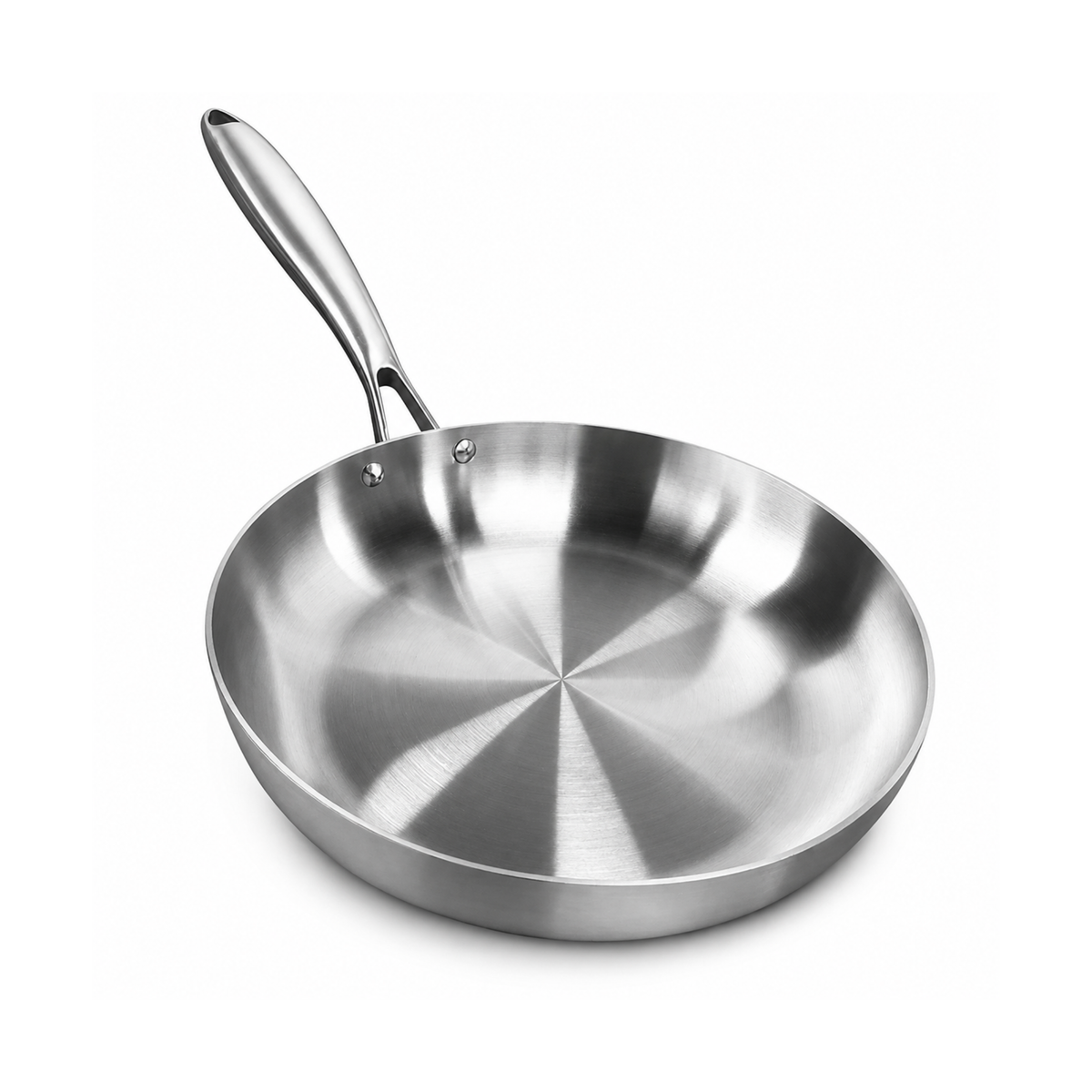
To clean a stainless steel pan, let it cool, wash it with warm water and washing-up liquid, then rinse and dry it thoroughly. For burnt-on food, gently simmer a little water in the pan, allow it to cool and loosen the residue with a non-scratch sponge. A bicarbonate of soda paste can help with stubborn deposits; diluted white vinegar can help with rainbow marks or mineral spots. Always follow your pan’s care instructions and never mix cleaning products.
A stainless steel frying pan can develop brown patches, cloudy marks or a sticky film without being beyond rescue. The useful first step is identifying what is on the surface. Burnt food needs a different approach from water marks, while a clean rainbow-coloured patch does not need the same scrubbing as a layer of cooked-on oil.
This guide explains how to clean stainless steel cookware using a gentle-first approach. You will learn what to try, what to avoid and how small changes to your cooking routine can make washing up easier. These methods are for uncoated stainless steel surfaces, not non-stick coatings, and the manufacturer’s instructions should always take priority.
What you need to clean a stainless steel pan
Start with ordinary washing-up equipment rather than the strongest cleaner in the cupboard. Warm water, washing-up liquid, a soft cloth and a non-scratch sponge will handle many everyday jobs. A wooden or silicone utensil can help lift softened food without scraping aggressively at the surface.
For occasional stubborn marks, keep bicarbonate of soda and plain white vinegar available. Use them separately, with a thorough rinse between methods. A specialist cleaner labelled suitable for your particular cookware may also be useful, but check its instructions carefully. Products suitable for a stainless steel sink are not automatically suitable for every pan finish.
Choose a sponge that is clean and free from grit. Even a soft cloth can drag particles across a polished surface. Have a dry tea towel ready too: drying is a small step that makes a noticeable difference to the appearance of stainless steel, especially in a hard-water area.
How to clean a stainless steel pan after everyday cooking
1. Let the pan cool before washing
After cooking, move the pan to a suitable heat-resistant surface and allow it to cool naturally. Do not place a very hot pan under cold running water. Sudden temperature changes can stress cookware, and splashing hot fat or producing a cloud of steam makes washing up unnecessarily risky.
Waiting does not mean leaving the pan dirty overnight. Aim to wash it once it is comfortably manageable. If there is a significant amount of oil left inside, let it cool and dispose of it appropriately rather than pouring it down the sink. Remove loose scraps before you begin.
2. Wash with warm soapy water
Add warm water and a little washing-up liquid. Use a non-scratch sponge to clean the base, sides and rim, paying attention to the area around handle attachments where food can collect. Gentle, repeated passes are better than immediately reaching for something abrasive.
If a patch resists the sponge, stop and soften it instead of pressing harder. A short soak can reduce the effort needed considerably. Keep the handle and outside of the pan supported while cleaning so that the pan does not slide around or knock against other items in the sink.
3. Rinse and dry thoroughly
Rinse away the detergent and inspect the surface. A remaining greasy feel usually means another quick wash is needed. Once the pan feels clean, dry it with a soft towel, including the underside, rim and handle attachment points.
Leaving a clean pan to air-dry can create water spots, particularly where tap water contains more dissolved minerals. Those marks can make a perfectly washed pan look cloudy. Drying immediately is usually easier than removing the marks later.
How to remove burnt-on food from stainless steel
For a pan with stuck rice, browned vegetables or a stubborn layer of sauce, start by adding enough water to cover the affected area. Place the pan on the hob and bring the water to a gentle simmer. Stay nearby and do not let it boil dry.
As the water warms, use a wooden or silicone utensil carefully to encourage softened food to lift. You are loosening the residue, not trying to chip it away. Keep your hands clear of steam and remember that the handle may become hot.
Turn off the heat and let the pan cool before emptying it. Wash with warm soapy water and a non-scratch sponge. If some residue remains, repeat the process. Several gentle rounds can be more effective, and kinder to the finish, than one forceful scrubbing session.
This method works best when the problem is food attached to the surface. A flat rainbow mark or a faint water stain is a different issue. Once the pan is free of food and grease, assess any remaining discolouration separately rather than assuming every mark needs more abrasion.
How to use bicarbonate of soda on stubborn residue
If warm water and detergent are not enough, allow the pan to cool and make a small paste using bicarbonate of soda and water. Spread it over the affected uncoated stainless steel area, following any care restrictions supplied with your cookware.
Work gently with a damp non-scratch sponge. Bicarbonate of soda has a mild abrasive action, so more pressure is not necessarily better. On a visible brushed finish, work with the direction of the grain where practical. Test a small, inconspicuous area first if you are uncertain about the finish.
Rinse thoroughly, then wash the pan normally to remove remaining residue. Dry it and inspect the result in good light. If the deposit has reduced, you can repeat the process rather than escalating immediately to an aggressive scourer.
Do not confuse bicarbonate of soda with caustic soda or other cleaning chemicals. They are not interchangeable. Keep cleaning ingredients clearly labelled and avoid improvised combinations. A simple method used correctly is preferable to a complicated mixture whose compatibility you cannot verify.
How to remove rainbow stains from a stainless steel pan
Rainbow-coloured patches can appear on stainless steel after heating. They are often a surface discolouration rather than stuck food. When the pan is clean and the surface feels smooth, vigorous scrubbing is unlikely to be the most useful first response.
If the manufacturer permits it, wipe the cooled surface briefly with diluted plain white vinegar using a soft cloth. Start with a weak solution and rinse promptly. Then wash with washing-up liquid, rinse again and dry thoroughly. Avoid leaving an acidic solution sitting in the pan for an extended period.
Do not use vinegar on other parts or finishes unless the care instructions permit it. A pan can contain different materials around its handle, trim or exterior. Advice for an uncoated stainless steel cooking surface is not blanket permission to treat every component in the same way.
If the colour remains but the surface is clean, check the cookware instructions before trying anything stronger. A slight change in appearance does not automatically mean the pan is damaged. Actual pitting, a separating base or a loose handle deserves a different response from a cosmetic mark.
How to remove white spots and cloudy marks
White patches are often associated with mineral deposits left behind by water. First wash the pan to rule out detergent residue or a light film of food. Rinse carefully, dry it and inspect again before deciding that the surface needs a separate treatment.
For mineral marks on a compatible stainless steel surface, a brief wipe with diluted white vinegar may help. Rinse promptly and wash afterwards. Avoid repeated, prolonged soaking simply to chase a cosmetic finish, and follow the manufacturer’s instructions if the mark does not improve.
Prevention is straightforward: rinse off washing-up liquid fully and dry the pan rather than leaving water to evaporate. If you regularly see white marks on glasses and taps as well, hard water may be contributing to the appearance of your cookware.
How to clean sticky oil from a stainless steel frying pan
A sticky amber or brown film is different from loose grease. Oil that has been heated repeatedly can form a stubborn layer, particularly around the sides and outside of a frying pan. A quick wipe with water will often leave that film behind.
Begin with warm water and washing-up liquid, giving the affected area time to soften. Follow with a bicarbonate of soda paste if the cookware guidance allows it. Work in small areas so that you can see whether the deposit is actually lifting rather than simply spreading around.
Wash and rinse between attempts. If the surface still feels tacky, it is worth treating it again before the next cooking session. Reheating an existing film can make the clean-up harder and may create unwanted smells or smoke.
To reduce future build-up, avoid heating oil until it smokes, wipe away cooled splashes from the exterior and clean the sides as well as the flat cooking surface. A pan that looks clean from above may still have oil collecting around its outer edge.
How to clean the outside and bottom of the pan
Exterior stains can come from splashed oil, spills on the hob or contact with cooking residues. Let the pan cool completely and wash the outside with warm soapy water first. Check the underside carefully, as its construction or finish may differ from the interior.
Use only cleaning methods approved for that surface. Do not assume that an abrasive paste suitable for one area is suitable for a decorative exterior or exposed base layers. Keep printed markings and any special finishes in mind before scrubbing.
Rinse away all cleaner and dry the bottom before placing the pan back on the hob. Keeping the hob itself clean also helps: a spill underneath the pan can bake onto the exterior during the next meal, even when the inside has been washed thoroughly.
Cleaning mistakes to avoid
Using steel wool as the first solution
A metal scourer may seem like a shortcut, but it can scratch the finish, and some metal pads can leave particles behind. Start with soaking, gentle simmering and a non-scratch sponge. Use more abrasive equipment only if the cookware manufacturer specifically permits it.
Mixing cleaning products
Never mix bleach with vinegar, acids or other cleaning products. Avoid using multiple cleaners together in the pan. If you change methods, rinse thoroughly first and follow each product’s label. There is no need to create a bubbling mixture to clean ordinary cooking residue.
Using oven cleaner or harsh household chemicals
A heavily stained pan is still cookware, not an oven cavity. Do not apply oven cleaner or another strong household chemical unless the product label and cookware instructions explicitly support that use. Aggressive chemistry can introduce problems that ordinary washing never would.
Trying to restore a showroom finish at any cost
Cookware is a working tool. Light scratches or a subtle change in colour can develop through normal use. Focus on removing food, grease and cleaning residue rather than pursuing a mirror finish with increasingly harsh methods. Clean and sound matters more than looking unused.
Can stainless steel pans go in the dishwasher?
Check the instructions for your particular pan rather than relying on the material name alone. Dishwasher suitability depends on the whole construction, including the handle, finish and any bonded components. Stainless steel does not automatically mean every pan is approved for dishwasher cleaning.
Handwashing gives you more control over stubborn areas and makes it easy to dry the surface straight away. If dishwasher use is permitted, follow the loading and detergent guidance supplied with the cookware. Remove and dry the pan promptly if water marks are a recurring issue.
For Culivra products, confirm the current care information before choosing a cleaning method. This guide does not establish dishwasher, oven or temperature limits for any individual product. Those details should come from the relevant product instructions rather than a general cleaning article.
Make your next cooking session easier to clean up
Cleaning starts with how you cook. Use controlled heat rather than treating the highest hob setting as the default. Allow food time to brown before trying to move it, and adjust the heat if oil begins to smoke or residues darken too quickly.
Our guide to cooking with stainless steel without food sticking explains the relationship between preparation, heat and food release. Better technique cannot eliminate washing up, but it can reduce the temptation to scrape at a pan while dinner is still cooking.
Some brown residue left after frying can be useful cooking flavour rather than a cleaning problem. When the recipe suits it, learn how to make a pan sauce without wine. Only use pleasantly browned cooking juices, not blackened or bitter burnt residue.
If vegetables regularly leave a wet, stuck layer, consider batch size and moisture as well as the pan itself. The advice in our guide to cooking mushrooms without them going soggy offers a useful example of giving food enough room and managing released water.
Choosing a pan for everyday stainless steel cooking
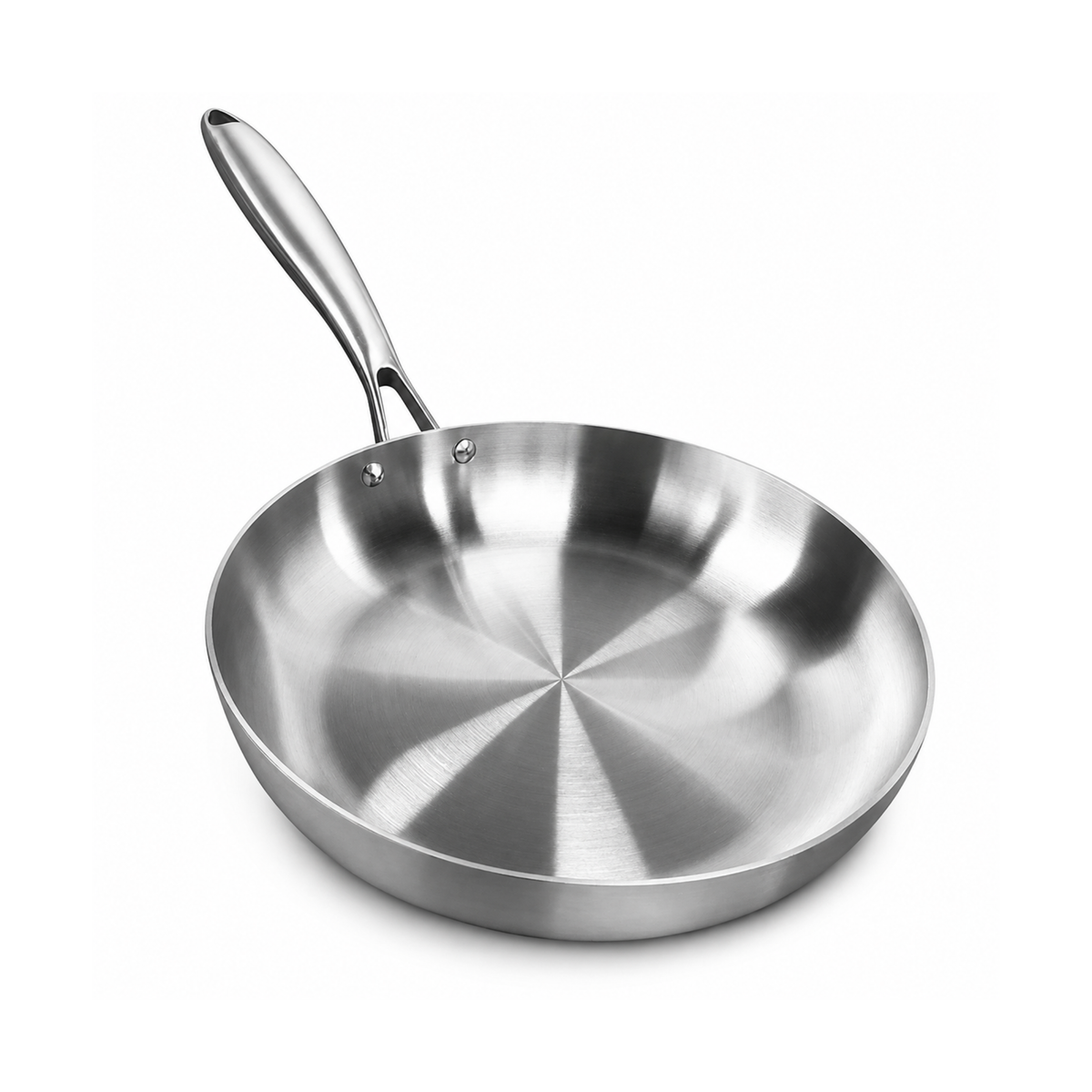
If you are building confidence with uncoated cookware, take a look at Culivra’s 304 Stainless Steel Frying Pan. Its product description identifies an uncoated stainless steel surface and suitability for gas and induction hobs. Check the product page and supplied instructions for current specifications and care advice.
Choose a pan size that suits your usual portions and hob rather than simply buying the largest available option. Enough cooking space helps avoid crowding, while a sensible fit makes handling, washing and storing the pan more comfortable in an everyday kitchen.
No pan removes the need to manage heat, oil and timing. Think of cookware and technique as a partnership: the pan provides the cooking surface, while your choices determine how food browns and what is left to wash afterwards.
Frequently asked questions about cleaning stainless steel pans
What is the easiest way to clean a stainless steel pan?
Let it cool, wash with warm water and washing-up liquid, rinse thoroughly and dry with a towel. If food remains attached, soften it before scrubbing. A short soak or gentle water simmer is often more useful than pressing harder with a sponge.
How do you clean a badly burnt stainless steel pan?
Start by gently simmering water over the residue, then cool the pan and wash it. Repeat as needed. If compatible with the care instructions, try a bicarbonate of soda paste on remaining deposits. Stop if you notice physical damage rather than ordinary residue.
Does vinegar clean every kind of pan stain?
No. Diluted white vinegar can help with some mineral deposits and rainbow discolouration on compatible stainless steel. It is not a substitute for washing-up liquid when the problem is grease, and it is not the first choice for a thick layer of burnt food.
Should I mix vinegar and bicarbonate of soda?
There is no need to combine them for this routine. Use the method that matches the problem, then rinse thoroughly. Bicarbonate of soda paste is useful for gentle mechanical cleaning; diluted vinegar serves a different purpose when tackling certain surface marks.
Is a brown pan permanently ruined?
Not necessarily. Brown marks may be cooked-on food or oil, which can often be reduced with appropriate cleaning. However, discolouration alone cannot tell you whether cookware is structurally sound. Check for warping, pitting, loose fittings or a separating base and seek manufacturer advice if concerned.
Why does my pan look cloudy straight after washing?
Remaining detergent, mineral deposits or a thin greasy film can all affect appearance. Wash and rinse carefully, then towel-dry. If the surface is clean but still marked, identify the stain before treating it rather than assuming you need a stronger detergent.
Do I need to season a stainless steel pan after cleaning?
Ordinary uncoated stainless steel does not generally need the same seasoning routine as cast iron. Follow your pan’s instructions, dry it thoroughly and store it clean. For the next meal, concentrate on suitable preheating, controlled heat and an appropriate amount of cooking fat.
A simple stainless steel cleaning routine to keep
After each use, cool the pan, remove leftover food and wash it with warm soapy water. Rinse fully and dry it before storage. When something sticks, soften it first. When a mark remains, decide whether it is food, oil, mineral residue or discolouration before choosing the next step.
That gentle-first routine is the most practical place to begin. It avoids unnecessary scrubbing, keeps cleaning methods focused and makes stainless steel cookware less intimidating to use. A well-used pan does not have to look brand new to earn its place in your kitchen; it needs to be clean, cared for and ready for the next meal.

Leave a comment
This site is protected by hCaptcha and the hCaptcha Privacy Policy and Terms of Service apply.