
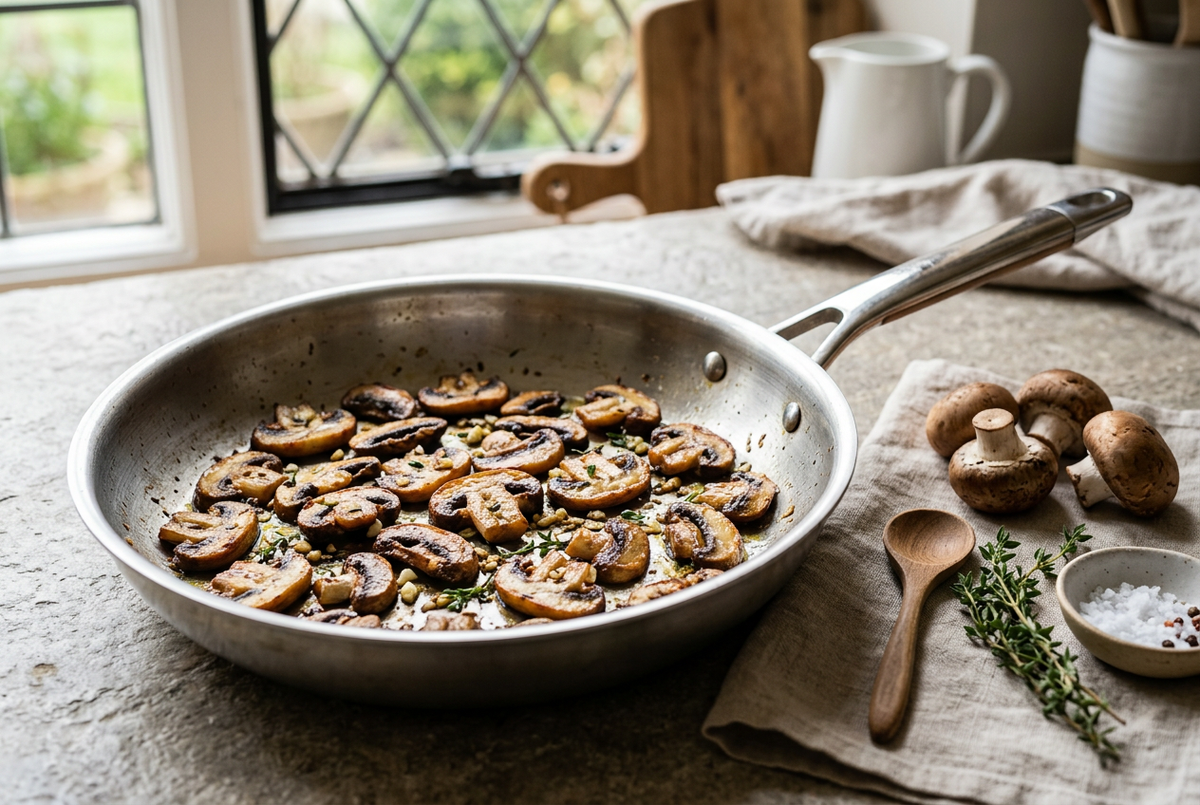
If your mushrooms turn pale, watery and soft instead of golden and savoury, the solution is usually simpler than you think. You do not need a restaurant burner or a complicated technique. You need enough space in the pan, a sensible amount of heat and time for moisture to escape before you expect browning.
This guide explains how to cook mushrooms without them going soggy, from cleaning and slicing to choosing your pan and knowing when to stir. It also covers what to do when mushrooms release water, when to add butter and garlic, and how to use your finished mushrooms in everyday meals.
The short answer: dry the surface, use a wide pan, avoid overcrowding and let released moisture evaporate. Then give the mushrooms enough contact with the hot cooking surface to develop colour. Think of evaporation and browning as two stages rather than expecting everything to happen at once.
Why do mushrooms go watery in a frying pan?
Mushrooms naturally contain a lot of water. As they heat up, their structure softens and some of that moisture escapes. This is normal. The problem starts when the water reaches the pan faster than it can evaporate.
A crowded pan traps moisture between the pieces. A small cooking surface gives that moisture less room to spread out and evaporate. Low heat can make the process slower still. Instead of frying against a relatively dry surface, the mushrooms end up simmering in their own liquid.
That does not mean the batch is ruined. You can usually continue cooking uncovered until the liquid has gone, then allow the mushrooms to brown. However, starting with manageable batches gives you more control and generally produces a better balance of golden surfaces and a tender centre.
Some softness is desirable. Well-cooked mushrooms should not feel raw or rigid. The aim is to avoid a pool of liquid and a uniformly pale finish, not to remove every trace of moisture from the mushrooms themselves.
Which mushrooms are best for frying?
For an uncomplicated starting point, use chestnut mushrooms or white button mushrooms. They are easy to find, straightforward to slice and suitable for toast, pasta, omelettes and simple side dishes. Chestnut mushrooms have a darker appearance, but either type can develop a good golden finish.
Large flat mushrooms and portobellos work well when sliced into substantial strips. Their broader surfaces make browning easy to see. If you leave them whole, their shape can hold liquid, so a sliced preparation is often simpler when learning the technique.
Oyster mushrooms can be torn into fairly even pieces. Their thinner edges may colour faster than the thicker central sections, so watch them closely. A mixed pack can be delicious, but it adds a little complexity because different shapes and thicknesses cook at different speeds.
Use fresh, shop-bought edible mushrooms for this guide. Do not treat cooking instructions as a way to identify wild mushrooms or make an unidentified variety safe to eat.
How to clean mushrooms before frying
Brush away loose dirt or wipe mushrooms with a damp cloth. If they need a rinse, rinse briefly rather than leaving them soaking, then dry the surfaces thoroughly with a clean towel or kitchen paper.
You do not need to follow the absolute rule that mushrooms must never touch water. What matters for this method is avoiding unnecessary surface moisture immediately before they enter the pan. A freshly rinsed, dripping batch adds another source of water that must evaporate before browning can begin.
Trim away dry stem ends and remove any damaged areas. There is usually no need to peel ordinary button or chestnut mushrooms. Keeping preparation simple makes it easier to cook them regularly rather than saving them for an elaborate recipe.
Once cleaned, slice and cook them without leaving them sitting in a puddle. Keep your chopping board reasonably dry too. Small habits at this stage make the cooking process easier to read.
How thick should you slice mushrooms?
For everyday sautéed mushrooms, start with slices roughly 5–8 mm thick. They are substantial enough to retain texture but thin enough to cook through without a long wait. The exact measurement matters less than keeping the pieces reasonably consistent.
Very thin slices can quickly shrink and become floppy. Very thick pieces need more time before their centres soften. Neither is inherently wrong, but a mixture of paper-thin slices and large chunks makes it difficult to judge the whole batch.
Small mushrooms can be halved or quartered instead. Use that shape when you want a more substantial side dish, and expect the cooking time to differ from thin slices. Adjust your judgement to the food in front of you rather than treating a timer as the final authority.
Choose a wide pan with enough usable space
A wide frying pan is usually easier to work with than a narrow, deep saucepan. The broad base gives mushrooms more contact with the cooking surface and lets moisture escape from a larger area.
A stainless steel frying pan can work well for browning, while a suitable non-stick frying pan can make the process approachable for beginners. With either, follow the manufacturer's guidance on heat, utensils and preheating. A non-stick coating should not be treated as permission to heat an empty pan aggressively.
If you are learning on stainless steel, our guide to cooking with stainless steel without food sticking explains the importance of heat control and patient handling. The same general habit helps here: give the food time to cook before trying to move it repeatedly.
Choose a burner that suits the pan's base. A very large pan over a tiny heat source can have a hot centre and cooler edges. If that is your setup, work in smaller batches and move pieces between hotter and cooler areas as needed.
A simple method for golden sautéed mushrooms
For two servings as a topping or small side, start with about 250 g mushrooms, one tablespoon of cooking oil, a little butter if you like, salt and black pepper. Optional additions include a small chopped garlic clove, thyme, parsley or a squeeze of lemon.
The quantities are a starting point, not a strict formula. Your pan size, mushroom variety and preferred finish all affect the result. If the mushrooms cannot sit comfortably across the base, cook them in two batches rather than forcing the full amount into the pan.
1. Prepare everything before you begin
Clean, dry and slice the mushrooms. Set out your oil and seasonings. If you plan to add garlic or herbs, have those ready too. Mushrooms are easier to manage when you can watch the pan instead of stopping halfway through to search for ingredients.
2. Warm the pan appropriately
Use medium to medium-high heat as a starting range, adjusted for your hob and cookware. Add the oil and allow it to warm. It should spread readily, but it does not need to smoke. Follow your pan's instructions rather than using a single preheating rule for every material.
3. Add a manageable layer
Arrange the mushrooms across the base with some breathing room. Perfect spacing is unnecessary, but avoid a deep mound. You should hear a gentle, active sizzle rather than an immediate aggressive crackle or a completely silent pan.
4. Let the first surfaces cook
Leave the mushrooms alone briefly before turning or stirring. Constant movement makes it harder for any one surface to spend time against the hot pan. Check a few pieces, then turn them once you see colour developing.
5. Cook off released moisture
If liquid appears, keep cooking uncovered. Adjust the heat enough to maintain evaporation without scorching the mushrooms or burning the oil. Stir occasionally so pieces cook evenly. Do not add more oil just because the pan contains water.
6. Finish with flavour
When the liquid has largely evaporated and the mushrooms have browned, reduce the heat a little. Add a small knob of butter and any garlic or delicate herbs. Stir briefly until fragrant, taking care not to let the garlic darken excessively. Season, taste and finish with parsley or a little lemon if wanted.
A batch might take around 8–12 minutes, but this is only a guide. A crowded pan, thick pieces or a less powerful hob can take longer. Look for golden patches, a tender texture and no unwanted pool of liquid.
Should you salt mushrooms before or after cooking?
There is no need to turn this into a rigid kitchen rule. Salt affects moisture movement, but mushrooms release water as they cook anyway. Pan space, heat and cooking time are usually more useful things to control than arguing over the exact second you season.
For a beginner-friendly routine, season towards the end. That makes it easier to focus first on evaporation and browning, then adjust the flavour once the mushrooms have reduced in volume.
If you salt earlier, do not assume you have ruined them. Continue cooking uncovered and let the moisture evaporate. Taste before adding more, especially if the mushrooms will join salty ingredients such as cheese, stock, soy sauce or a seasoned pasta sauce.
Oil or butter: what should you use?
Cooking oil is a practical starting point for the initial frying stage. Butter adds flavour, but its milk solids can brown and burn during prolonged cooking over stronger heat. Starting with oil and adding butter near the end gives you a more forgiving sequence.
You can also cook mushrooms without butter if you prefer. Finish with herbs, black pepper, lemon or a small amount of another suitable seasoning. The important technique remains the same: manage moisture first and build the final flavour once the mushrooms are cooked.
Avoid repeatedly adding oil because the mushrooms seem to absorb the first spoonful. Give the batch time and assess the pan. Add a little more only if it genuinely looks dry and the mushrooms are catching before they cook properly.
How to stop garlic burning with mushrooms
Garlic cooks much faster than a full pan of raw mushrooms. If you add finely chopped garlic at the beginning, it may become bitter before the mushrooms have released and evaporated their moisture.
Add it later, when the mushrooms are nearly ready and you have reduced the heat. Stir it through a little oil or melted butter until fragrant. Keep watching, because the change from aromatic to over-browned can happen quickly.
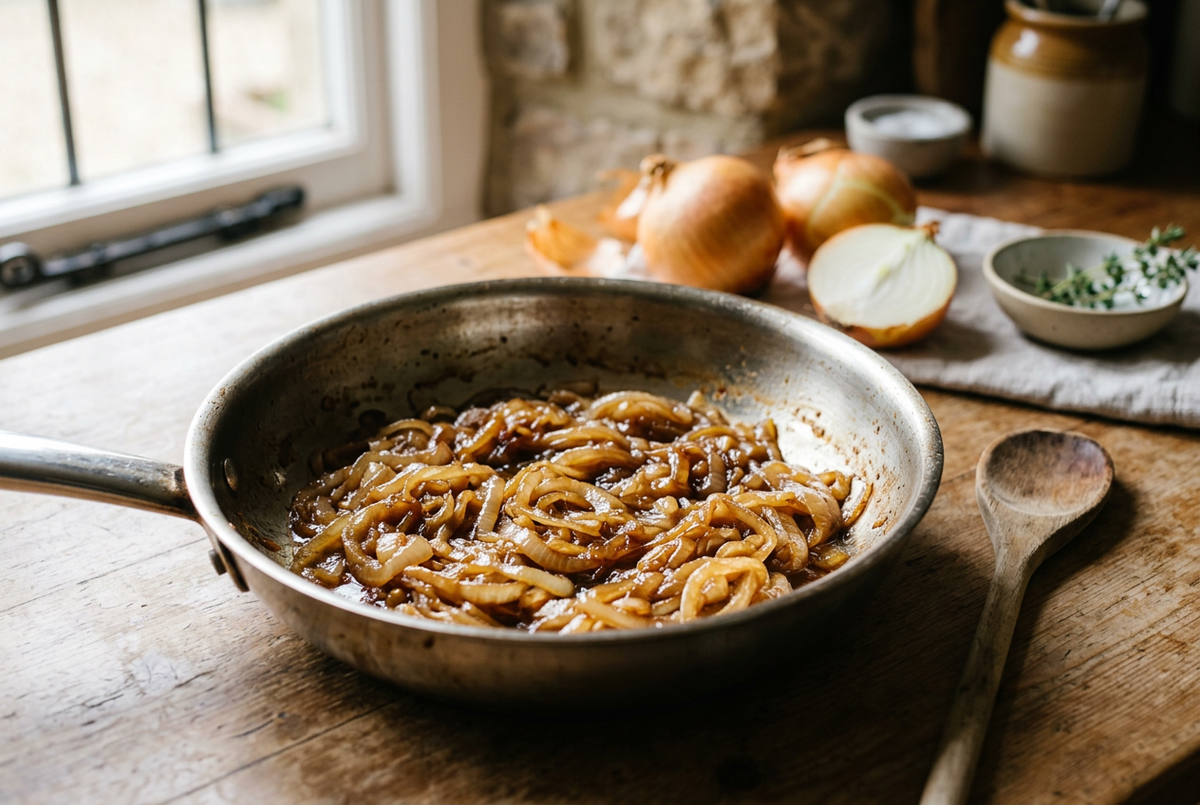
If you want onions in the same dish, consider cooking them separately or giving them an appropriate head start. Properly caramelised onions take considerably more patience than sautéed mushroom slices. Our guide to caramelising onions without burning them explains that slower process.
What to do if your mushrooms are already watery
First, remove the lid if you are using one. A lid keeps steam close to the food, which works against the dry finish you are trying to achieve. Let the mushrooms cook uncovered and assess how much liquid is present.
If there is a modest amount, continue cooking until it evaporates. Stir occasionally and adjust the heat gradually. Avoid turning the hob straight to its maximum setting, particularly with cookware that has heat restrictions.
If the pan is heavily crowded, carefully transfer some mushrooms to a second suitable pan, or set part of the batch aside while you finish the rest. Splitting the load creates more cooking surface. Use care around hot liquid and oil.
Once the water has gone, allow time for browning. Stopping immediately after evaporation can leave the mushrooms cooked but pale. If you want them as part of a sauce instead, you may choose to keep some of their liquid and build the dish around it rather than forcing a dry finish.
Common mistakes that prevent golden mushrooms
One common mistake is treating the packet size as the right batch size. A large packet may need several rounds in a smaller pan. Cook according to the available surface area, not according to how much you bought.
Another is adding sauce too early. Stock, cream, wine or other liquids turn the process towards simmering. Brown the mushrooms first if that is the flavour and appearance you want, then add the sauce ingredients.
Stirring constantly can also delay colour. Check and turn the mushrooms deliberately instead of moving them every few seconds. Equally, do not abandon them completely: a pan with uneven heat needs occasional attention.
Finally, avoid using burnt residue as the definition of success. Golden or deeper brown mushroom surfaces can be delicious. Blackened garlic, smoking oil and harsh burnt smells are signals to reduce the heat and reassess.
Easy ways to serve sautéed mushrooms
Mushrooms on toast
Toast sturdy bread while the mushrooms finish. Spoon them over the top and add black pepper, chopped parsley or a little soft cheese if you like. Serve promptly so the toast keeps some texture rather than sitting beneath the topping for too long.
Mushroom pasta
Fold browned mushrooms into a simple pasta sauce. Add a little pasta cooking water as needed to bring the sauce together, rather than pouring in a large amount at once. For a useful starting point, see our guide to making pasta sauce from scratch.
A quick pan sauce
After cooking the mushrooms, you can use the pan's flavourful browned residue as the beginning of a sauce, provided nothing has burnt. Our guide to making pan sauce without wine covers ways to build flavour without reaching for a bottle.
Breakfasts, bowls and simple sides
Add mushrooms to an omelette filling, spoon them beside beans on toast or pair them with roasted vegetables. Keep the seasoning appropriate for the rest of the meal. A small squeeze of lemon can brighten a rich combination without needing a complicated dressing.
Frequently asked questions
Why are my fried mushrooms rubbery?
A chewy result can come from thick pieces that have not softened sufficiently, a very dry finish or the particular variety you are cooking. Keep the slices consistent and check both colour and tenderness. Browning alone does not tell you everything about the centre.
Can I cook mushrooms without oil?
Some methods begin with mushrooms in a dry pan or use water before a final browning stage. Those are different techniques, not mistakes. For this beginner guide, a modest amount of oil gives a straightforward starting point. Always consider your cookware's instructions before attempting dry-pan cooking.
Should I cover mushrooms while frying?
Leave them uncovered when your goal is a golden, relatively dry finish. Covering can help trap heat and moisture for other cooking methods, but it slows the escape of steam that this method relies on.
Can I add raw mushrooms straight to pasta sauce?
You can cook mushrooms in a sauce, but expect a different result from frying them first. Their released liquid becomes part of the sauce, and they will not develop the same browned surfaces. If you want a deeper sautéed flavour, cook them separately before combining.
Do I need expensive cookware to brown mushrooms?
No. A suitable pan in good condition, manageable batches and attentive heat control matter more than chasing a particular price point. Learn how your existing pan responds and follow its care instructions before deciding you need different equipment.
The habit that makes the biggest difference
If you change only one thing, stop overcrowding the pan. Give the mushrooms room, let their moisture escape and wait for colour before finishing with delicate flavourings. This makes the cooking process easier to understand and gives you a repeatable method rather than a lucky result.
Once you are comfortable with that sequence, vary the herbs, slice size and serving ideas. Golden mushrooms can turn toast into lunch, add savoury depth to pasta or make a simple vegetable dinner feel more complete. Good results come from watching the pan and responding to it, one manageable batch at a time.

Leave a comment
This site is protected by hCaptcha and the hCaptcha Privacy Policy and Terms of Service apply.