
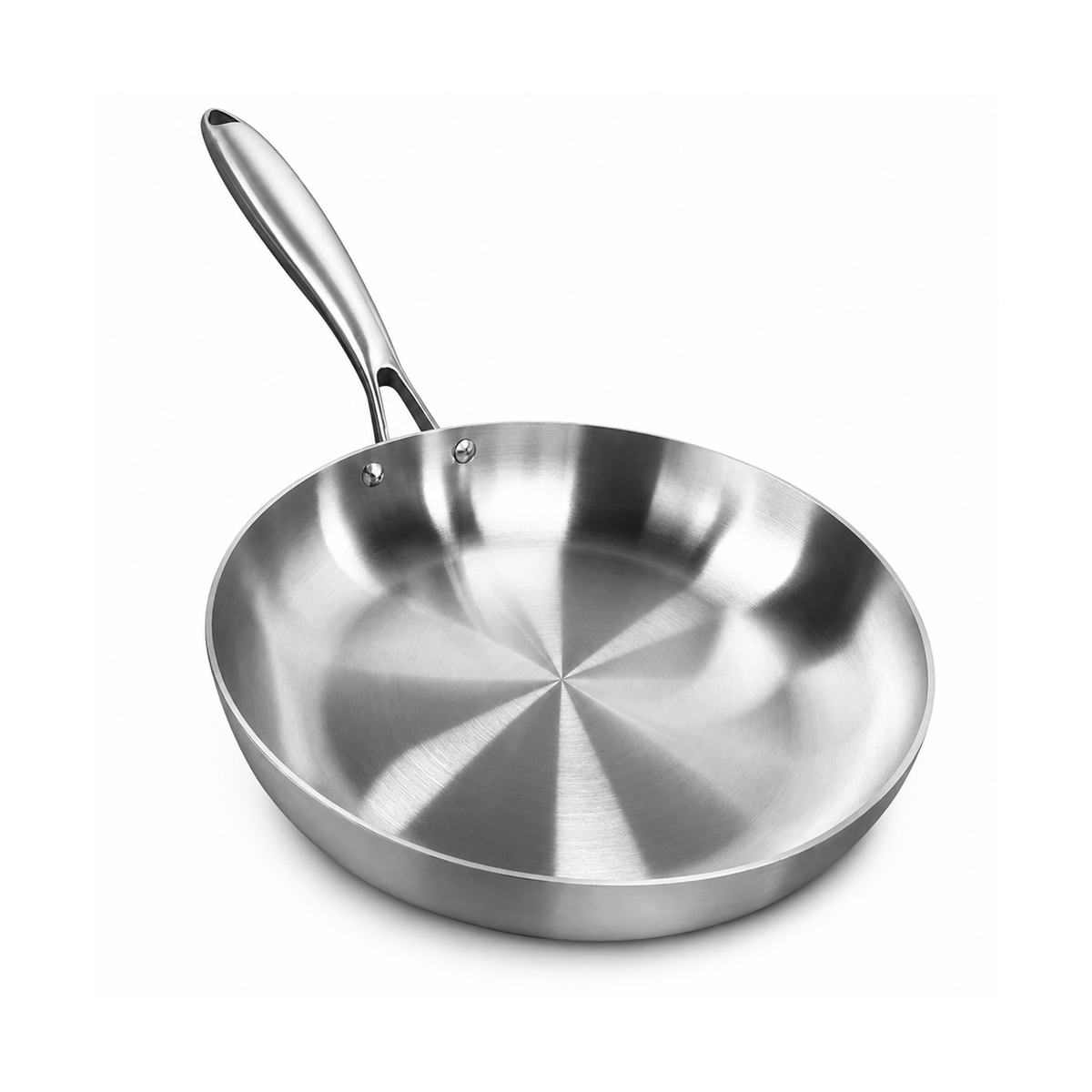
To cook eggs in a stainless steel pan without sticking, start with a clean pan, warm it over medium-low heat, then add enough butter or oil to coat the cooking surface. Add the eggs when the butter foams gently rather than browns, reduce the heat if necessary, and allow fried eggs to set before lifting. Stainless steel is not non-stick, so controlled heat, a continuous layer of fat and patient handling matter more than a very hot pan.
Eggs are a useful lesson in everyday heat control. A pan that works beautifully for browning mushrooms can be far too hot for a delicate egg white. This guide explains how to adapt your technique for fried eggs, scrambled eggs and omelettes, what to do when things stick, and how to make your next breakfast easier.
Why do eggs stick to stainless steel?
Egg proteins can adhere to a metal cooking surface as they heat and set. Unlike a non-stick coating, bare stainless steel does not provide a built-in release layer. Fat helps separate the food from the surface, while appropriate heat allows the egg to cook without rapidly scorching onto the pan.
The most common problems are a patchy layer of fat, excessive heat, leftover residue and trying to move a fried egg before its underside has formed. Several of these can happen together. If the butter burns, the egg lands on a dry area and a spatula goes underneath immediately, adding more oil afterwards is unlikely to rescue the original result.
Do not assume every stuck egg means the pan was too cold. An overheated pan can cause just as much trouble. Pay attention to the behaviour of the fat and the speed at which the egg cooks, rather than following a fixed hob setting regardless of what is happening.
What you need before you start
For a simple first attempt, use one or two eggs, a clean stainless steel frying pan, butter or a suitable cooking oil, a small bowl and a thin spatula. Have a plate ready so the eggs can leave the hot pan as soon as they reach your preferred doneness.
Choose a pan that gives the eggs room without leaving an unnecessarily large cooking surface to heat and grease. A smaller breakfast is usually easier to manage in a modest-sized pan than in a very large one. The important point is usable space: you should be able to slide a spatula under each egg without pushing it into another.
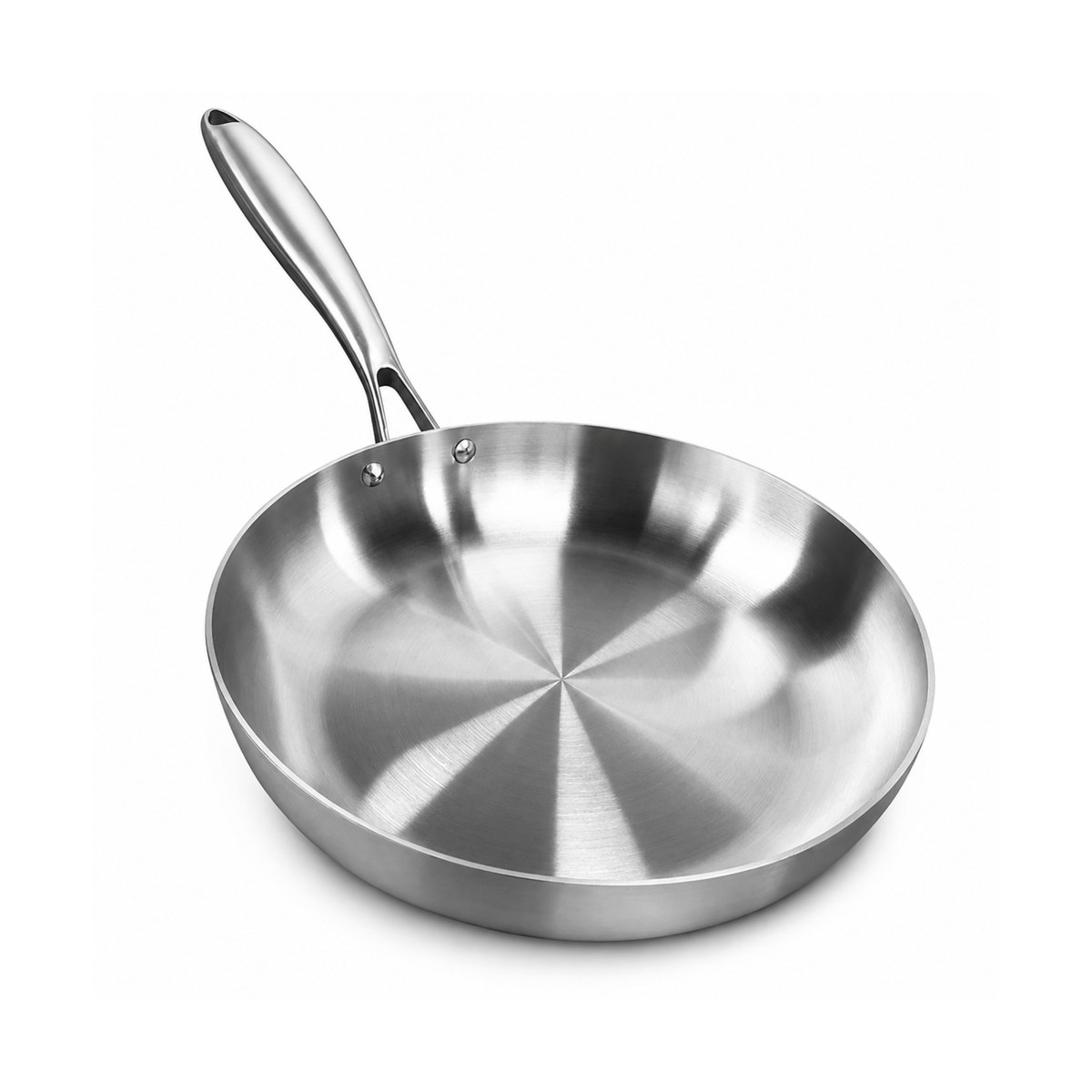
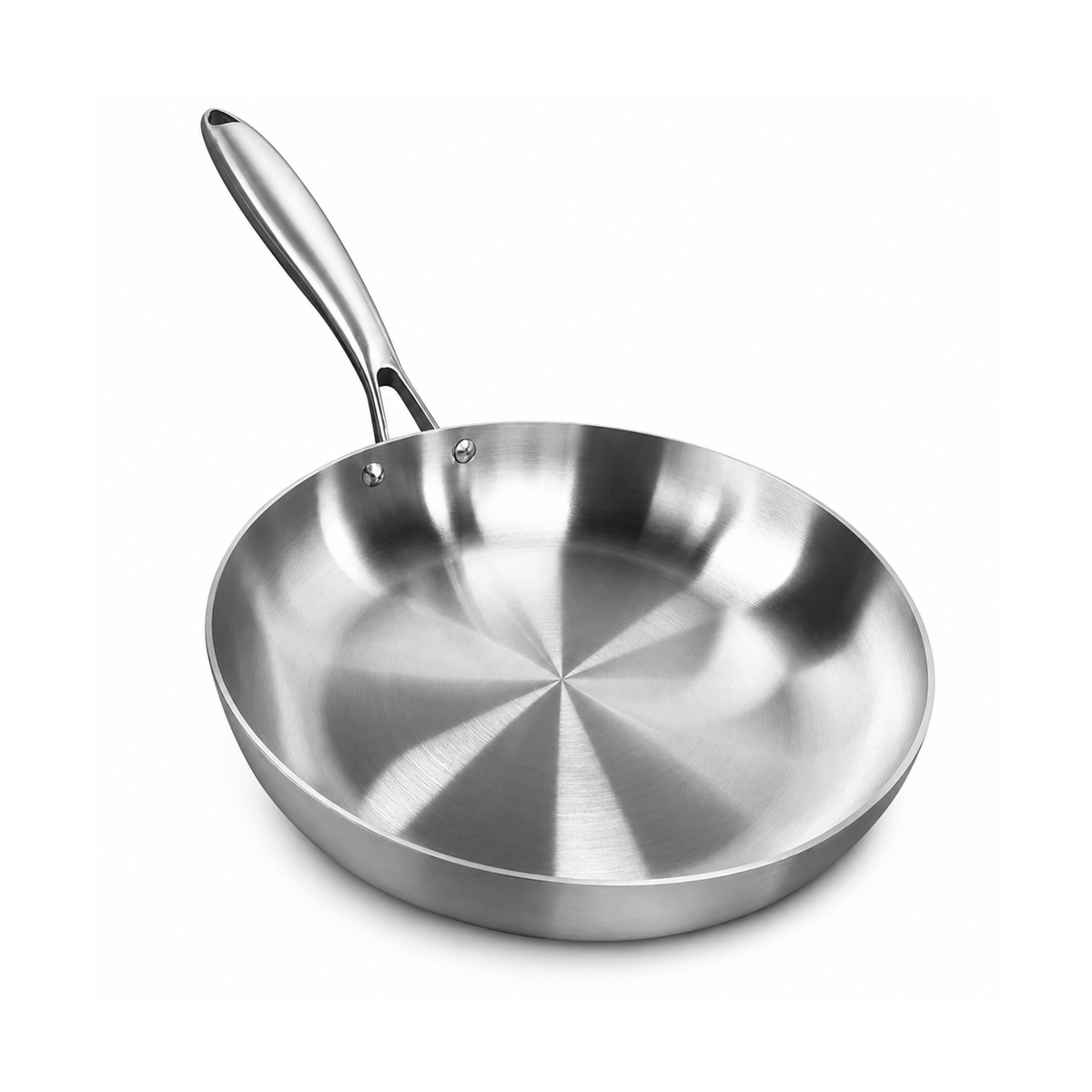
Culivra's 304 Stainless Steel Frying Pan has an uncoated cooking surface and is suitable for gas and induction hobs. Treat it as stainless steel rather than expecting it to behave like a coated non-stick pan. The technique in this guide focuses on that difference.
Crack the eggs into a bowl before switching your attention to the pan. This lets you remove any shell and transfer the eggs promptly when the fat is ready. It also reduces the temptation to leave an empty pan heating while you search for ingredients.
How hot should a stainless steel pan be for eggs?
Start over medium-low heat and warm the pan gradually. The exact setting depends on the hob, the pan and the size of the cooking zone. A powerful induction hob can change the pan temperature quickly; a heavier pan may respond more slowly when you turn the setting down.
For a butter-based method, add the butter after a brief, gentle warm-up. It should melt and foam without immediately turning dark. If it browns almost instantly, the pan is too hot for a gentle egg-cooking approach. Move the pan off the heat, let it cool and start again with fresh fat if the butter has burned.
You may have seen a water-droplet test in which a bead skates across hot stainless steel. That can demonstrate a very hot surface, but it is not a target you need to chase for eggs. A pan hot enough to produce that effect may be too hot for ordinary butter and soft, pale egg whites.
Never add water to a pan containing hot oil just to test it. For this method, use the butter's gentle foaming and the egg's quiet sizzle as practical cues. The aim is steady cooking, not dramatic sizzling or visible smoke.
Butter or oil: which is better for cooking eggs?
Butter is a useful starting point because its foaming gives you a visible temperature cue and its flavour suits eggs. Cooking oil can also work well, particularly if you prefer a more neutral flavour. In either case, coat the area that the eggs will actually touch.
For two eggs in a modest-sized pan, begin with roughly two teaspoons of butter or oil, then adjust to the surface area. This is a starting amount, not a guarantee: a wide pan may need more to maintain an even film. Tilt the pan so the fat reaches the edges of the intended cooking area before adding food.
Adding a little oil to butter does not prevent the butter's milk solids from burning. You still need sensible heat control. If the fat smokes or smells acrid, stop and lower the temperature rather than assuming a different combination of fats will solve the problem.
If you want to use very little fat, a non-stick pan may be the more forgiving choice for delicate eggs. Stainless steel can produce excellent results, but using almost no fat makes the task less forgiving, especially while you are learning your hob.
How to fry eggs in a stainless steel pan
1. Prepare the eggs and the pan
Make sure the pan is clean, dry and free from old cooking residue. Crack one or two eggs into a small bowl. Set out your spatula and serving plate before preheating so that you can concentrate on the pan once cooking begins.
2. Warm gently and coat with fat
Place the pan over medium-low heat and allow it to warm gradually. Add the butter or oil, then tilt to coat the cooking area. With butter, look for gentle foaming. Avoid waiting until it is deeply browned if you want tender whites rather than crisp, browned edges.
3. Add the eggs close to the surface
Lower the bowl towards the pan and slide in the eggs gently. They should make a mild sizzling sound, not crackle aggressively. If the edges instantly bubble hard or darken, reduce the heat and briefly move the pan away from the cooking zone.
4. Let the underside set
Leave the eggs alone initially. Constantly pushing a spatula underneath can tear the whites while they are still fragile. Watch for the outer white to become opaque and the base to gain enough structure to lift. Release may improve as it sets, but stainless steel will not always let food slide freely without help.
5. Finish to your preferred doneness
Slide a thin spatula carefully beneath the egg, working around any resistant area rather than forcing it. For over-easy eggs, turn gently once the base holds together. For a firmer yolk, continue cooking over gentle heat, turning if that suits your preferred result. Timing varies with egg size and pan temperature, so appearance matters more than a stopwatch.
6. Serve promptly
Transfer the eggs to the plate when they are ready. Leaving them sitting in a hot pan continues the cooking and can make the underside tougher. Season to taste and serve with toast, vegetables or whatever else you have prepared.
How to make scrambled eggs in stainless steel
Scrambled eggs need a different approach because you are deliberately moving the egg while it sets. Do not wait for the whole mixture to form a firm base as you would with a fried egg. Use low heat, enough fat and gentle, regular movement instead.
Beat two or three eggs in a bowl until the whites and yolks are combined. Warm the pan gently, add butter and spread it across the base. Pour in the eggs when the butter has melted and is gently foaming, then reduce the heat if the mixture starts setting too quickly at the edges.
Use a spatula to draw the setting egg from the edges towards the centre. Tilt the pan slightly so uncooked egg flows into the cleared areas. Keep the movements unhurried and scrape across the base gently so a thick cooked layer does not build up underneath.
If the curds form much faster than you can move them, take the pan off the heat briefly. Lowering the hob alone will not remove heat already stored in the metal. This short pause is often more useful than stirring faster and hoping the eggs will catch up.
Transfer the scramble while it is still moist but cooked to your preference. Residual heat continues to firm it after cooking. A thin film of egg residue can still remain on stainless steel, even when the scramble is successful; that does not automatically mean the method has failed.
Can you make an omelette in a stainless steel pan?
Yes, but a delicate folded omelette is less forgiving than a basic fried egg. Start with the fried-egg method until you understand how your pan responds to heat. Then practise a simple omelette without a large amount of filling.
Beat two eggs, warm the pan gently and coat the base with butter. Add the egg mixture and spread it evenly. As the edges set, draw them in slightly and tilt the pan to let uncooked egg reach the gaps. Keep the heat moderate enough that the underside does not brown before the top is ready.
Add a small amount of prepared filling once the omelette has enough structure. A little grated cheese or cooked, well-drained vegetables is easier to manage than a heavy pile of wet ingredients. Fold with a thin spatula, loosening the edge first rather than trying to lift the centre immediately.
For mushroom fillings, prepare them separately so excess moisture does not flood the eggs. Our guide to cooking mushrooms without them going soggy explains how to build flavour before adding them to another dish.
Why are my eggs still sticking?
The butter burns before the eggs go in
The pan is too hot for this method. Remove it from the heat and allow it to cool. If the butter is burned, clean it out carefully once it is safe to do so and restart. Simply adding eggs to cool down scorched butter transfers that burnt flavour to breakfast.
The egg sticks in isolated patches
Look for uneven fat coverage or residue on the cooking surface. Tilt the pan before adding the next batch and check that the base is properly clean. Also make sure the hob zone suits the pan: concentrated heat in one small area can make temperature management more difficult.
The underside browns before the white sets
Reduce the heat. Aggressive browning means the base is cooking faster than the rest of the egg. For your next attempt, start with a gentler preheat and use the behaviour of the butter as your guide. A slightly longer, calmer cook is easier to control.
The egg tears when you lift it
You may be moving it too early, or using a spatula that is too thick to slide underneath cleanly. Give the base a little more time to set, then work from the edge. If it still resists, loosen small sections rather than pushing hard through the middle.
The first batch works but the second sticks
The pan may have become hotter during cooking, or the first batch may have used most of the fat. Check the temperature again and replenish the coating before adding more eggs. Do not assume the original hob setting remains correct throughout a longer breakfast session.
How to clean a stainless steel pan after eggs
Let the pan cool before cleaning it. Avoid plunging a very hot pan into cold water. Add warm water and a little washing-up liquid once the pan is safe to handle, then allow any egg residue to soften before washing with a suitable non-scratch sponge.
For stubborn residue, a brief soak is often easier than aggressive scraping. Follow the pan's care instructions when choosing cleaning products and avoid assuming that every abrasive cleaner is appropriate for the finish. Rinse thoroughly and dry before putting the pan away.
A clean base matters for the next meal. A thin patch of old cooked egg can become a new sticking point, so check the cooking surface before you store it. You do not need to season stainless steel in the same way as cast iron to use this egg-cooking method.
Build a better breakfast around your eggs
Prepare slower-cooking sides first so the eggs do not wait in the pan. Potatoes, onions and mushrooms generally need more time than eggs, while toast can be started close to the end. This simple order makes the final few minutes much less rushed.
For a more substantial breakfast, pair your eggs with crispy frying-pan potatoes. Finish the potatoes before starting the eggs, or use a separate pan if you want both components ready together. If you reuse the same pan, remove leftover browned bits and reassess the heat rather than dropping eggs straight into a very hot surface.
Once you are comfortable with breakfast, the same habits help with other everyday cooking: prepare ingredients first, observe the fat, adjust heat as you go and avoid overcrowding. Our broader guide to cooking with stainless steel without sticking explores how these principles apply beyond eggs.
Frequently asked questions
Can you cook eggs in stainless steel without oil or butter?
It is possible to attempt it, but sticking is much more likely on an uncoated surface. For a straightforward home-cooking method, use enough fat to create a continuous film. If avoiding added fat is your priority, consider a different egg-cooking method rather than expecting bare stainless steel to act like non-stick cookware.
Should the eggs be at room temperature?
You do not need to leave eggs out for a long period to follow this guide. Temperature can affect how quickly the pan recovers after you add food, but it is not a substitute for good heat control. Prepare the eggs while you organise the other ingredients, and follow the storage guidance on their packaging.
Is stainless steel better than non-stick for eggs?
Neither is automatically better for every cook. Non-stick is generally more forgiving for delicate eggs and low-fat cooking. Stainless steel gives you an uncoated surface that can handle a wider range of browning tasks, but eggs require more attention. Choose based on how you cook, not on a promise that one material always wins.
Do I need the highest heat to stop sticking?
No. Eggs do not need the intense heat used for searing. Excessive heat can burn the fat and toughen the whites before the egg cooks through. Start gently, watch the butter and make small adjustments. Learning the right moderate setting on your hob is more valuable than maximising temperature.
How long do fried eggs take in stainless steel?
They usually cook within a few minutes, but the exact time depends on the starting temperature, egg size, pan and preferred doneness. Use the setting of the white and the firmness of the yolk as your guide. Follow appropriate food-safety guidance when cooking for anyone who needs fully cooked eggs.
The simplest routine to remember
Clean pan, gentle heat, even fat coverage, then patient cooking: that is the foundation of better eggs in stainless steel. Begin with one or two fried eggs so you can learn how your pan responds, then move on to scrambled eggs and omelettes once temperature control feels familiar.
If the first attempt sticks, change one thing next time rather than everything at once. Lower the preheat, improve the fat coverage or wait a little longer before lifting. Those small, repeatable adjustments are how an unpredictable breakfast becomes a reliable everyday skill.

Leave a comment
This site is protected by hCaptcha and the hCaptcha Privacy Policy and Terms of Service apply.