
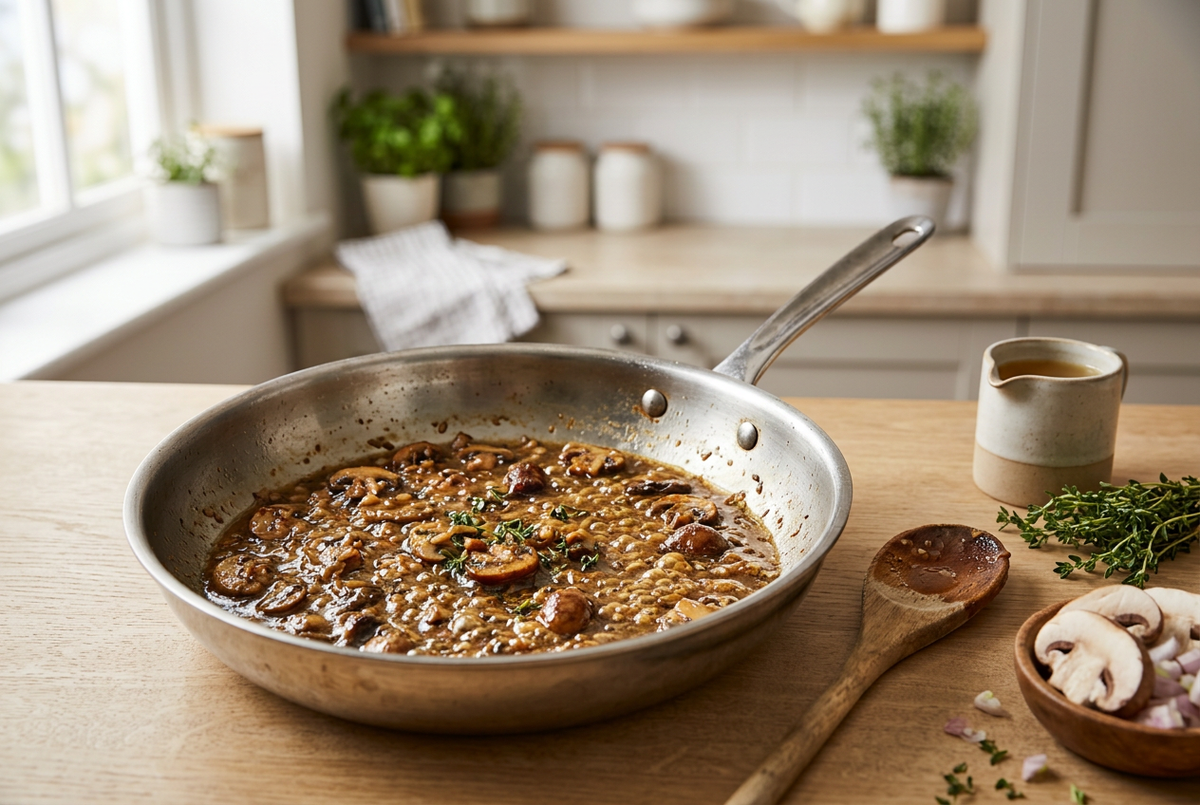
Knowing how to make pan sauce without wine is one of the simplest ways to make an everyday dinner feel more complete. Once you have fried mushrooms, browned chicken or cooked a steak, the frying pan often contains the beginning of a delicious sauce. You need a little liquid, a few flavourings and a short simmer to bring it together.
You do not need an expensive bottle of wine, a separate saucepan or a cupboard full of ingredients. Stock, water and a small splash of lemon juice can do the job beautifully. The important part is understanding what to keep in the pan, when to add liquid and how far to reduce it.
This beginner-friendly guide explains how to deglaze a pan with stock, how to make a glossy sauce without flour, and what to do if your sauce tastes salty, bitter or thin. There is also a straightforward recipe you can adapt to the ingredients you already have.
What is a pan sauce?
A pan sauce is a sauce made in the same pan used to cook the main ingredient. After frying, you remove the cooked food, add aromatics if you want them, then pour in liquid to loosen the browned cooking residue. You simmer that liquid until its flavour becomes more concentrated and finish it with butter, herbs or another seasoning.
The browned residue is often called fond. It forms when ingredients brown against the hot cooking surface. Golden and deep-brown patches can bring savoury depth to a sauce, whereas blackened patches can make it bitter. Learning to recognise the difference is more useful than memorising a complicated recipe.
Unlike a large batch of gravy, a pan sauce is usually made in a small quantity just before serving. Think of a few spoonfuls per person rather than enough to cover an entire plate. Its job is to connect the main ingredient with the vegetables, potatoes or grains alongside it.
Can you make a pan sauce without wine?
Yes. Wine is one possible deglazing liquid, not a requirement. It contributes liquid, acidity and flavour, but those roles can be separated. Stock supplies savoury depth, water loosens the browned bits, and a little lemon juice or suitable vinegar can brighten the finished sauce.
The best substitute depends on the dish. Chicken stock works well with chicken and many mushroom dishes. Vegetable stock is a flexible choice for vegetables and meat-free meals. Beef stock can suit a richer steak sauce. Water is also useful when the pan already contains plenty of flavour or when your stock is too salty.
Avoid replacing a full measure of wine with the same quantity of vinegar or lemon juice. These ingredients are much sharper. Start with stock as the main liquid and add acidity in small amounts near the end, tasting as you go.
The best pan for making a simple pan sauce
A frying pan with enough space for your ingredients helps you develop browning rather than steam. Stainless steel is a useful option because browned residue is easy to see against the surface. If you are exploring this style of cooking, browse Culivra’s 304 Stainless Steel Frying Pan and choose a size that suits the meals you normally make.
The method matters as much as the material. Avoid crowding the cooking surface, and adjust the heat if residue is darkening too quickly. Keep your stock measured and ready before cooking so you can add it promptly when the pan is ready.
A non-stick pan can also make a sauce, although you may get less browned residue. Use utensils suitable for the surface and follow the manufacturer’s instructions. For more help with heat and food release, read our guide to cooking with stainless steel without food sticking.
A simple pan sauce recipe without wine
This small recipe makes approximately two modest servings. The exact yield depends on the width of your pan and how much you reduce the liquid. Make it after cooking your main ingredient, or use browned mushrooms as the flavour base.
Ingredients
- About 1 teaspoon of cooking fat left in the pan, or a little fresh oil if needed
- 1 small shallot, finely chopped
- 1 small garlic clove, finely chopped, optional
- 150ml low-salt stock, plus a little extra if needed
- Half a teaspoon of Dijon mustard, optional
- 15g cold butter, cut into small pieces
- A small squeeze of lemon juice, to taste
- Black pepper and a little chopped parsley or thyme
- Salt only if needed after tasting
Mustard and butter introduce allergens, so choose alternatives suitable for everyone eating the meal. For a dairy-free version, you can reduce the stock to the consistency you like and finish with a small drizzle of olive oil instead. The texture will be different but still pleasant.
Step 1: Remove the cooked food and inspect the pan
Transfer your main ingredient to a suitable plate. If you are cooking meat, check that it is properly cooked using appropriate guidance for that food rather than assuming that browning proves it is done. Resting and sauce-making are separate from checking doneness.
Look carefully at the residue in the pan. Brown is useful; burnt black patches are not. If the residue smells acrid or looks heavily scorched, it is better to start the sauce in a clean pan with fresh aromatics than to build a sauce around a bitter base.
Step 2: Adjust the fat and soften the shallot
Carefully spoon off excess fat, leaving roughly a teaspoon. Reduce the heat to medium-low and add the shallot. Stir until softened, usually a few minutes, adjusting the heat rather than rushing it. If the pan is very dry, add a small amount of oil.
Add the optional garlic only towards the end of this stage. Finely chopped garlic burns faster than shallot, so it needs less time. The aim is a fragrant base, not dark garlic that overwhelms the rest of the sauce.
Step 3: Deglaze the pan with stock
Pour in the stock carefully. A hot pan may release a burst of steam, so keep your face and hands clear. Use a wooden spoon or a utensil suitable for your pan to loosen the brown patches from the bottom.
As you stir, the residue should dissolve into the liquid. You do not need to scrape aggressively. Gentle stirring and a brief simmer are generally enough. If the liquid disappears immediately, reduce the heat and add a little more stock or water.
Step 4: Reduce until the flavour is concentrated
Bring the liquid to a steady simmer and stir in the mustard if using. Let it reduce until there is noticeably less liquid and the flavour tastes rounded. In a wide frying pan this may happen quickly, so stay nearby.
Judge the sauce by taste and texture rather than a strict timer. Stock varies in strength, and a broad pan evaporates liquid faster than a narrow one. Stop before the sauce becomes sticky or excessively salty. Remember that the butter will add a little body at the end.
Step 5: Finish gently with cold butter
Take the pan off the heat. Add the cold butter a few pieces at a time, swirling or stirring gently as it melts. This helps create a glossy sauce rather than a pool of melted fat. If the pan is fiercely hot, let it settle briefly before adding the butter.
Taste before seasoning. Add pepper, herbs and a small squeeze of lemon juice as needed. Only add salt if the sauce genuinely needs it. Spoon over your meal and serve promptly, because a small pan sauce is at its best when freshly made.
How to deglaze a pan with stock instead of wine
Deglazing simply means adding liquid to dissolve flavourful residue from the cooking surface. Stock is especially convenient because it contributes flavour at the same time. The technique works best when the pan is hot enough for a gentle simmer but not so hot that every splash evaporates instantly.
If your frying pan is smoking heavily, lower the heat or briefly move it away from the hob before adding liquid. Pour carefully and allow room for steam. Do not pour a large amount of very cold liquid into an overheated pan; follow the care guidance for your cookware.
Start with enough liquid to cover the base in a shallow layer. Once the fond has loosened, you can add a little more if necessary. Adding a huge quantity at the beginning makes reduction slower and can leave you waiting while the rest of dinner cools.
How to thicken pan sauce without flour
The simplest way to thicken a pan sauce without flour is to reduce it. Simmering removes water and concentrates what remains. This gives a lighter sauce than a flour-based gravy, which is often exactly what you want with a pan-fried main ingredient.
Finishing with butter can improve body and gloss, but it will not turn a large volume of watery stock into thick gravy. Reduce first, then finish. Adding more and more butter to compensate for insufficient reduction usually makes the sauce greasy rather than balanced.
If you prefer a thicker result, use a small cornflour slurry. Mix half a teaspoon of cornflour with a teaspoon of cold water, stir it into the simmering sauce and allow it to cook briefly. Add gradually and assess the consistency before using more. Check ingredient labels if you need the whole meal to meet a particular dietary requirement.
Easy pan sauce variations for everyday dinners
Mushroom pan sauce without wine
Brown sliced mushrooms before adding the shallot. Give them enough space and time for released moisture to evaporate. Then follow the stock method, finishing with parsley or thyme. Mushrooms contribute savoury flavour even when you are not starting with meat juices.
For a creamier version, stir in a small splash of cream once the stock has reduced, then warm gently. Taste before adding the lemon, as the balance will be different. This sauce works well with chicken, mashed potatoes or a plate of roasted vegetables.
Lemon and herb pan sauce for chicken
Use chicken stock, omit the mustard if you prefer, and finish with parsley and a little lemon juice. A small amount of finely grated lemon zest can add fragrance without the same sharpness as extra juice. Add zest sparingly so it supports rather than dominates the sauce.
If there are juices on the resting plate, add them while the sauce is still simmering and allow them to heat through before the butter finish. Keep the main ingredient warm appropriately and avoid leaving the finished meal waiting while you continue adjusting the sauce.
Mustard pan sauce for a richer dinner
Increase the mustard slightly after tasting the basic recipe. Dijon gives a smoother result, while wholegrain mustard adds texture. Neither needs to be used in large quantities. The stock, fond and mustard should remain in balance rather than tasting like diluted mustard straight from the jar.
Serve a little alongside steak, pork or mushrooms, depending on your preferences. If the sauce becomes too sharp, a small amount of extra stock and a gentler reduction can help. Do not automatically add sugar before checking whether dilution solves the problem.
Why does my pan sauce taste bitter?
The most common starting point is burnt residue. Dark brown cooking marks can be useful, but blackened garlic, scorched spices or burnt pan juices may bring unpleasant bitterness. Adding stock does not remove that flavour; it spreads it through the sauce.
Next time, lower the heat earlier, watch the pan between batches and add delicate ingredients later. If you notice burning before deglazing, stop and clean the pan. Losing a little fond is better than wasting the remaining ingredients on a sauce you will not enjoy.
Why is my pan sauce too salty?
Reduction concentrates salt as well as flavour. A stock that tastes pleasantly seasoned at full strength may become much saltier after simmering down. That is why low-salt stock and delayed seasoning are helpful for this technique.
Add a little water or unsalted stock to dilute an over-salted sauce, then reassess. Do not reduce it straight back to its previous volume or the saltiness will return. Serving a smaller amount alongside simply seasoned potatoes or vegetables may also make the meal more balanced, but it does not remove salt from the sauce.
Why has my pan sauce split or turned greasy?
A greasy appearance can come from leaving too much cooking fat in the pan, adding too much butter, or boiling strongly after the butter finish. Before deglazing, remove excess fat. When finishing, take the pan off the heat and add butter gradually.
If the sauce separates, let it cool slightly and whisk in a small splash of warm water. This can help bring it together, although recovery is not guaranteed. Avoid trying to fix it by adding another large knob of butter. Gentle heat and proportion are the more useful adjustments.
What to serve with a homemade pan sauce
Keep the sides straightforward so the sauce has something useful to bring together. Mashed potatoes, rice, soft polenta and crusty bread all work well with different versions. A few spoonfuls of sauce can also lift steamed greens or roasted root vegetables.
If your main ingredient is already rich, choose vegetables with a little freshness and avoid adding a second heavy sauce. Our guide to how to roast vegetables for better results is a useful companion when you want a simple side that can cook while you prepare the hob element.
For an easy workflow, get the sides nearly ready before starting the sauce. Have warm plates available, measure the stock and chop the shallot in advance. Pan sauce is quick, but that speed is most useful when you are not searching for ingredients halfway through.
Frequently asked questions about pan sauce without wine
Can I use water instead of stock?
Yes. Water can work particularly well when there is plenty of flavourful fond in the pan. The sauce will usually taste lighter than a stock-based version, so use herbs, mustard or a little lemon to build balance. Taste before adding salt rather than assuming water always means more seasoning is needed.
Can I make pan sauce without butter?
Yes. Reduce the stock until you like the consistency and finish with herbs and a little olive oil if appropriate. You can also use a suitable dairy-free alternative, checking its cooking guidance. Expect a different texture rather than an exact copy of a butter-finished sauce.
Do I need flour to make a pan sauce?
No. A classic quick pan sauce can rely on reduction and a butter finish. Flour is one way to build a thicker sauce, but it is not essential. If you want a gravy-like texture, use a tested thickening method rather than expecting a lightly reduced stock to behave like gravy.
Can I make it ahead?
You can prepare chopped aromatics and measured stock ahead, but the simplest version is best finished close to serving. If you make a base in advance, cool and store it following appropriate food-safety guidance, then reheat thoroughly before adding finishing ingredients. A reheated butter-finished sauce may not have quite the same texture.
Does a pan sauce need vinegar or lemon juice?
Not always. Acidity is useful when a sauce tastes heavy or flat, but some stocks and ingredients already have enough balance. Add a few drops, taste and stop when the flavour feels brighter. The finished sauce should not automatically taste lemony or vinegary.
Build confidence with one simple method
The most useful formula is straightforward: keep the good browned bits, soften a little shallot, deglaze with stock, reduce, then finish gently. Once that sequence feels familiar, you can change the herbs, add mushrooms or vary the stock without learning a completely new technique.
Start with the basic recipe and notice what happens as the liquid simmers. Taste before and after reduction, then again after a small squeeze of lemon. Those comparisons teach you more than adding ingredients without checking the result.
A good pan sauce does not need wine, a long ingredient list or a restaurant kitchen. With a suitable frying pan and a few minutes of attention, you can turn what is left after cooking into something worth serving, making an ordinary dinner feel more considered without making it complicated.

Leave a comment
This site is protected by hCaptcha and the hCaptcha Privacy Policy and Terms of Service apply.