
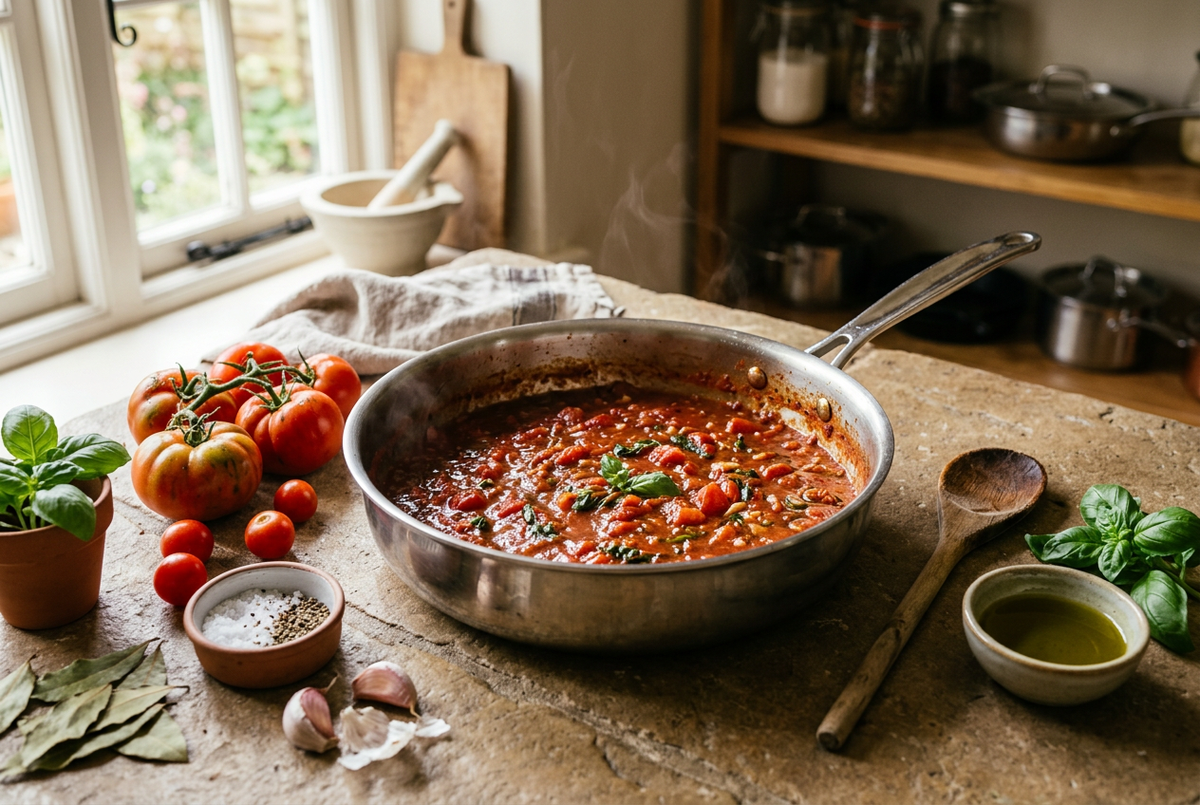
Learning how to make pasta sauce from scratch is one of the most useful skills you can bring to everyday cooking. A tin of tomatoes, a little olive oil and a few simple ingredients can become a comforting dinner without an expensive shopping list. The difference between a thin, sharp sauce and something you genuinely want to eat usually comes down to a few decisions: how you cook the aromatics, how gently the tomatoes simmer and how you finish the pasta.
This guide walks you through a flexible homemade tomato pasta sauce for beginners. You will learn whether fresh or tinned tomatoes make more sense, how to thicken tomato sauce without flour, why a sauce sometimes tastes bitter and how to help it cling to pasta instead of gathering in a watery puddle. Start with the basic method, then adapt it to your own kitchen.
What makes a good homemade pasta sauce?
A good tomato sauce balances tomato flavour, savouriness, fat and seasoning. It should taste rounded rather than harsh, but it does not need to be sweet. Its texture should suit the pasta: a relatively smooth sauce works well with spaghetti, while a chunkier version can settle into the curves of short pasta.
More ingredients do not automatically mean a better result. Too much dried oregano can overwhelm the tomatoes, while excessive garlic can dominate every mouthful. Begin with a small, clear set of flavours. You can always add more after tasting, but you cannot easily remove a spoonful of herbs once it is in the pan.
Cooking time also needs context. A small batch of crushed tinned tomatoes can become a satisfying weeknight sauce fairly quickly. A larger pan of fresh tomatoes may need longer because it contains more water. Judge the sauce by its texture and flavour, not simply by the clock.
Fresh or tinned tomatoes: which should you use?
Why tinned tomatoes are useful for beginners
Tinned tomatoes are a practical starting point because they are convenient and available throughout the year. Whole peeled tomatoes give you control over texture: crush them with a spoon as they cook, or break them up in a bowl before adding them. Chopped tomatoes are convenient if you prefer less preparation.
Passata is another useful option when you want a smoother finish. It is sieved tomato rather than a finished pasta sauce, so it still benefits from aromatics, seasoning and gentle cooking. Check the label, as some products already contain salt or other ingredients.
When fresh tomatoes work well
Fresh tomatoes are especially rewarding when they are ripe, fragrant and full of flavour. Out-of-season tomatoes that taste bland when raw are unlikely to become exceptional sauce simply because they spend longer in a pan. If your tomatoes are watery, allow extra time for evaporation.
Chop fresh tomatoes evenly and remove the hard stem cores. Peeling is optional: skins soften during cooking but can remain noticeable in a rustic sauce. If you want a very smooth finish, peel before cooking or blend carefully afterwards. Do not assume an equal weight of fresh tomatoes will behave exactly like tinned tomatoes; adjust the simmering time to the result in front of you.
Choosing a pan for homemade tomato sauce
Use a pan with enough room to stir comfortably and a base that distributes heat reasonably evenly. A wide pan encourages evaporation, making it useful for reducing a watery sauce. A deeper saucepan is helpful for larger quantities, although the same volume of sauce may reduce more slowly in a narrower vessel.
Stainless steel is a practical choice for tomato-based cooking. If you are comparing everyday options, explore Culivra’s 304 Stainless Steel Frying Pan and check the available sizes against your usual portions. Choose cookware for its capacity and suitability, rather than expecting one shape to suit every recipe.
A wooden spoon or suitable silicone utensil helps you stir into the corners. Keep a lid nearby for splashes, but remember that covering the pan fully traps moisture. For more general stovetop technique, read our guide to cooking with stainless steel without food sticking.
Easy homemade tomato pasta sauce recipe
This flexible recipe makes approximately four portions of sauce. Preparation takes around 10 minutes, followed by roughly 30–40 minutes of cooking, depending on your pan, heat and preferred thickness. Treat these timings as a guide rather than a guarantee.
Ingredients
- 2 tablespoons olive oil
- 1 medium onion, finely diced
- 2–3 garlic cloves, finely chopped
- 2 tins of tomatoes, approximately 400g each
- 1 tablespoon tomato purée, optional
- A small handful of fresh basil, or a modest pinch of dried oregano
- Salt and freshly ground black pepper, to taste
- A little water, only if needed
- Approximately 300–400g dried pasta, according to appetite
- Reserved pasta cooking water, for finishing
The onion adds a gentle savoury sweetness, but you can leave it out for a simpler tomato-and-garlic sauce. Tomato purée adds depth, especially when the tomatoes taste mild. Basil and oregano create different flavour profiles, so start with one rather than adding a large amount of both.
Step 1: soften the onion without burning it
Warm the olive oil over a medium-low heat. Add the diced onion with a small pinch of salt, then stir to coat it. Cook gently for around 8–10 minutes, stirring regularly, until softened and becoming translucent. If the edges darken quickly while the centre stays firm, reduce the heat.
This stage is worth a little patience. Softened onion integrates into the sauce more pleasantly than onion that is still crunchy when the tomatoes go in. You are not trying to create deeply browned onions here. If the pan starts drying out, a small splash of water can help you continue softening without adding more oil.
Step 2: briefly cook the garlic and tomato purée
Add the garlic and stir for about 30 seconds, just until fragrant. Garlic can turn bitter when scorched, so do not leave it sitting on the hot base unattended. Add the tomato purée, if using, and stir for another minute or so at a gentle heat.
The aim is to combine the purée with the oil and aromatics, not to burn it into a dark crust. If the garlic has gone black and smells acrid, it is usually better to restart the aromatics than to build the entire sauce on a burnt flavour.
Step 3: add the tomatoes
Pour in the tomatoes and stir thoroughly. Break up whole tomatoes with your spoon, taking care because they can release hot liquid. Rinse the tins with a small splash of water only if you need help loosening the mixture; adding lots of water now simply creates more liquid to reduce later.
Add a little black pepper and, if using dried oregano, a small pinch. Bring the mixture to a gentle bubbling simmer, then lower the heat. The sauce should move lazily rather than boil so vigorously that it spits across the hob.
Step 4: simmer until the sauce tastes rounded
Cook uncovered or partly covered for around 20–30 minutes, stirring regularly and scraping gently across the base. Keep the heat low enough to avoid catching. If the sauce becomes thick before the flavours have developed, add a small amount of water and continue gently.
Taste towards the end. The tomatoes should taste less raw, the onion should be tender and the sauce should have enough body to coat a spoon. Stir in torn fresh basil near the end so its flavour stays noticeable. Adjust the salt gradually rather than adding a large amount at once.
Step 5: finish the pasta in the sauce
Cook your pasta according to the packet instructions, checking it before the full time if you plan to finish it in the sauce. Before draining, reserve a mug of cooking water. Transfer the pasta to the sauce and toss over a gentle heat, adding the reserved water a small splash at a time.
The goal is a coating that follows the pasta, not a separate pool of sauce underneath it. Tossing helps combine the tomato sauce, oil and starchy water. Stop adding water as soon as the texture looks glossy and loose enough to move easily. Serve promptly, with extra basil or a suitable cheese if you like.
How to thicken tomato pasta sauce without flour
The simplest method is usually gentle reduction. Leave the pan uncovered and let excess water evaporate, stirring regularly so the thicker sauce does not catch underneath. A wider pan can make this easier because more sauce is exposed to the air.
Before changing anything, check whether the sauce is genuinely too thin or simply hot and fluid. Spoon a little onto a plate and watch how it settles. Also remember that finishing pasta in the pan changes the final consistency, so a sauce that looks slightly loose on its own may be just right once tossed.
Tomato purée can add body as well as flavour, but it is not a substitute for reducing a large amount of excess water. Add a little, stir it in well and give it time to cook into the sauce. Avoid dumping flour directly into tomato sauce: it can form lumps and create a texture that is heavier than you intended.
Why does homemade tomato sauce taste sour?
Tomatoes are naturally acidic, and different batches taste noticeably different. If the sauce tastes sharp, first ask whether it has cooked long enough for the raw tomato flavour to mellow. Give it a little more time at a gentle simmer, adding a splash of water if it has already reduced too far.
Next, check the seasoning. A modest amount of salt can make the overall flavour feel more balanced. Softened onion and a little olive oil can also round out the eating experience. None of these steps removes acidity, but they can change how prominently you perceive it.
If the sauce remains unpleasantly sharp, a very small pinch of sugar is an option. Taste before adding more. Sugar balances the impression of sourness rather than neutralising the tomatoes, and too much can leave you with a sauce that tastes strangely sweet. Better tomatoes are often a more useful improvement for your next batch.
Why does pasta sauce taste bitter?
Bitterness is different from the bright sharpness of tomatoes. Common culprits include burnt garlic, scorched tomato purée, heavily browned herbs or sauce that has caught on the base of the pan. Turn down the heat early rather than waiting for a strong burnt smell.
If the bottom has scorched, stop stirring immediately. Carefully transfer the unburnt sauce from the top into a clean pan without scraping up the burnt layer. Taste it before deciding whether to continue. Adding sugar will not reliably rescue a sauce that tastes strongly burnt throughout.
Too many dried herbs can also create a harsh flavour. Measure with restraint, especially in a small batch. Add delicate fresh herbs closer to serving and build stronger flavours gradually. A sauce should taste of tomatoes first, unless you deliberately want a different style.
How to make pasta sauce stick to pasta
A common mistake is draining pasta completely dry, putting it on a plate and pouring sauce on top. This can leave you with plain strands underneath and an uneven coating. Instead, move the pasta into the sauce while it is still slightly wet and toss them together.
Reserved pasta water gives you control over the finishing texture. Add a small splash, toss and watch what happens before adding more. The starch in the water helps bring the sauce together, but excessive water will dilute even a well-reduced sauce.
Match the pasta shape to the sauce, too. Smooth tomato sauce coats long strands easily, while chunkier vegetables tend to work well with ridged tubes or short shapes. You do not need a strict rule for every dinner; simply choose something that makes the sauce easy to catch and eat.
Simple ways to vary your homemade pasta sauce
Add roasted vegetables
Roasted peppers, courgettes or aubergines add texture and a deeper savoury flavour. Cook them separately first so you do not release a large amount of vegetable water directly into a nearly finished sauce. Fold them through near the end and adjust the seasoning afterwards.
For help getting colour without turning vegetables soft and watery, see how to roast vegetables for better results. You can keep the pieces chunky or blend some into the tomato base, depending on the texture you prefer.
Make a gentle chilli tomato sauce
Add a small pinch of chilli flakes with the garlic, watching carefully so neither burns. Chilli intensity varies between products, so start with less than you think you need. You can add a little more later, but taking heat out of a finished sauce is much harder.
Build a mushroom version
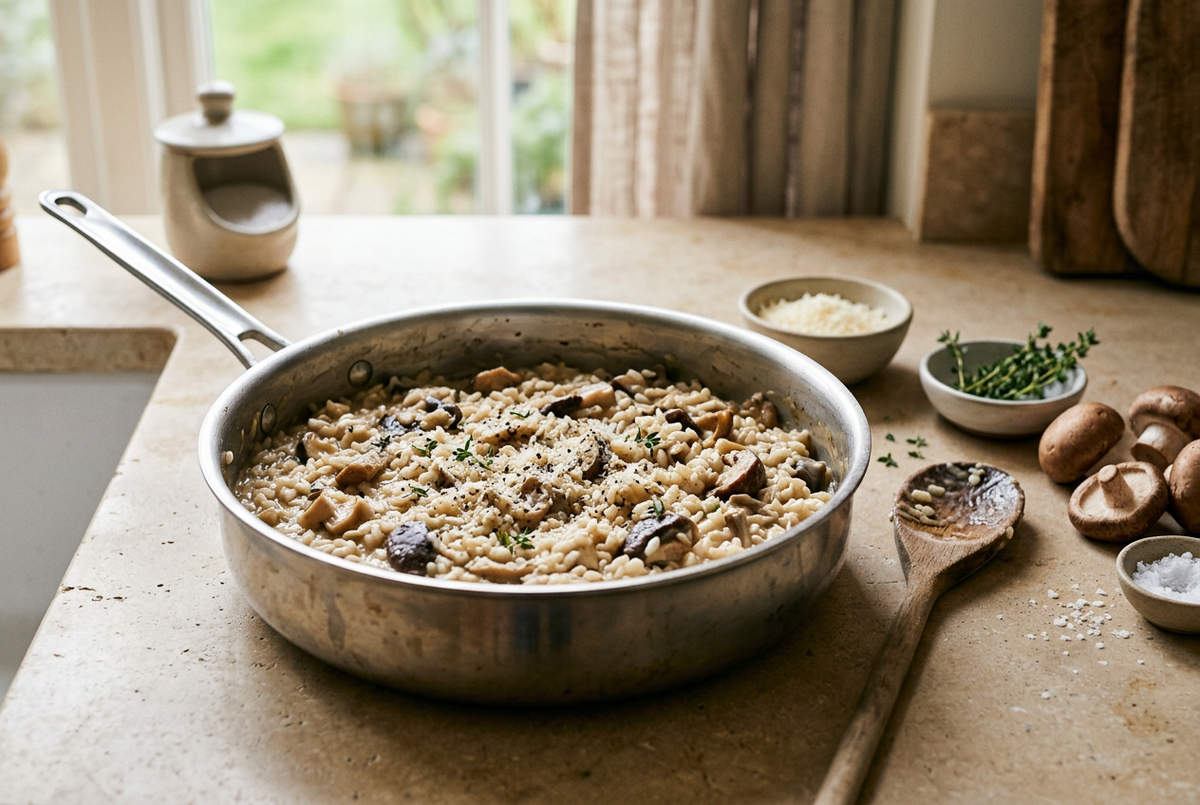
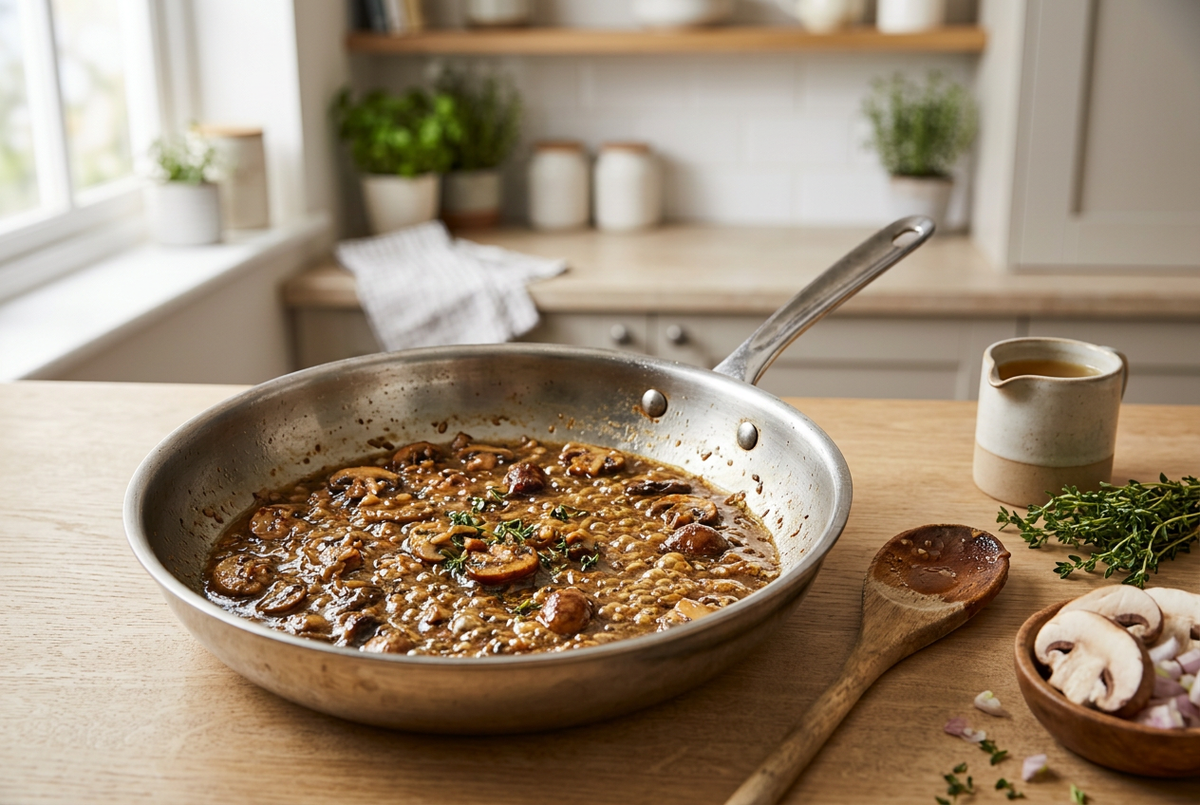
Cook sliced mushrooms separately until their released moisture has evaporated and they have developed some colour. Stir them into the tomato sauce towards the end. Crowding raw mushrooms into the sauce makes it harder to brown them and can leave the whole mixture more watery.
Keep a simple garlic-and-basil version
Leave out the onion, use the garlic gently and let good tomatoes do most of the work. Finish with torn basil and a little olive oil. This lighter approach is especially useful when you want to notice the tomatoes rather than build a very heavily seasoned sauce.
Making a larger batch without losing control
Doubling the ingredients does not always mean doubling the cooking time. What matters is the depth of the sauce and the surface area of the pan. A crowded saucepan can take much longer to reduce than two shallower pans containing the same total amount.
Use a pan with room for comfortable stirring and keep checking the base. If you batch cook regularly, note which quantity works well in your own cookware. A short note about the pan, tomato brand and cooking time is more useful than relying on memory next week.
For planning how a homemade sauce can fit into several different dinners, explore our meal prep guide for beginners. Think of the sauce as one flexible component rather than committing every portion to the same pasta dish.
Frequently asked questions about homemade pasta sauce
Can you make pasta sauce without onion?
Yes. Use tomatoes, olive oil, garlic and basil for a straightforward version. Cook the garlic briefly over a gentle heat before adding the tomatoes. Without onion, the sauce may taste a little brighter and less sweet, which can be exactly what you want.
Can you use passata instead of chopped tomatoes?
Yes. Passata creates a smoother sauce and is convenient when you do not want tomato pieces. Check its thickness before adding water, and taste before seasoning because ingredients vary. Simmer until it has the flavour and texture you want rather than using the timer alone.
Should you put a lid on pasta sauce?
Leave it uncovered when you want moisture to evaporate. Use a partly open lid if splashing is a problem, and lower the heat if it bubbles aggressively. Fully covering the pan holds in more moisture, which is useful when you want gentle cooking without much reduction.
Do you need to blend tomato pasta sauce?
No. Crushing the tomatoes with a spoon creates a pleasantly rustic result. If you prefer a smooth sauce, blend using equipment suitable for hot food and follow its instructions. Hot liquids can splash or build pressure, so never assume a closed blender jug is appropriate.
Can you make a good sauce in 20 minutes?
A small batch made with passata or crushed tinned tomatoes can work well in a short time, particularly without an onion that needs softening. Keep the flavour simple and use a broad pan. It will not taste identical to a longer-cooked sauce, but it can still make a satisfying dinner.
Why is there water around the pasta on the plate?
The sauce may need further reduction, the pasta may be carrying too much water, or the two may not have been tossed together long enough. Finish them in the same pan and add cooking water gradually. Serve when the sauce coats the pasta rather than separating visibly.
A simple method you can use again and again
Homemade pasta sauce becomes easier when you stop treating it as a rigid formula. Soften the aromatics, avoid burning the garlic, simmer the tomatoes gently and use the final few minutes to bring pasta and sauce together. Taste as you go and make one small adjustment at a time.
Start with the basic tomato recipe before building more elaborate versions. Once you recognise the texture of a reduced sauce and understand how your own pan behaves, you can adapt the method to different tomatoes, vegetables and pasta shapes with much more confidence. A reliable everyday dinner does not need dozens of ingredients; it needs a clear method and a little attention.

Leave a comment
This site is protected by hCaptcha and the hCaptcha Privacy Policy and Terms of Service apply.