
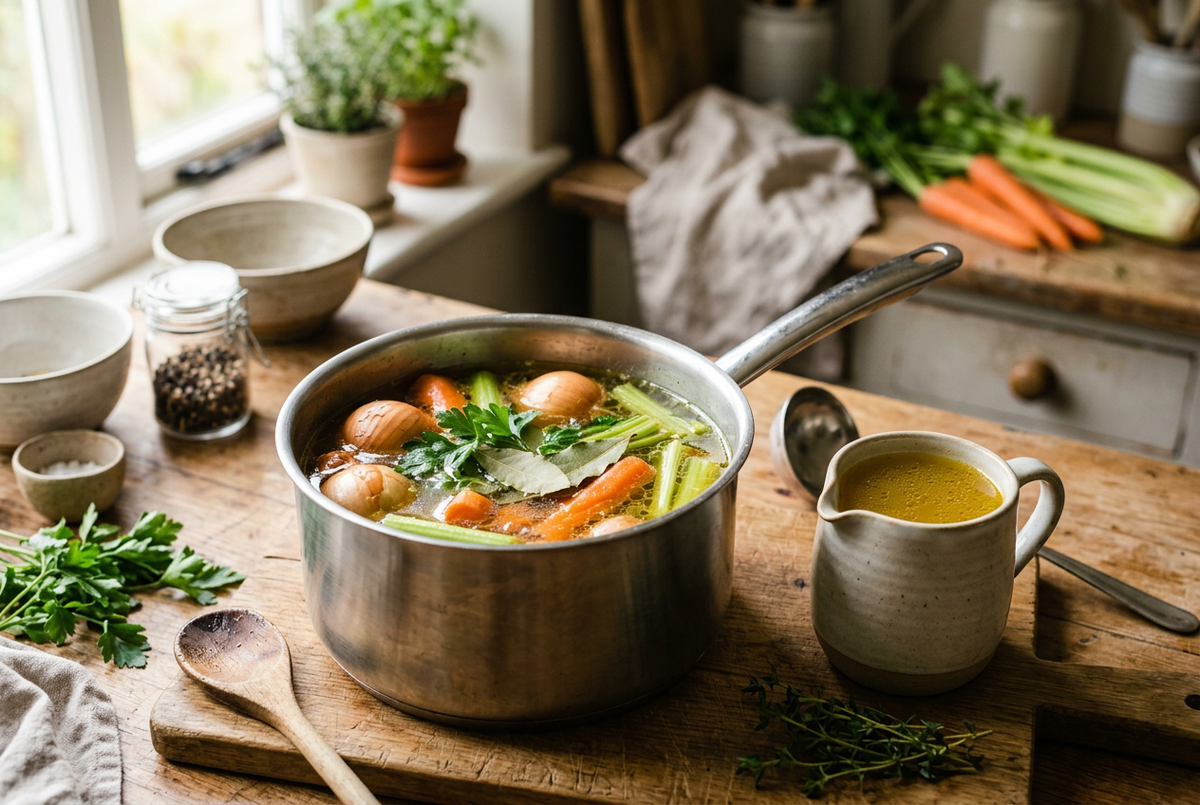
Learning how to make vegetable stock from scratch is one of the simplest ways to make everyday cooking taste more considered. A saucepan of water, a few familiar vegetables and some gentle heat can create a useful foundation for soups, risottos, stews and sauces. You do not need expensive ingredients, a professional kitchen or an entire afternoon.
The aim is not to produce the strongest possible liquid. Good homemade vegetable stock should taste balanced and pleasant, supporting the dish you cook next rather than taking it over. A mild, aromatic stock is often more useful than a dark, heavily seasoned one, especially when you want one batch to work across several meals.
This beginner’s guide explains which vegetables to choose, how much water to add, how long to simmer vegetable stock and what to do when a batch tastes weak or bitter. Start with the basic recipe, then adapt it to the meals you enjoy making.
What is vegetable stock?
Vegetable stock is a cooking liquid made by gently simmering vegetables, herbs and sometimes spices in water, then straining out the solids. During cooking, flavour moves into the water. The finished liquid becomes a building block for another dish.
Onions, carrots and celery are a familiar starting combination because they contribute savouriness, sweetness and an aromatic background. Leeks, parsley stalks and a small amount of mushroom can add further interest. The best combination depends on whether you want a light, adaptable stock or something darker and more robust.
Recipes sometimes use the words stock and broth interchangeably. Rather than worrying about the label, consider the result you need. A lightly seasoned vegetable cooking liquid is useful for recipes that will receive more salt later. A broth intended for sipping usually needs more deliberate final seasoning.
Why make homemade vegetable stock?
Making your own gives you control over flavour. You can keep the stock mild for a delicate soup, add mushrooms for a savoury stew or leave out ingredients you do not enjoy. You also decide how much salt goes into the pan, which is particularly helpful when the liquid will reduce during another recipe.
It can also put suitable vegetable trimmings to work. Clean carrot ends, fresh leek tops and parsley stalks may still have plenty of flavour. However, stock is not a way to rescue food that has spoiled. Use ingredients that are fresh and fit to eat, whether they are whole vegetables or carefully selected offcuts.
There is also a practical advantage: stock-making teaches you to taste and adjust. Comparing the liquid before and after simmering helps you understand how vegetables, water and cooking time work together. That awareness carries into almost everything else you cook.
The best vegetables for vegetable stock
Onions: the savoury foundation
Ordinary brown onions are a reliable starting point. Peel them and cut them into chunky pieces so their flavour can move into the liquid without producing a pan full of tiny fragments. Shallots or the white parts of leeks can replace some of the onion when that is what you have.
Some cooks include clean onion skins for colour, but they are not essential. For your first batch, remove the papery skins so you can judge the flavour of the basic ingredients more easily. A pale stock is not a failed stock.
Carrots: gentle sweetness
Carrots bring a rounded sweetness that softens the sharper notes of onion and celery. Scrub them well, remove damaged sections and cut them into pieces. Peeling is optional when the carrots are clean and in good condition.
Avoid using so many carrots that the stock becomes noticeably sweet. Think of them as one part of a balanced mixture, not the main ingredient. If you are making stock specifically for a sweet root-vegetable soup, you can deliberately lean further in that direction.
Celery and leeks: aromatic depth
Celery provides a distinctive savoury aroma. A little goes a long way, particularly if you include leafy tops. Leeks contribute a softer onion-like flavour, but wash between their layers carefully because grit can hide there.
If you dislike celery, leave it out and use a little extra leek or onion. Homemade stock should suit your kitchen. There is no benefit in following a classic combination that creates a flavour you know you will not enjoy.
Mushrooms and herbs: useful accents
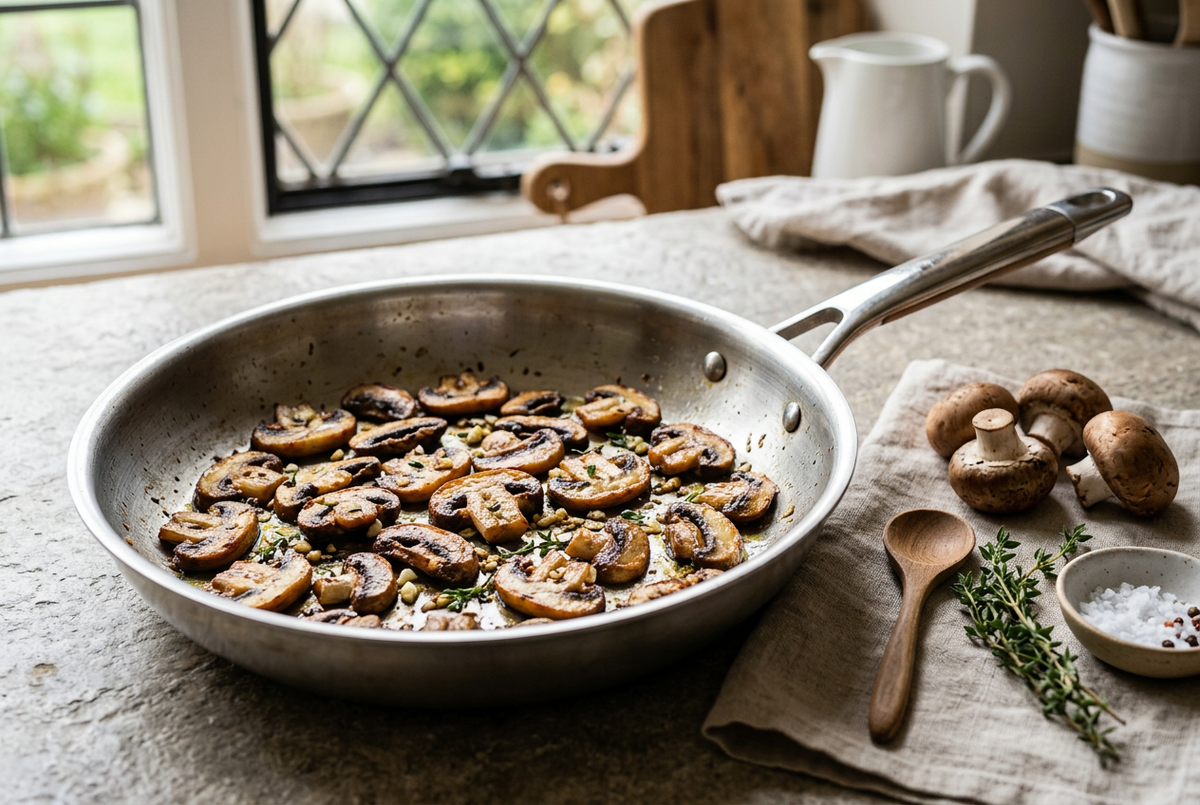
A handful of mushroom stalks or sliced mushrooms can make vegetable stock taste more savoury. They also darken the liquid, so use them sparingly when you want a light stock. Parsley stalks, a bay leaf and a small sprig of thyme are useful supporting ingredients.
Strong herbs need restraint. A large amount of rosemary or sage can dominate everything else in the saucepan. Add modest quantities first; it is easier to introduce another herb in the final dish than to remove its flavour from a finished stock.
Which vegetables should you avoid?
For an adaptable beginner’s stock, avoid making cabbage, broccoli, cauliflower or Brussels sprouts the main ingredients. Their flavours can become pronounced during simmering and may not suit the dish you plan to make. They are not automatically unusable, but they are less forgiving than onions, carrots and celery.
Beetroot strongly changes the colour and flavour, while large amounts of potato can make the liquid cloudy and starchy. Peppers, asparagus and tomatoes also create more distinctive results. Save those ingredients for batches where you specifically want their character.
Chilli, ginger and whole spices can be excellent in a deliberately flavoured broth, but they limit flexibility. If your stock might become both a mild risotto and a vegetable soup, keep the base neutral and add those stronger flavours when you make each meal.
Equipment you need
You need a saucepan or stock pot with enough room for the vegetables and water, a chopping board, a knife, a spoon and a sieve. A ladle is helpful for transferring hot liquid in manageable amounts. Set a heatproof bowl or another suitable pan beneath the sieve before you start straining.
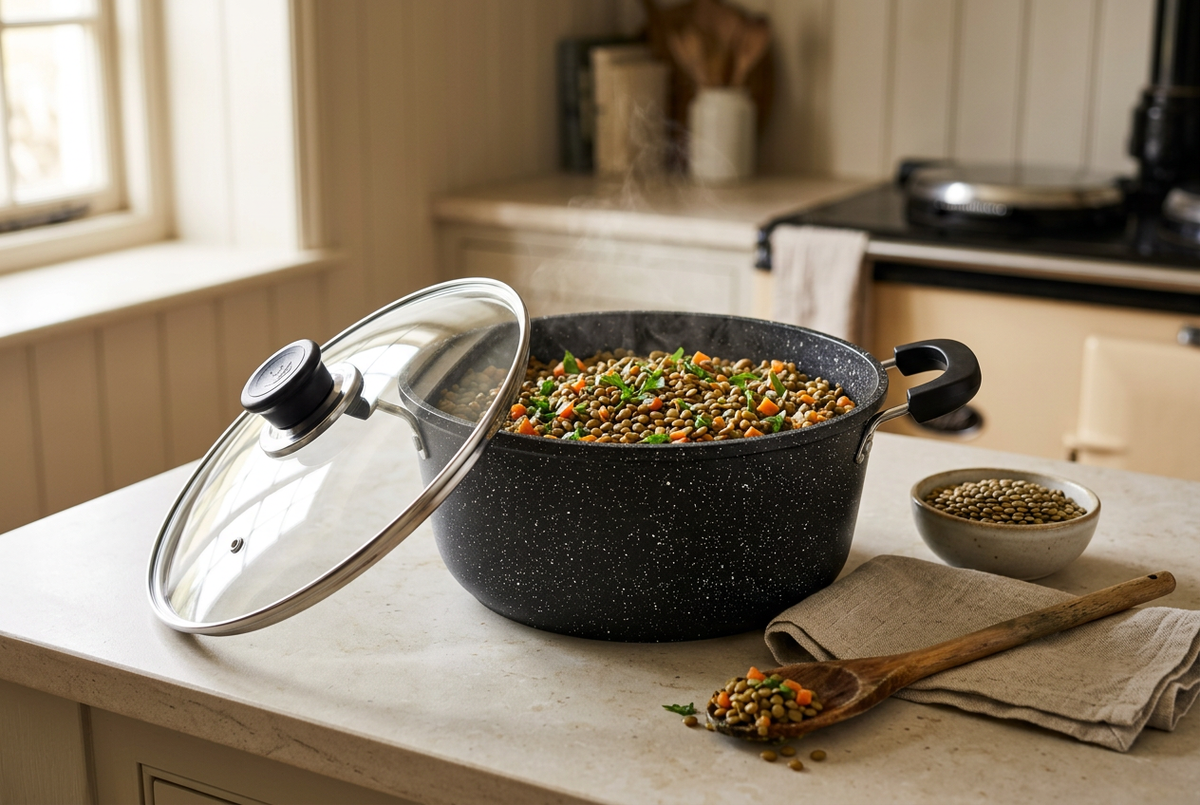
If you are choosing a pot, look for a size that lets you stir comfortably without filling it close to the rim. Culivra’s Nonstick Stock Pot with Glass Lid is one option to explore when putting together your cooking kit. Choose cookware according to its care instructions and your hob requirements.
Handle hot pans and strained liquid carefully. A full pot can be awkward and heavy, so ladling may be easier than lifting and pouring the entire batch. You do not need specialist equipment to make good stock, but a calm, uncluttered workspace helps.
A simple homemade vegetable stock recipe
This recipe starts with around two litres of water. The finished quantity will vary with your saucepan, how firmly the stock simmers and whether the lid is partly on. Treat it as a flexible starting point rather than an exact yield.
Ingredients
- 2 medium onions, peeled and roughly chopped
- 2 medium carrots, scrubbed and roughly chopped
- 2 celery sticks, roughly chopped
- 1 small leek, thoroughly washed and sliced, optional
- A small handful of parsley stalks
- 1 bay leaf
- 4–6 whole black peppercorns, optional
- About 2 litres of cold water, enough to cover the vegetables comfortably
- A little cooking oil, optional, if softening the vegetables first
Step 1: prepare the vegetables
Wash everything thoroughly and remove anything damaged or unsuitable. Cut the vegetables into fairly even, chunky pieces. There is no need for precise chopping, but very large halves release flavour differently from tiny dice, so aim for a reasonably consistent size.
Place the prepared vegetables in the pot and check that you have room for water above them without overcrowding the pan. If the pot looks too full, reduce the batch rather than filling it to the brim.
Step 2: choose a light or slightly richer base
For a clean, light stock, add the water directly to the vegetables. For a rounder flavour, first soften the onions, carrots and celery in a little oil over a moderate heat. Stir occasionally and stop before they catch or scorch.
This softening stage is optional. It is useful when you want a little extra depth, but it should not turn a simple stock into a complicated project. Your first batch can go straight from chopping board to water.
Step 3: add water and aromatics
Add the herbs and peppercorns, then pour in enough cold water to cover the vegetables comfortably. Too much water can leave you with a thin-tasting result. Too little makes it harder for the ingredients to move and cook evenly.
Leave the salt out for now, especially if the stock will be reduced in a sauce or absorbed into rice. You can season the final dish more accurately once all its ingredients are together.
Step 4: simmer gently
Bring the liquid towards a simmer, then lower the heat so it bubbles gently rather than boiling vigorously. A partly covered pan can help control evaporation. Check occasionally and adjust the heat if the surface becomes too lively.
Start tasting after about 30 minutes. Many straightforward vegetable stocks develop enough flavour in roughly 30–45 minutes of gentle simmering, although the ingredients and piece sizes make a difference. Longer cooking is not automatically better. Stop when the liquid tastes pleasantly rounded.
Step 5: strain carefully
Turn off the heat and position your sieve securely over a suitable heatproof container. Ladle or carefully pour the stock through it. Remember that you are keeping the liquid, not draining it away like pasta water.
Let the vegetables drain without forcing them hard against the sieve. Pressing can push fine particles into the stock and make it cloudier. That cloudiness is not necessarily a problem for a rustic soup, but gentle straining gives you a cleaner starting point.
How to make vegetable stock from scraps
Vegetable-scrap stock works best when the collection of scraps is intentional. Think clean onion trimmings, suitable carrot offcuts, leek tops and herb stalks, rather than every piece of vegetable waste from the week. Variety matters, but balance matters more.
Keep the same general flavour pattern as the basic recipe. If your scraps are mostly carrot peelings, add onion or leek rather than expecting the carrots to do everything. If celery leaves dominate the collection, use a smaller portion and build around it.
Only use trimmings that have been handled and stored appropriately and are still suitable to eat. Do not add mouldy vegetables, unidentified old scraps or ingredients with an unpleasant smell. When in doubt about an ingredient, leave it out. A modest fresh batch is better than a large questionable one.
How to make a darker, richer vegetable stock
For a deeper stock, roast some of the onions, carrots and mushrooms before adding them to the pan. Aim for browned edges and a pleasant roasted aroma, not blackened surfaces. Burnt vegetables can give the entire batch an acrid taste.
After roasting, add the vegetables to your pot. A little water can help loosen the browned cooking juices from a suitable roasting tray; add those juices as well, provided they are not burnt. Then simmer and strain as you would for the lighter version.
This style is particularly useful in hearty stews and darker sauces. If roasting is new to you, our guide to how to roast vegetables explains the importance of spacing, moisture and browning. The same principles help you build flavour before the stock reaches the hob.
Common vegetable stock mistakes and how to fix them
The stock tastes weak
A weak result usually needs a closer look at the balance of vegetables and water. If the ingredients were sparse, cooking them for much longer may not solve the problem. Strain the stock, then gently reduce the liquid to concentrate what is already there.
Before deciding it has no flavour, taste a spoonful with a tiny pinch of salt added separately. Unsalted stock can seem quieter than expected. This test helps you distinguish between a genuinely watery stock and one that simply needs seasoning in the finished recipe.
The stock tastes bitter
Bitterness can come from scorched ingredients, a heavy hand with strong herbs or an unbalanced mixture of vegetables. There is no dependable way to remove a burnt flavour once it has spread throughout the liquid. Avoid building another dish around stock you already dislike.
For the next batch, simplify the ingredients and taste earlier. Use less celery leaf, fewer strong aromatics and no burnt scraps. A shorter, gentler simmer with a balanced mixture is a better experiment than adding more and more ingredients to mask the problem.
The stock is cloudy
Vigorous boiling, starchy vegetables and pressing the solids through the sieve can all make stock look cloudy. For many home-cooked soups and stews, appearance matters less than flavour. You do not have to discard a pleasant-tasting stock because it is not transparent.
If you want a clearer result next time, simmer gently and strain without squeezing. A finer sieve can catch smaller particles. Keep your expectations practical: homemade vegetable stock is an everyday cooking ingredient, not a test of visual perfection.
Easy ways to use homemade vegetable stock
Soup is an obvious place to start. Use the stock as the liquid for a blended carrot soup, a chunky bean soup or a simple vegetable broth. Our homemade soup guide explains how to build a balanced bowl rather than relying on stock alone to supply every flavour.
Risotto is another useful application. A mild stock supports the rice and your chosen vegetables without overwhelming them. Follow our guide to making risotto for the wider method, and keep checking seasoning as the liquid is absorbed.
Stock also helps loosen sauces and lift browned flavour from a suitable pan. Our guide to making pan sauce without wine gives you another way to use a small amount. Add it gradually so you control the consistency rather than accidentally flooding the sauce.
You can also use vegetable stock when cooking grains, braising vegetables or making a lentil stew. Choose the stock to suit the meal: a mushroom-heavy batch will be more noticeable than a simple onion, carrot and celery base.
Planning a practical batch
Make a quantity you can manage comfortably, including the straining and cooling stages. An enormous pot is not more efficient if you lack suitable containers or space. Several smaller portions are often more useful than one large container because recipes need different amounts.
If keeping stock for later, follow current local food-safety guidance on prompt cooling, refrigeration, freezing and reheating. Use suitable clean containers and label the contents and preparation date. Do not assume that every glass container is freezer-safe or suitable for sudden temperature changes; check the manufacturer’s instructions.
Planning the next meal before you make the stock also helps. A soup might use a larger portion, while a quick sauce needs much less. Matching portions to your actual cooking habits makes the batch easier to use and reduces unnecessary handling.
Frequently asked questions
Do you need to peel vegetables for stock?
Not always. Clean carrots can often be scrubbed rather than peeled, while onions are straightforward to use with their papery skins removed. The priority is clean, suitable ingredients. Do not include dirty peelings simply because everything will eventually be strained.
Should you add garlic?
You can add a small amount if its flavour suits the dishes you plan to make. Garlic is optional, not a requirement. For a broadly useful first batch, keep it restrained so it does not dominate a delicate soup or risotto.
Can you make stock without celery?
Yes. Use onions, carrots and leeks as the foundation, then add modest amounts of herbs or mushrooms if you like. The flavour will be different, but it can still be balanced and useful. Taste the stock rather than judging it against a rigid ingredient list.
Should vegetable stock be salted?
Leaving it unsalted gives you flexibility, particularly for recipes that reduce the liquid. Season the finished dish instead. If you prefer a lightly salted stock, remember that the salt becomes more concentrated as water evaporates.
Does stock need to simmer all day?
No. Vegetable stock does not benefit automatically from the long cooking associated with some meat-based stocks. Start tasting after about half an hour and use flavour as your guide. More time cannot compensate for an unsuitable mixture of ingredients.
Can homemade stock replace a stock cube?
It can replace the prepared stock liquid in many recipes, but it will not necessarily match the intensity or salt level of a particular cube. Check how much liquid the recipe needs, use your homemade stock and adjust the final seasoning thoughtfully.
Start simple, then make it your own
The best way to learn how to make vegetable stock from scratch is to begin with a balanced, uncomplicated batch. Use onions, carrots and celery, add water without drowning the ingredients, simmer gently and taste before deciding the stock is finished.
Once you understand that basic method, experiment with one change at a time. Try leek instead of some onion, add a few mushroom stalks or compare roasted vegetables with an unroasted batch. Each small experiment teaches you more than an overloaded pan of unrelated scraps.
Homemade stock is not about making dinner more demanding. It is about creating a useful foundation that makes the next soup, sauce or risotto easier to bring together. Start with the pot you have, keep the flavours balanced and let your everyday cooking guide the next batch.

Leave a comment
This site is protected by hCaptcha and the hCaptcha Privacy Policy and Terms of Service apply.