
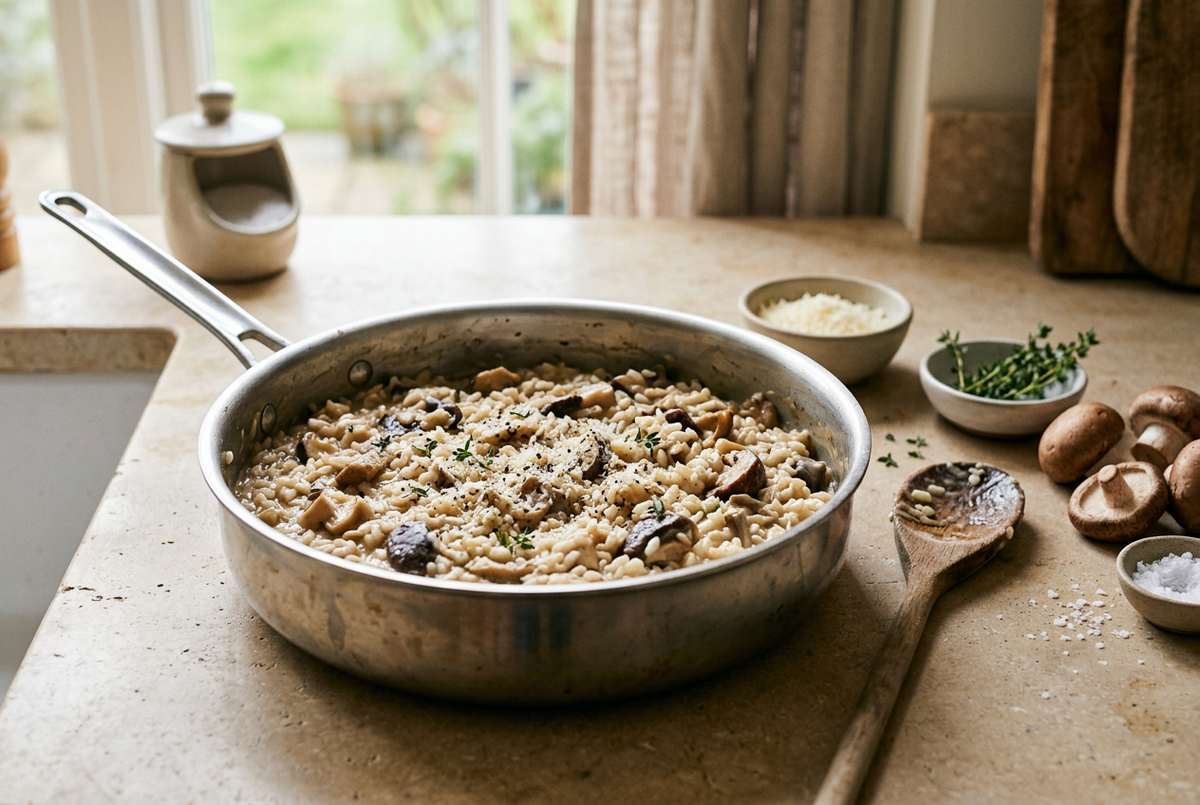
Learning how to make risotto is less about mastering a difficult recipe and more about recognising a few simple changes in the pan. Rice turns glossy, stock gradually disappears, and separate ingredients become a creamy, comforting dish. Once you understand that sequence, risotto becomes an approachable dinner rather than something reserved for restaurants.
This guide explains how to choose risotto rice, prepare your ingredients, add stock and judge the right consistency. You will also find a mushroom risotto recipe, useful variations and practical fixes for common problems. There is no need for expensive ingredients or constant frantic stirring. A suitable pan, warm stock and a little attention will take you a long way.
If you are building confidence with everyday cooking, this is a useful next step after our guide to cooking with stainless steel without food sticking. The same habits of controlled heat and patient observation make a real difference here.
What is risotto?
Risotto is an Italian rice dish cooked by gradually combining rice with stock until the grains are tender and the surrounding liquid becomes creamy. The rice releases starch as it cooks, helping create the sauce that binds the dish together. Butter and cheese are often stirred in at the end, but cream is not necessary for a classic creamy texture.
A good risotto should move easily when spooned onto a plate. It should not stand up like a mound of dry rice, and it should not look like rice floating in broth. The grains should remain distinct, with a gentle bite at the centre rather than a chalky or crunchy core.
There are regional styles and plenty of personal preferences, so think of this guide as a dependable home-cooking method rather than a rigid rulebook. Your ingredients, hob and pan will influence how much stock you need and how quickly the rice cooks.
Choose the right rice for creamy risotto
The easiest way to improve homemade risotto is to start with rice intended for the job. Risotto varieties can absorb liquid while releasing enough starch to create a creamy consistency. Ordinary long-grain rice behaves differently and will not give the same result using this method.
Arborio rice
Arborio is widely available in UK supermarkets and is a sensible starting point. Its plump grains produce a creamy dish, though they can soften quickly towards the end of cooking. Taste regularly rather than relying only on the packet time, especially when you are making risotto for the first time.
Carnaroli rice
Carnaroli is another popular choice. Many cooks like it because the grains retain their structure well as the surrounding sauce becomes creamy. If you enjoy making risotto and can find it locally, it is worth trying alongside arborio to discover which texture you prefer.
Should you rinse risotto rice?
For this method, do not rinse the rice. You want its surface starch to help thicken the cooking liquid. Measure it into a dry bowl and have it ready before you start. Unlike a pot of plain boiled rice, risotto is cooked with that starch as part of the finished dish.
What pan is best for risotto?
Choose a reasonably wide, heavy-based pan with enough depth to stir comfortably. A broad cooking surface helps the rice cook evenly, while sides keep the liquid contained. The pan should accommodate your batch without leaving the rice in an extremely thin layer or piling it into a deep, crowded column.
A wide saucepan, sauté pan or suitable casserole can work. A very shallow frying pan may be awkward for four portions because the stock can spill when stirred. A narrow, deep pot can make evaporation less predictable. You do not need specialist risotto cookware, but you do need comfortable space to work.
If you are reviewing your everyday options, explore the Culivra Nonstick Cookware Set and choose a suitably sized pan for the quantity you plan to cook. Check the individual product information and care guidance before deciding which piece is appropriate for your hob and cooking routine.
Stainless steel is useful for browning mushrooms separately. Our 304 Stainless Steel Frying Pan is an option to explore for that stage. Keeping mushroom browning separate from the rice gives you more control over both flavour and moisture.
Prepare your ingredients before switching on the hob
Risotto is much more relaxed when everything is ready. Chop the onion, slice the mushrooms, measure the rice and grate the cheese before you begin. Keep a ladle beside your stock and put a spoon within reach for tasting. This avoids leaving the rice unattended while you search for ingredients.
Use stock you enjoy the taste of, but be cautious with salt. Stock becomes more concentrated as liquid evaporates, and hard cheese adds further seasoning. If using a stock cube or concentrate, make it according to its instructions and consider a lower-salt version where available.
Keep the stock hot in a separate saucepan at a gentle heat. It does not need to boil aggressively. Warm stock helps maintain a steady cooking rhythm rather than cooling the rice with every addition. If you need another pot for this task, take a look at the Nonstick Stock Pot with Glass Lid and check which size suits your usual meals.
Easy mushroom risotto recipe
This recipe makes approximately four main-course portions. Allow around 15 minutes for preparation and roughly 30–40 minutes for cooking, depending on your equipment and ingredients. The rice itself commonly takes about 18–25 minutes after you begin adding stock, but tasting is the more reliable guide.
Ingredients
- 300g arborio or carnaroli rice
- 400g mushrooms, cleaned and sliced
- 1 medium onion, finely chopped
- 2 garlic cloves, finely chopped
- Approximately 1.2 litres vegetable stock, kept hot, plus extra hot water if needed
- 2 tablespoons olive oil, divided between the mushrooms and rice
- 30g butter, divided
- 100ml dry white wine, optional
- 50g Parmesan-style hard cheese, finely grated, plus extra to serve
- A small handful of chopped parsley or a few thyme leaves
- Freshly ground black pepper and salt, to taste
For a vegetarian version, choose stock and hard cheese labelled suitable for vegetarians. Traditional Parmesan is not vegetarian. To leave out the wine, simply skip it and begin with the first ladle of stock; you do not need a special substitute.
Step 1: Brown the mushrooms
Heat one tablespoon of olive oil in a frying pan over a medium to medium-high heat. Add the mushrooms in batches if necessary, leaving enough space for moisture to escape. Let them colour before moving them around too often. If the pan is crowded, the mushrooms are more likely to steam than brown.
Cook until they have released their moisture and developed golden edges. Add a little seasoning towards the end, then transfer them to a bowl. Do not worry about making every slice identical. You are looking for deeper flavour and a firmer texture, not a perfect restaurant garnish.
Step 2: Soften the onion
In your risotto pan, warm the remaining olive oil with about 10g of the butter over a medium-low heat. Add the onion and cook gently until soft and translucent, stirring regularly. This usually takes several minutes. Avoid browning it heavily, as you want a mellow base rather than a strong fried-onion flavour.
Add the garlic and stir for roughly 30–60 seconds, just until fragrant. If it starts to catch, lower the heat. Garlic can become bitter when burnt, and there is no advantage in rushing this stage.
Step 3: Toast the rice briefly
Add the dry rice and stir for about one to two minutes, coating the grains in the oil and butter. The rice should become glossy and warm through. This stage is often called toasting, but you are not trying to turn the grains brown or fry them until crisp.
If using wine, pour it in now. Stir and let most of the liquid evaporate before adding stock. The aim is to integrate its flavour without leaving a harsh, raw-wine taste. If you are not using wine, move straight to the next step.
Step 4: Add hot stock gradually
Add a ladle of hot stock and stir gently. Keep the rice at a lively but controlled simmer. Once most of the liquid has been absorbed and the spoon briefly leaves a trail across the base, add another ladle. The rice should remain moist throughout; do not let it fry dry between additions.
Repeat this process, stirring regularly and paying particular attention to the base and corners of the pan. You do not need to stir every second, but do not walk away for long stretches. Gentle movement encourages the creamy texture and helps prevent sticking without breaking up the grains excessively.
Step 5: Add the mushrooms and taste the rice
After about 15 minutes of adding stock, start tasting a grain. When the rice is nearly cooked, stir in most of the browned mushrooms, keeping a few aside for serving. Continue adding stock in smaller amounts until the grains are tender with a little resistance in the middle.
You may not need all the stock, or you may need extra hot water. Both are normal. Evaporation varies with pan width and heat, so treat the quantity as a working estimate. If the rice still has a chalky centre, it needs more liquid and more cooking time.
Step 6: Finish off the heat
Remove the pan from the heat while the risotto is slightly looser than you want to serve it. Stir in the remaining 20g butter and the grated cheese. Add a small splash of hot stock if necessary, then fold everything together until the sauce looks glossy.
Taste before adding more salt. Finish with black pepper and the herbs, then let the risotto settle briefly. Serve promptly in warm shallow bowls, topped with the reserved mushrooms and a little extra cheese if desired. It will continue to thicken as it stands.
How to tell when risotto is ready
Use three checks: the grain, the sauce and the movement. First, taste the rice. It should be cooked through without becoming soft and shapeless. A little bite is welcome, but a dry, floury centre is not. Second, look at the surrounding liquid. It should coat the grains rather than sit apart as a watery puddle.
Finally, gently tilt the pan. The risotto should flow rather than remain in a fixed heap. If you pull a spoon through it, the gap should slowly close. This is easier to judge than trying to copy an exact cooking time, especially when switching between different rice brands.
Remember that finishing butter and cheese will change the texture. Stop the cooking stage with enough moisture left for those ingredients to combine smoothly. A splash of hot stock is often the difference between a heavy bowl and a pleasingly creamy one.
Common risotto mistakes and how to fix them
The risotto is too thick
Stir in hot stock or hot water a little at a time until it loosens. Do this before adding extra butter or cheese, because richness does not replace missing liquid. If you have already finished the dish, gentle folding with a small splash of hot liquid usually helps restore its flow.
The rice is crunchy but the pan looks dry
Add more hot liquid and keep cooking at a controlled simmer. The rice has not finished hydrating. Turning up the heat will mainly evaporate the stock faster, which can make the problem worse. Keep tasting and add liquid in smaller increments as it gets closer to ready.
The risotto tastes bland
Check seasoning, then consider whether the dish needs balance rather than simply more cheese. Fresh herbs, black pepper or a little lemon zest can lift a mushroom risotto. Add any lemon juice sparingly and taste between additions. Good browning at the mushroom stage also makes a noticeable difference.
The mushrooms are watery
They were probably crowded or added to a pan that was not hot enough to evaporate their moisture efficiently. Cook them separately for longer, or divide them into smaller batches next time. Adding raw mushrooms directly to the rice can work in some recipes, but it gives less control over texture and colour.
The rice sticks to the bottom
Reduce the heat slightly, add enough stock to keep the mixture moist and stir more regularly across the base. A heavy-based pan can help distribute heat, but it does not remove the need to watch the liquid level. If anything has burnt, avoid scraping the scorched layer into the rest of the dish.
Easy risotto variations for different seasons
Once you are comfortable with the basic method, change one or two elements rather than rewriting the whole recipe. Mushroom and thyme is an autumn favourite, while lemon and peas feel lighter. Add peas near the end so they retain their colour and do not become unnecessarily soft.
Roasted squash makes another comforting variation. Cook the squash separately and fold it in near the end, allowing a few pieces to break down into the sauce. For help getting a good roasted finish, read our guide to how to roast vegetables. Keep the risotto seasoning restrained until you have added the vegetables and tasted everything together.
For a tomato version, use a measured amount of passata alongside the stock and adjust the liquid as you cook. For a green vegetable version, try cooked asparagus pieces or wilted spinach. Whatever you choose, consider how much extra liquid the ingredients introduce and whether they are already cooked.
What to serve with mushroom risotto
Risotto can be a complete main course, particularly with a generous quantity of mushrooms. A crisp green salad with a light dressing offers a pleasant contrast to the creamy rice. Steamed greens, roasted broccoli or simply cooked green beans also work well without competing with the main dish.
If serving risotto as a smaller course, reduce the portion rather than making it deliberately heavy with toppings. It is usually more enjoyable to keep the rice loose and balanced than to cover it with so many extras that the texture disappears. Serve everything else first so the risotto can reach the table immediately.
Store dry ingredients so the next batch is easier
Keep dry risotto rice in a cool, dry place and follow the storage instructions on its packaging. If you transfer it into another container, retain the product name, cooking guidance and best-before information. A label makes it easier to distinguish similar-looking grains and use older supplies first.
For a more organised cupboard, browse the Airtight Food Storage Container and check its dimensions against your shelf space. Small jars can be useful for dried herbs and other frequently used ingredients; the 10-Piece Glass Storage Jar Set is another option to explore. Choose storage around the amounts you actually buy, rather than decanting everything simply for appearance.
Cooked rice needs particular care. If keeping leftover risotto, follow current NHS or Food Standards Agency guidance on cooling, refrigeration and reheating rice. Do not leave it sitting in the pan at room temperature for later. Freshly cooked risotto gives the best loose texture, so preparing the ingredients ahead is often preferable to cooking the whole dish in advance.
Frequently asked questions about making risotto
Do you need cream to make risotto creamy?
No. The rice releases starch into the stock, creating the characteristic creamy consistency. Finishing with butter and cheese adds richness, but the main texture comes from the rice and liquid. Adding cream will not fix undercooked grains or replace the need for enough stock.
Do you have to stir risotto constantly?
No, but regular attention matters. Stir gently and frequently enough to keep the grains moving and prevent sticking. Brief pauses to add stock or check another pan are fine. Aggressive, nonstop beating is unnecessary and can damage the grains as they soften.
Can you make risotto without wine?
Yes. Skip the wine and start adding stock after briefly toasting the rice. You can still make a satisfying risotto with well-cooked onion, flavourful stock and carefully browned mushrooms. Taste at the end and adjust the seasoning to suit your ingredients.
Can you cook risotto ahead of time?
For home cooking, it is simplest to chop, measure and prepare the toppings ahead, then cook the rice close to serving. Risotto thickens as it stands and loses some of its flowing texture. If you plan to keep cooked rice, follow current official food-safety guidance rather than treating it like a dish that can sit out until needed.
Why does the recipe use an approximate stock quantity?
Different rice varieties, pans and hob settings absorb and evaporate liquid at different rates. An exact volume cannot account for every kitchen. Keep extra hot water available, taste regularly and stop when the grains and consistency are right, not simply when the jug is empty.
Make your next risotto with confidence
The essentials are straightforward: choose suitable rice, soften your flavour base, add hot stock gradually and judge the finish by taste and texture. Brown mushrooms separately when you want a deeper savoury flavour, and leave enough liquid in the pan for a glossy finish.
Start with this mushroom version, then adapt it to the vegetables and herbs you enjoy. With a little practice, you will recognise the stages without constantly checking the clock. Explore Culivra for cookware and kitchen-storage options that fit your everyday routine, and keep building the small cooking habits that make dinner easier.

Leave a comment
This site is protected by hCaptcha and the hCaptcha Privacy Policy and Terms of Service apply.