
Learning how to cook lentils from scratch is one of the simplest ways to make everyday cooking more flexible. A bag of dried lentils can become a warming soup, a substantial salad, a gently spiced dhal or the base of a comforting vegetable stew. You do not need complicated equipment or an elaborate recipe. You need the right lentils for the dish, enough liquid and a little control over the simmer.
The main source of confusion is that not all lentils behave alike. Split red lentils soften and collapse, which is useful when you want a creamy texture. Green, brown and small dark lentils are better choices when you want individual lentils to remain visible. Treating those varieties as interchangeable often explains a disappointing result.
This guide covers how to cook lentils on the hob, which water ratios to use, when to start checking them and how to build flavour without making the process difficult. You will also find a straightforward recipe, answers to common problems and practical ideas for turning one pot into several different meals.
How to cook lentils: the quick answer
Sort and rinse dried lentils, place them in a saucepan with water or stock, bring to a boil and then reduce to a gentle simmer. Green and brown lentils commonly take around 20–35 minutes; small dark or Puy-style lentils often take around 20–30 minutes. Split red lentils usually soften in around 10–20 minutes. These are starting points, not guarantees: follow the packet instructions and taste regularly because age, variety and your preferred texture affect the timing.
For whole lentils that you plan to drain, begin with roughly three volumes of water to one volume of dry lentils and add more water if needed. For split red lentils, start with roughly three volumes of liquid to one volume of lentils for a spoonable base, then adjust as they soften. Soup needs more liquid, while a thicker dhal may need less. Keep the lentils gently bubbling rather than boiling fiercely.
Choose the right lentils before you start
Red lentils: best for soft, creamy dishes
The orange-red lentils commonly sold in supermarkets are usually split and have their skins removed. They cook relatively quickly and naturally break down, thickening the surrounding liquid. Choose them for dhal, blended soups, soft vegetable stews and sauces where you want the lentils to become part of the texture rather than remain separate.
Do not expect split red lentils to behave like green lentils in a salad. Even careful cooking will not make them hold their shape in the same way. If your recipe relies on distinct, firm lentils, changing variety is more effective than shaving a minute off the cooking time.
Green and brown lentils: useful everyday options
Green and brown lentils are versatile choices for stews, warm salads and vegetable-based sauces. They generally retain more structure than split red lentils, although some become quite soft with extended cooking. Their earthy flavour works well with onion, carrot, celery, garlic, bay and thyme.
For a salad, taste early and stop cooking when the lentils are tender but still hold together. For a soup or a thick sauce, you may prefer them softer. The correct texture depends on the meal, not simply the number printed beside a timer.
Puy-style and black lentils: good for distinct texture
Small dark green lentils, including Puy lentils, and black beluga lentils are useful when you want a more defined shape. They suit dressed salads, roasted vegetable bowls and side dishes. Puy lentils are a specific product associated with their French growing region; other small green lentils can offer a similar cooking role without being the same product.
These varieties still need tasting as they cook. A lentil that holds its shape can nevertheless be unpleasantly hard in the centre. Look for a tender bite rather than assuming that a neat appearance means it is ready.
Do lentils need soaking?
Most supermarket lentils do not need an overnight soak before cooking. That makes them convenient when you have not planned dinner the evening before. Check the packaging first, particularly if you have bought an unfamiliar variety or a mixed pulse blend, because a mixture may contain ingredients with different preparation requirements.
You should still sort and rinse them. Spread the lentils on a plate or inspect them in a shallow bowl, removing any small stones or obvious debris. Put them in a fine-mesh sieve and rinse under cool running water. This is a small preparation step that helps remove loose dust before the lentils go into the pot.
If you have already soaked your lentils, expect them to cook faster and begin checking earlier. Do not apply the usual dried-lentil timing without adjustment. The most reliable habit is always to taste a few lentils from different parts of the pan.
The equipment you actually need
A saucepan or stock pot, a fine-mesh sieve and a wooden or silicone spoon cover most lentil recipes. Choose a pot with room above the liquid because lentils can foam as they come to the boil. A cramped pan makes it harder to manage bubbling and more likely that liquid will spill onto the hob.
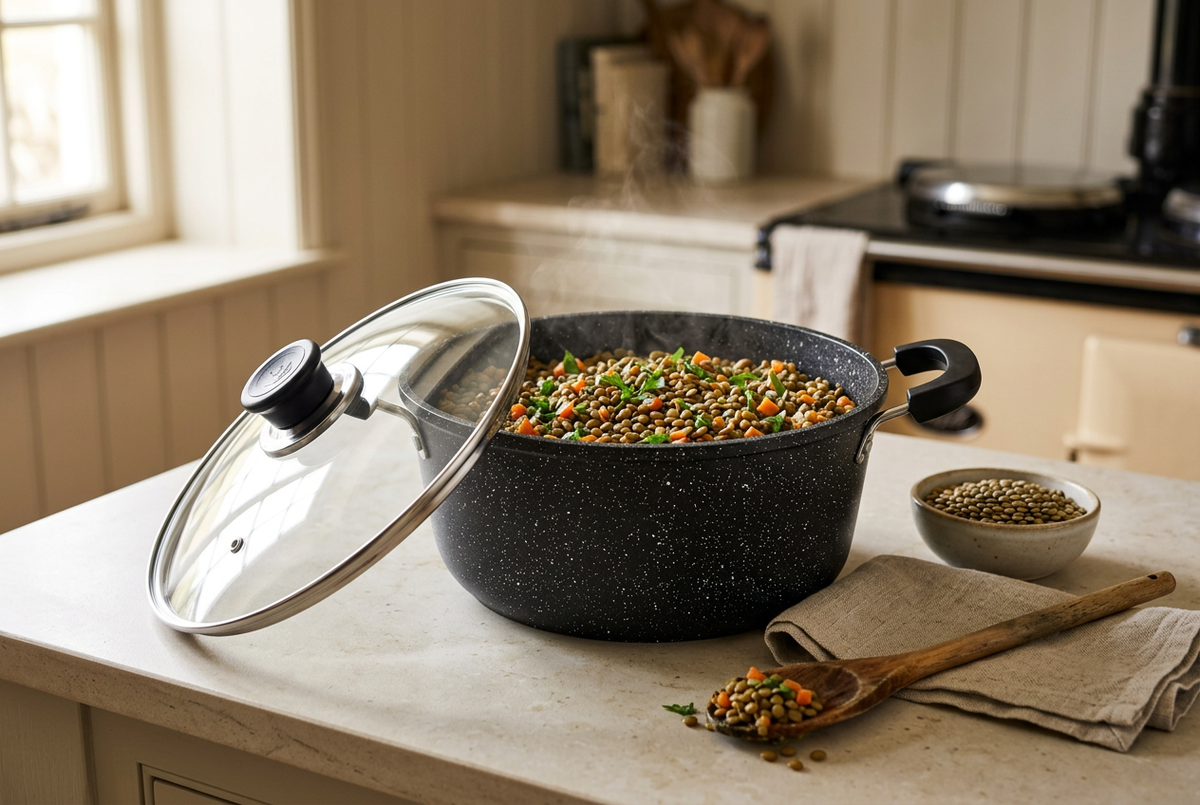
Culivra’s Nonstick Stock Pot with Glass Lid is an option for soups, stews and everyday one-pot meals. Its product design includes two side handles and a glass lid, making it a natural fit for the sort of gentle hob cooking described here. Choose a size that comfortably accommodates your batch rather than filling the pot close to the rim.
You do not need to buy specialist equipment to begin. Good results depend more on an appropriate simmer, enough water and checking texture than on an elaborate collection of utensils. When working with a nonstick surface, use suitable non-abrasive utensils and follow the cookware’s care instructions.
How to cook green or brown lentils step by step
1. Measure, sort and rinse
For a useful starting batch, measure 200g of dried lentils. The final yield varies with the variety and how much water they absorb, so think of this as a flexible cooking quantity rather than an exact number of portions. Sort and rinse the lentils, then transfer them to your pot.
2. Add enough liquid and simple aromatics
Cover with roughly three times their volume of water. You can use stock instead, but consider its salt level before adding further seasoning. Add a bay leaf, a crushed garlic clove or a few large pieces of onion if you want a lightly flavoured base. Keep the aromatics easy to remove if the lentils are destined for a salad.
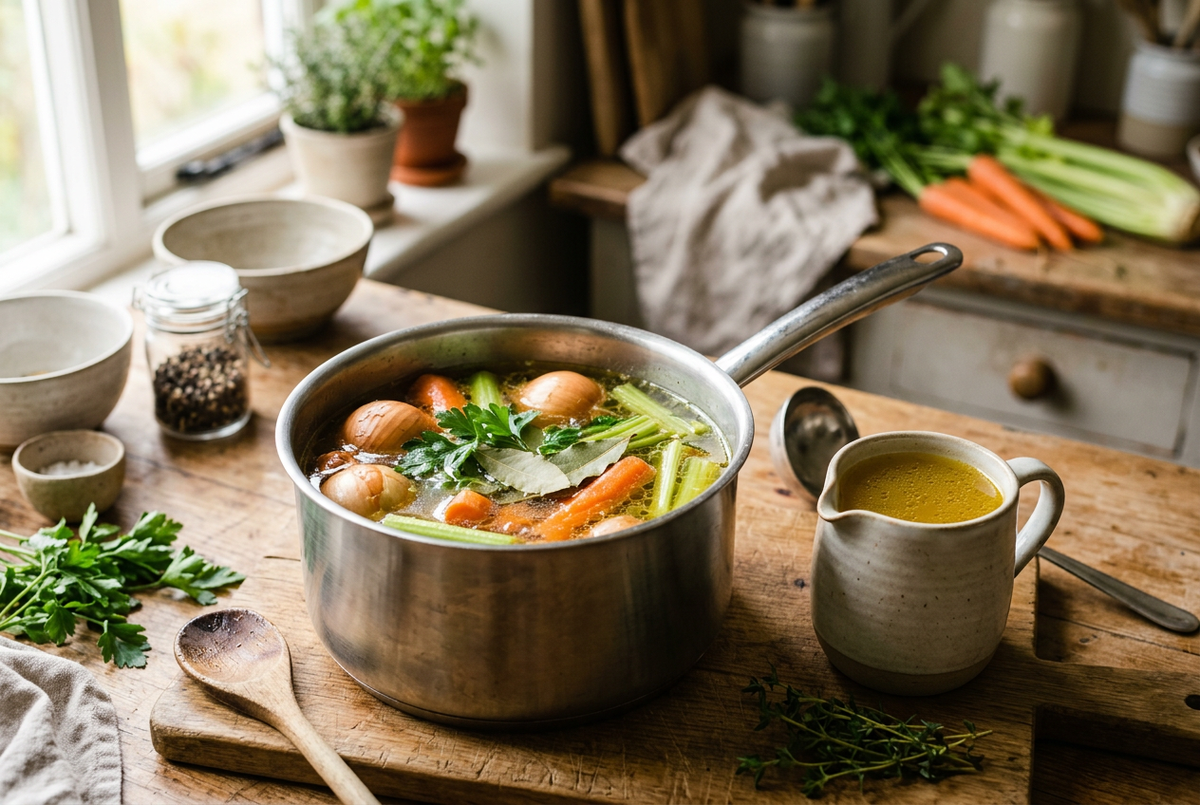
For a homemade option, use the techniques in our guide to making vegetable stock from scratch. A gently flavoured stock gives you room to finish the lentils in different ways later. Very concentrated stock can become overpowering as the cooking liquid reduces.
3. Bring to the boil, then lower the heat
Bring the pot to the boil, staying nearby so you can turn the heat down as foam rises. Reduce to a gentle simmer with small, steady bubbles. Skim off excess foam if it threatens to spill over. Leave the lid off or partly covering the pot, adjusting it and the heat to keep the simmer controlled.
A hard boil does not give you better lentils. It can break their skins, make them cook unevenly and evaporate the water before the centres are tender. If your hob runs hot, use a smaller burner or lower setting rather than trying to solve the problem by repeatedly adding cold water.
4. Check the liquid and taste early
Start tasting green or brown lentils after about 20 minutes, sooner if the packet recommends it. Add a little hot water if the lentils are no longer comfortably covered. Try several rather than judging the whole pot from one. They should be tender through the middle, with no dry or chalky centre.
For salads, stop when the lentils still have a little bite. For stews, let them become softer if that suits the recipe. Remove the pot from the heat promptly once they reach the texture you want, because sitting in hot liquid continues to soften them.
5. Drain if needed and finish with flavour
Drain excess liquid when preparing lentils for a salad or side dish. Remove bay leaves and any large aromatics you do not want to serve. Dress the warm lentils with a little olive oil, lemon juice or vinegar, chopped herbs and seasoning. Add the acidic ingredients once the lentils are tender so they do not complicate the softening process.
How to cook red lentils without a scorched base
Rinse split red lentils well and place them in a roomy pot with water or stock. Begin with roughly three volumes of liquid to one volume of lentils for a soft base, remembering that the ideal amount depends on whether you want a thick dhal or a looser soup. Bring to the boil, reduce the heat and simmer gently.
Stir more often as the lentils soften. Split lentils thicken their cooking liquid, which means the base can catch even while the surface looks fairly wet. Use a spoon that reaches across the bottom of the pot and loosen the mixture with a splash of hot water whenever it becomes too thick.
Begin checking after about 10 minutes. Some batches soften quickly; others need closer to 20 minutes or longer. Stop when there are no firm pieces and the texture suits your dish. Red lentils often turn yellow as they cook, so the colour change alone is not a sign that something has gone wrong.
Once tender, season and add finishing ingredients such as lemon, herbs or a little butter if appropriate for your recipe. If adding tomatoes, allow extra flexibility with timing; their acidity can slow softening. For the easiest beginner method, soften the lentils first and add the tomato component afterwards.
A simple savoury lentil pot for everyday dinners
This flexible recipe uses whole green or brown lentils and makes a lightly brothy base that you can serve with bread, vegetables or a baked potato. It is deliberately simple so you can learn the texture before experimenting with extra ingredients.
Ingredients
- 200g dried green or brown lentils, sorted and rinsed
- 1 tablespoon olive oil
- 1 medium onion, finely chopped
- 1 carrot, finely diced
- 1 celery stick, finely diced, optional
- 2 garlic cloves, finely chopped
- 750ml water or vegetable stock, plus extra as needed
- 1 bay leaf
- A few thyme sprigs or a small pinch of dried thyme
- Salt and black pepper, to taste
- Lemon juice and chopped parsley, to finish
Method
Warm the oil over a medium-low heat in a roomy pot. Add the onion, carrot and celery, if using. Cook gently until the onion softens, stirring regularly and avoiding heavy browning. Add the garlic and stir briefly until fragrant. This soft vegetable base gives the lentils more depth than simply adding raw vegetables at the end.
Add the rinsed lentils, liquid, bay and thyme. Bring to the boil, then lower the heat to a gentle simmer. Cook with the lid partly covering the pot, stirring occasionally and checking that the lentils have enough liquid. Begin tasting after about 20 minutes and continue until tender, allowing roughly 20–35 minutes or longer if your packet suggests it.
Remove the bay leaf and any woody thyme stems. If the mixture is too brothy, simmer uncovered briefly once the lentils are tender, watching closely. If it is too thick, stir in a little hot water. Taste before adding salt, especially when using stock. Finish with black pepper, parsley and a small squeeze of lemon.
Serve as a bowl on its own or spoon alongside roasted vegetables. Our guide to roasting vegetables is a useful companion if you want contrasting crisp edges and deeper roasted flavour. Add a spoonful of yoghurt or a dairy-free alternative if it suits the meal.
How to make lentils taste better
Start with aromatics rather than relying on a heavy finish. Softened onion and garlic add a savoury foundation; carrot brings sweetness; celery and herbs add another layer. You do not need every ingredient each time. Two or three thoughtful additions are often more effective than a crowded spice cupboard.
For warmer flavours, briefly stir cumin, coriander or smoked paprika into softened vegetables before adding liquid. Keep the heat moderate so ground spices do not scorch. For a fresher result, add chopped herbs at the end rather than simmering them for the entire cooking time.
Balance matters as much as intensity. Lentils can taste flat when they need seasoning, acidity or a little richness. Taste after cooking, then add a small amount of salt, lemon juice or olive oil and taste again. Make one adjustment at a time so you can tell what improved the dish.
Common lentil problems and how to fix them
Why are my lentils still hard?
They may simply need more time. Older lentils can take longer, and hard water or acidic ingredients can also make softening more difficult. Add hot water if needed and continue simmering gently. Next time, try plain water for the initial cooking and introduce tomatoes, vinegar or lemon after the lentils are tender.
Why have my lentils gone mushy?
First check the variety. Split red lentils are meant to break down. Whole lentils can become mushy after prolonged cooking or a vigorous boil. You cannot rebuild their shape, but you can use the result in soup, a thick sauce or a soft vegetable filling. For the next batch, choose a firmer variety and begin tasting earlier.
Why is the bottom sticking?
The mixture may be too thick or the heat too high. Reduce the heat, add a little hot liquid and stir regularly, especially with split lentils. If the base has actually burnt, do not scrape it into the rest of the meal. Transfer the unburnt portion carefully to a clean pot and assess the flavour before continuing.
Why are my lentils watery?
If they are tender and intended for a salad, simply drain them. For a stew or dhal, simmer uncovered to reduce excess liquid, stirring as it thickens. Another option is to mash a small portion and stir it back in. Avoid overcooking an entire pot merely to evaporate water if you want the lentils to keep their shape.
Turn cooked lentils into different meals
For a warm salad, combine drained whole lentils with roasted carrots, parsley and a mustard dressing. Add the dressing while the lentils are still warm, then taste again before serving. A little crunch from toasted seeds or finely chopped raw vegetables can make the dish more interesting.
For soup, loosen cooked lentils with stock and add vegetables that complement the base. Blend a portion if you want a thicker texture without making the whole pot smooth. Our homemade soup guide explains how to build a balanced bowl rather than relying on a fixed combination of ingredients.
For a tomato-based dinner, fold tender lentils into a separately prepared tomato sauce and simmer briefly to bring the flavours together. See our guide to making pasta sauce from scratch for a useful foundation. Keep the sauce slightly looser than you think necessary, because lentils can thicken it as it stands.
Cooling, storing and reheating cooked lentils
If you are saving lentils for another meal, divide them into shallow portions so they cool promptly rather than leaving a large pot standing out. Refrigerate promptly once cooled, and follow current food-safety guidance for storage and reheating. Label portions with the cooking date so you do not have to guess later.
Store a lentil salad base separately from crisp vegetables and delicate herbs when possible. This lets you refresh the texture at serving time. Lentil stews often thicken in storage, so add a little water or stock when reheating and stir to distribute the heat evenly.
Reheat until steaming hot throughout, not just around the edges. Only reheat the portion you intend to eat and avoid repeatedly warming and cooling the same batch. If freezing, use suitable containers and leave appropriate headroom for liquid-based dishes. Check the container manufacturer’s instructions before changing temperatures.
Frequently asked questions about cooking lentils
Can I cook lentils in stock instead of water?
Yes. Stock is a convenient way to add savoury flavour, particularly for soup or stew. Choose a stock that suits the dish and taste before adding more salt. For a neutral batch you plan to use in several meals, water with a bay leaf or onion is more flexible.
Should I cook lentils with the lid on or off?
Either can work if you manage the heat and water level. A partly covered pot is a practical starting point. Remove the lid if foaming becomes a problem or you need more evaporation. Cover more fully if water is disappearing quickly, but keep watching the simmer.
Can I substitute tinned lentils for dried lentils?
Tinned lentils are already cooked, so they usually need draining, rinsing if appropriate and warming through rather than the full dried-lentil cooking process. Reduce the recipe’s liquid accordingly. They are useful for quick meals, but a direct weight-for-weight swap will not produce the same result because dried lentils absorb water.
Can I mix red and green lentils in the same pot?
You can, but they soften at different rates. The red lentils will usually break down before the green ones are ready. That can be desirable in a thick soup, but it is not a good approach for a salad where you want every lentil to remain separate.
How do I know lentils are properly cooked?
Taste several. Whole lentils should be tender through the centre, while split red lentils should have softened without hard pieces. Colour and elapsed time are useful clues but cannot replace tasting. Keep checking towards the end so you stop at the texture your meal needs.
A simple habit that makes everyday cooking easier
The best way to learn how to cook lentils is to start with one variety and a simple pot. Rinse them, give them enough liquid, hold a gentle simmer and taste before the timer tells you dinner is ready. Once you recognise the texture you enjoy, changing herbs, vegetables and sauces becomes straightforward.
Choose split red lentils for creamy comfort, whole green or brown lentils for versatile everyday meals, and smaller dark varieties when you want a distinct bite. Keep the first batch uncomplicated and let the technique become familiar. For a cookware option suited to soups and one-pot cooking, explore Culivra’s Nonstick Stock Pot with Glass Lid, then put those simple simmering skills to work in your next dinner.

Leave a comment
This site is protected by hCaptcha and the hCaptcha Privacy Policy and Terms of Service apply.